
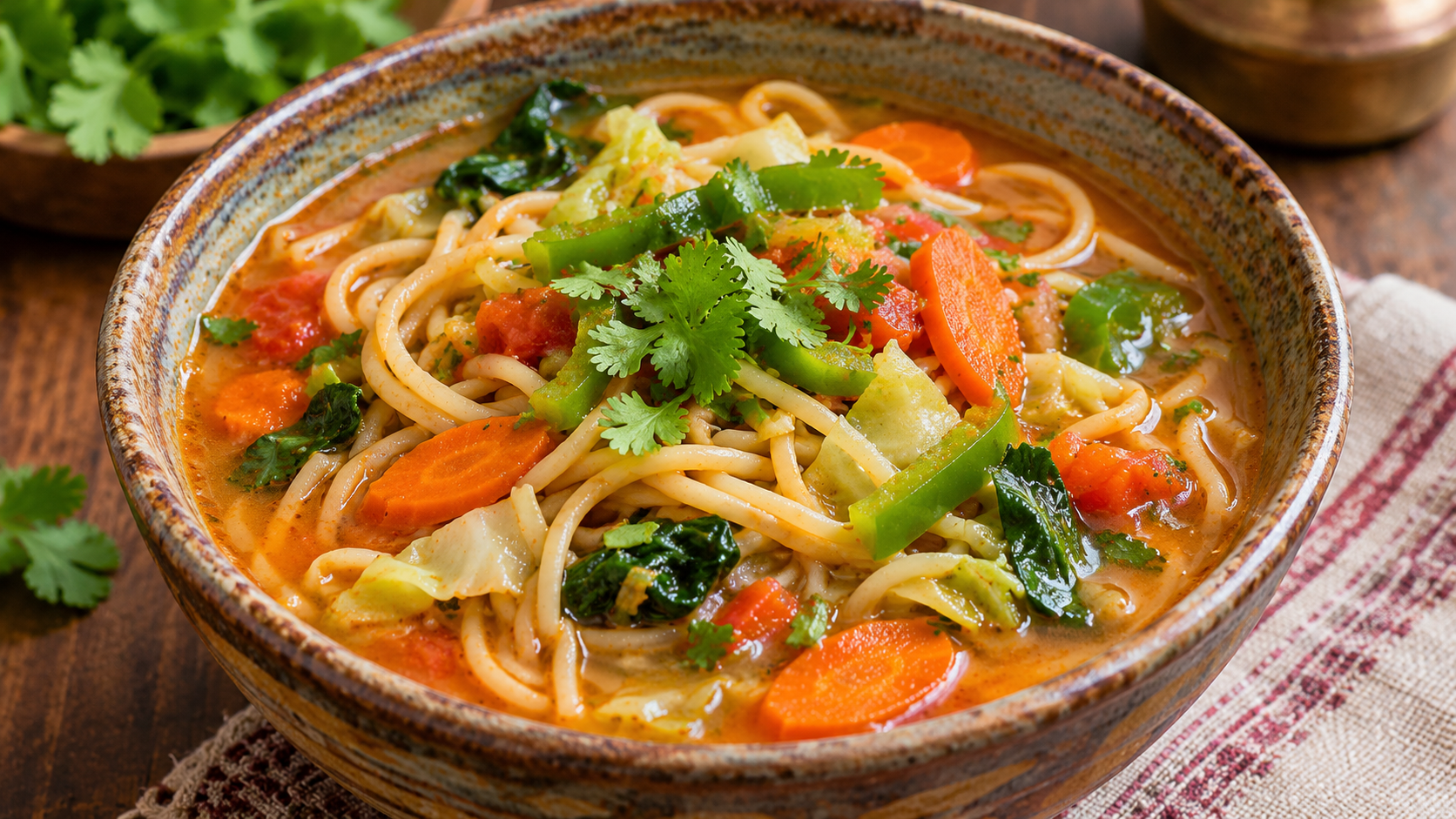
A warming Himalayan-style vegetable noodle soup with ginger, tomato, spinach and yogurt, without onion, garlic or eggs. This independently standardized preparation brings a different culinary style to the Hare Krishna table.
What is vegetable thukpa?
Thukpa is a Himalayan noodle soup with many regional variations. This Nepali-inspired version has a substantial vegetable broth, noodles and a little yogurt, with ginger and warm spices rather than onion or garlic. Fresh tomatoes give the broth body and acidity. It is a home-kitchen adaptation, not a claim that all traditional thukpa uses the same ingredients.
Choose suitable noodles and broth
Read the noodle label: some fresh noodles contain eggs and instant noodle packets often include onion or garlic powder. Plain dried eggless wheat noodles or spaghetti are suitable. Water, vegetables and measured spices form the broth here, avoiding the uncertainty of packaged stock. Cook noodles separately until nearly tender so they do not absorb all the soup liquid.
Keep the yogurt smooth
Whisk the yogurt before use. Gradually combine it with a little hot broth to raise its temperature, then stir it into the soup over gentle heat. Vigorous boiling after adding yogurt may produce a grainy broth. This variation omits packaged soy sauce and uses salt and optional fresh lemon for seasoning.
Bhakti Thought
A warm bowl of soup can be an expression of care. Prepare it attentively and offer a clean portion before sharing.
PrintNepali Vegetable Thukpa (Himalayan Noodle Soup)
A warming Himalayan-style vegetable noodle soup with ginger, tomato, spinach and yogurt, without onion, garlic or eggs.
- Prep Time: 20 minutes
- Cook Time: 25 minutes
- Total Time: 45 minutes
- Yield: 4 servings 1x
- Category: Soup
- Method: Stovetop
- Cuisine: Nepali-inspired
- Diet: Vegetarian
Ingredients
- 200 g dry eggless wheat noodles or spaghetti
- 1 tablespoon neutral cooking oil (14 g)
- 1 tablespoon minced fresh ginger
- 1/2 teaspoon ground turmeric
- 1 teaspoon ground cumin
- 1/4 teaspoon ajwain (carom seeds), optional
- 1 Indian bay leaf
- 100 g carrots, thinly sliced
- 150 g shredded cabbage
- 100 g green bell pepper, sliced
- 200 g tomatoes, chopped
- 4 cups water (960 ml)
- 1/2 cup plain whole-milk yogurt (120 g)
- 100 g spinach, washed and chopped
- 3/4 teaspoon fine salt (4.5 g)
- 1/4 teaspoon black pepper
- 1 tablespoon lemon juice (15 ml), optional
- 2 tablespoons chopped cilantro
- 1 small green chili, optional
US & metric measurements — original 1× batch
Use either measurement, not both. Equivalents are approximate; original specified weights are preserved. Counts, optional quantities and amounts to taste remain as written. This reference is for the original batch; multiply both quantities if scaling the recipe.
200 g (approx. 7.05 oz by weight) dry eggless wheat noodles or spaghetti
1 tablespoon neutral cooking oil (14 g)
1 tablespoon (approx. 15 mL) minced fresh ginger
1/2 teaspoon (approx. 2.5 mL) ground turmeric
1 teaspoon (approx. 5 mL) ground cumin
1/4 teaspoon (approx. 1.25 mL) ajwain (carom seeds), optional
1 Indian bay leaf
100 g (approx. 3.53 oz by weight) carrots, thinly sliced
150 g (approx. 5.29 oz by weight) shredded cabbage
100 g (approx. 3.53 oz by weight) green bell pepper, sliced
200 g (approx. 7.05 oz by weight) tomatoes, chopped
4 cups water (960 ml)
1/2 cup plain whole-milk yogurt (120 g)
100 g (approx. 3.53 oz by weight) spinach, washed and chopped
3/4 teaspoon fine salt (4.5 g)
1/4 teaspoon (approx. 1.25 mL) black pepper
1 tablespoon lemon juice (15 ml), optional
2 tablespoons (approx. 30 mL) chopped cilantro
1 small green chili, optional
Approximate kitchen conversions: NIST and ingredient-specific baking weights.
Instructions
- Cook the eggless noodles in water until just shy of tender. Drain and set aside; the noodles will finish in the soup.
- Heat oil in a soup pot. Stir ginger, cumin, turmeric, optional ajwain and bay leaf for 30 seconds, adding a little water if needed to prevent burning.
- Add carrots, cabbage and bell pepper. Stir for 3 minutes, then add tomatoes and measured water. Bring to a boil and simmer 8–10 minutes until vegetables are tender-crisp.
- Add noodles and spinach and simmer 2–3 minutes. Whisk yogurt with a few spoonfuls of hot soup in a separate bowl. Reduce heat, stir in the tempered yogurt, and warm gently without boiling hard.
- Season with salt and pepper, add lemon if desired, remove bay leaf and garnish with cilantro. Reserve an offering portion.
Notes
- Makes 4 servings. Use suitable plain ingredients without onion, garlic, eggs or mushrooms.
- Nutrition estimated from representative ingredient composition; minor spices omitted. Weights, cooking times and proportions have not been kitchen-tested.
- Refrigerate leftovers promptly and follow the storage guidance.
- Ingredient quantities and cooking times are editorial estimates; confirm through kitchen testing.
- Nutrition values are estimates per serving unless otherwise specified.
Nutrition
- Serving Size: 1/4 of the prepared batch
- Calories: 264
- Sugar: 6.9 g
- Sodium: 508 mg
- Fat: 5.6 g
- Saturated Fat: 1.1 g
- Unsaturated Fat: 4.5 g
- Trans Fat: 0 g
- Carbohydrates: 46.2 g
- Fiber: 4.7 g
- Protein: 9.2 g
- Cholesterol: 4 mg
Serving suggestions
Serve hot in deep bowls, dividing noodles and vegetables evenly. A small flatbread or a separate serving of paneer or dal can make a more substantial meal. For gatherings, cook noodles in batches and add them close to serving so the broth remains plentiful.
Making ahead and reheating
Refrigerate the vegetable broth and cooked noodles separately within two hours and consume within three days. Reheat until steaming hot, then combine the noodles and broth. If preparing in advance, add the yogurt during final preparation to reduce separation. Do not leave cooked noodles at room temperature for extended periods.
Dietary notes
Contains wheat and milk. Select suitable plain yogurt and eggless noodles; this is not a gluten-free or vegan dish as written. Nutritional figures assume four bowls and the listed dry noodle weight and measured fat. Individual spice quantities and optional cilantro are omitted from the estimates.
Frequently Asked Questions
Can I use rice noodles?
Yes, choose plain eggless rice noodles and follow their cooking directions; the texture and nutrition change.
Why did the yogurt split?
The broth may have been too hot. Temper the yogurt and stir it in over gentle heat.
Can I use stock instead of water?
Yes, only if it contains no onion, garlic, mushrooms or unsuitable additives.
Can I prepare it without yogurt?
Yes, but it will be a less creamy variation.
Explore More Recipes
Hare Krishna Vegetable Fried Rice
Rumali Roti (Handkerchief Flatbread)
Related recipes: For more warming international soups, explore Tibetan Vegetable Barley Soup, Vegetarian Mulligatawny Soup, Creamy Pumpkin and Potato Soup.