
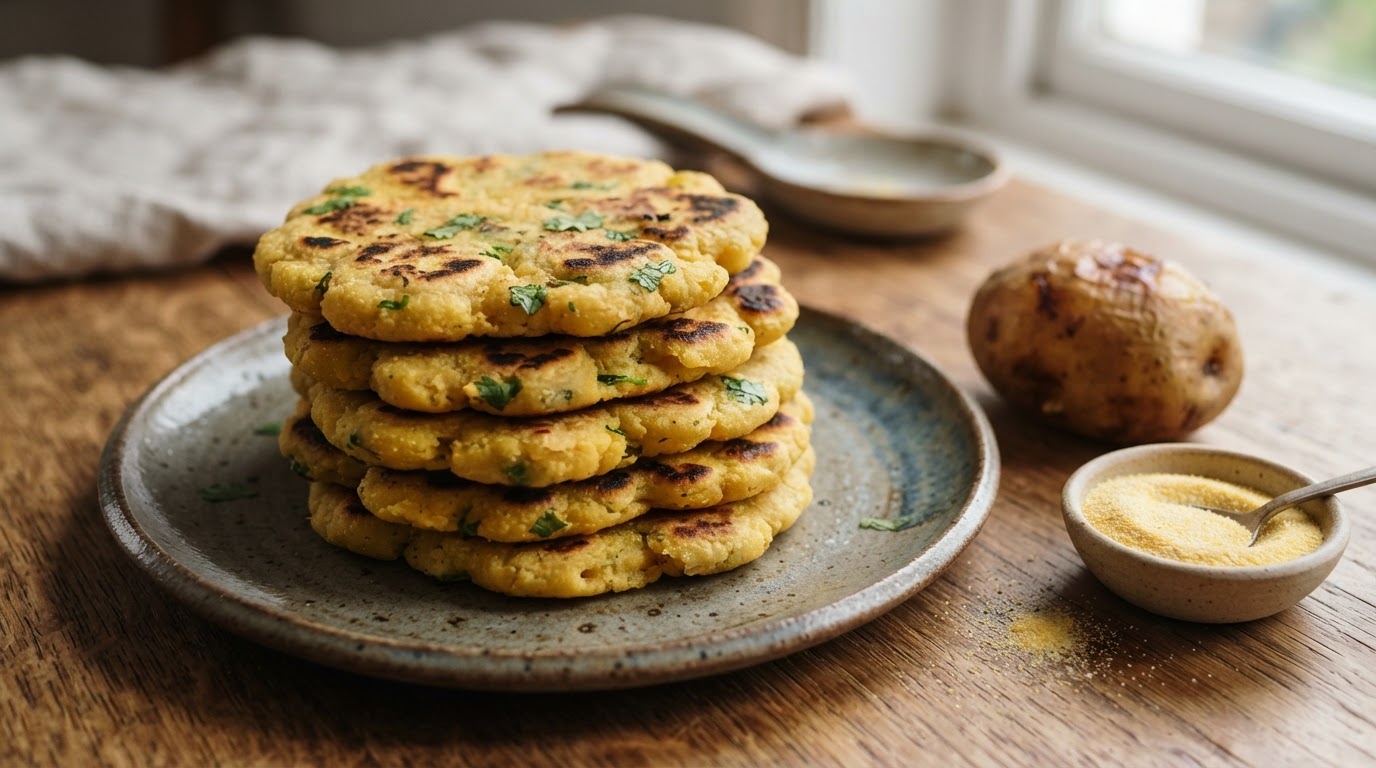
Golden maize and whole wheat flatbreads bound with mashed potatoes, fresh coriander and mild chili. No onion or garlic. This independently standardized preparation provides measured quantities and practical guidance for home cooks preparing prasadam.
What makes Punjab di roti distinctive?
This bread combines maize flour with wheat flour and cooked potato. Unlike stuffed aloo paratha, the potato is incorporated into the dough. It supplies moisture and a softer texture, making this bread easier to handle than a pure maize roti. Keep the cilantro and chili modest so the grain remains the principal flavor.
Preparing potatoes and flour
Cook potatoes until they mash without hard lumps, then drain well. Retained cooking liquid can make the dough sticky. Weigh the cooked, peeled potato instead of estimating by potato count. Use finely milled maize flour, not white cornstarch or a seasoned cornmeal mix. Add warm water only after working in the potato.
Rolling and cooking
Wheat helps the dough stretch, but maize makes it more fragile than a plain chapati. Keep the rounds slightly thick and use parchment if necessary. Remove the parchment before cooking. Moderate heat allows the inside to cook without scorching the surface. Let the underside set before turning with a broad spatula.
Bhakti Thought
Preparing nourishing breads from simple ingredients is a practical way to serve others. Offer the finished meal with care.
PrintPunjabi Maize and Potato Roti (Punjab Di Roti)
Golden maize and whole wheat flatbreads bound with mashed potatoes, fresh coriander and mild chili. No onion or garlic.
- Prep Time: 25 minutes
- Dough resting: 15 minutes
- Cook Time: 35 minutes
- Total Time: 75 minutes
- Yield: 8 servings 1x
- Category: Bread
- Method: Griddle cooking
- Cuisine: Punjabi
- Diet: Vegetarian
Ingredients
- 2 cups finely milled yellow maize flour (250 g), not cornstarch
- 1/2 cup whole wheat chapati flour (60 g)
- 2 cups cooked peeled mashed potatoes (400 g)
- 3 tablespoons chopped cilantro (8 g)
- 1/4 teaspoon mild red chili powder
- 3/4 teaspoon fine salt (4.5 g)
- 1/4–1/2 cup warm water (60–120 ml), as needed
- 2 tablespoons ghee (28 g), for cooking
US & metric measurements — original 1× batch
Use either measurement, not both. Equivalents are approximate; original specified weights are preserved. Counts, optional quantities and amounts to taste remain as written. This reference is for the original batch; multiply both quantities if scaling the recipe.
2 cups finely milled yellow maize flour (250 g), not cornstarch
1/2 cup whole wheat chapati flour (60 g)
2 cups cooked peeled mashed potatoes (400 g)
3 tablespoons chopped cilantro (8 g)
1/4 teaspoon (approx. 1.25 mL) mild red chili powder
3/4 teaspoon fine salt (4.5 g)
1/4–1/2 cup warm water (60–120 ml), as needed
2 tablespoons ghee (28 g), for cooking
Approximate kitchen conversions: NIST and ingredient-specific baking weights.
Instructions
- Boil peeled potatoes until tender, drain thoroughly and mash until smooth. Cool enough to handle.
- Mix maize flour, wheat flour, salt and chili powder. Work in the mashed potatoes and cilantro. Add water gradually until a soft, cohesive dough forms.
- Cover and rest 15 minutes. Divide into eight portions and roll gently between parchment sheets, or pat into discs about 6 inches (approx. 15.2 cm) wide and 4 mm (approx. 0.16 in) thick.
- Heat a heavy griddle over medium heat. Transfer one disc without parchment and cook until the underside firms.
- Turn, brush sparingly with ghee and cook both sides until golden and fully cooked. Repeat and reserve a clean portion for offering.
Notes
- Makes 8 flatbreads. Weights and household measures are approximate.
- Use plain ingredients and individual spices without onion, garlic, eggs or mushrooms.
- Nutrition is estimated from representative ingredient composition and measured fats and salt, excluding minor spices and accompaniments. Kitchen testing pending.
- Ingredient quantities and cooking times are editorial estimates; confirm through kitchen testing.
- Nutrition values are estimates per serving unless otherwise specified.
Nutrition
- Serving Size: 1 flatbread (1/8 of batch)
- Calories: 214
- Sugar: 0.7 g
- Sodium: 235 mg
- Fat: 5 g
- Saturated Fat: 2.4 g
- Unsaturated Fat: 2.6 g
- Trans Fat: 0.1 g
- Carbohydrates: 39.5 g
- Fiber: 4 g
- Protein: 4.1 g
- Cholesterol: 9 mg
Serving suggestions
Serve with a seasonal greens sabji, chana dal or plain yogurt. The potato makes this bread more substantial than an ordinary roti; a mild lentil preparation provides a complementary meal. For gatherings, portion the dough evenly and keep cooked breads covered briefly. Offer a clean portion before sharing.
Storage and troubleshooting
Refrigerate uncooked potato dough if not using promptly and cook within one day. Refrigerate cooked breads within two hours and consume within three days. Reheat on a skillet until hot. If the dough feels sticky, allow the flour to hydrate before adding extra flour; if it cracks, work in a teaspoon of warm water.
Dietary and nutrition notes
Contains wheat and milk-derived ghee, so it is not gluten-free or vegan as written. The estimate assumes eight breads and all measured cooking fat; sides are excluded. Use unseasoned maize flour and plain cooked potatoes. This bread contains grains and is not a standard Ekadasi preparation.
Frequently Asked Questions
Is this the same as aloo paratha?
No, the potato is kneaded into the maize-based dough.
Can I omit wheat?
That would need a different formula and shaping method.
Why does my roti crack?
Add a little warm water and shape smaller rounds.
Can I use oil?
Yes, substitute neutral plant oil for ghee.