
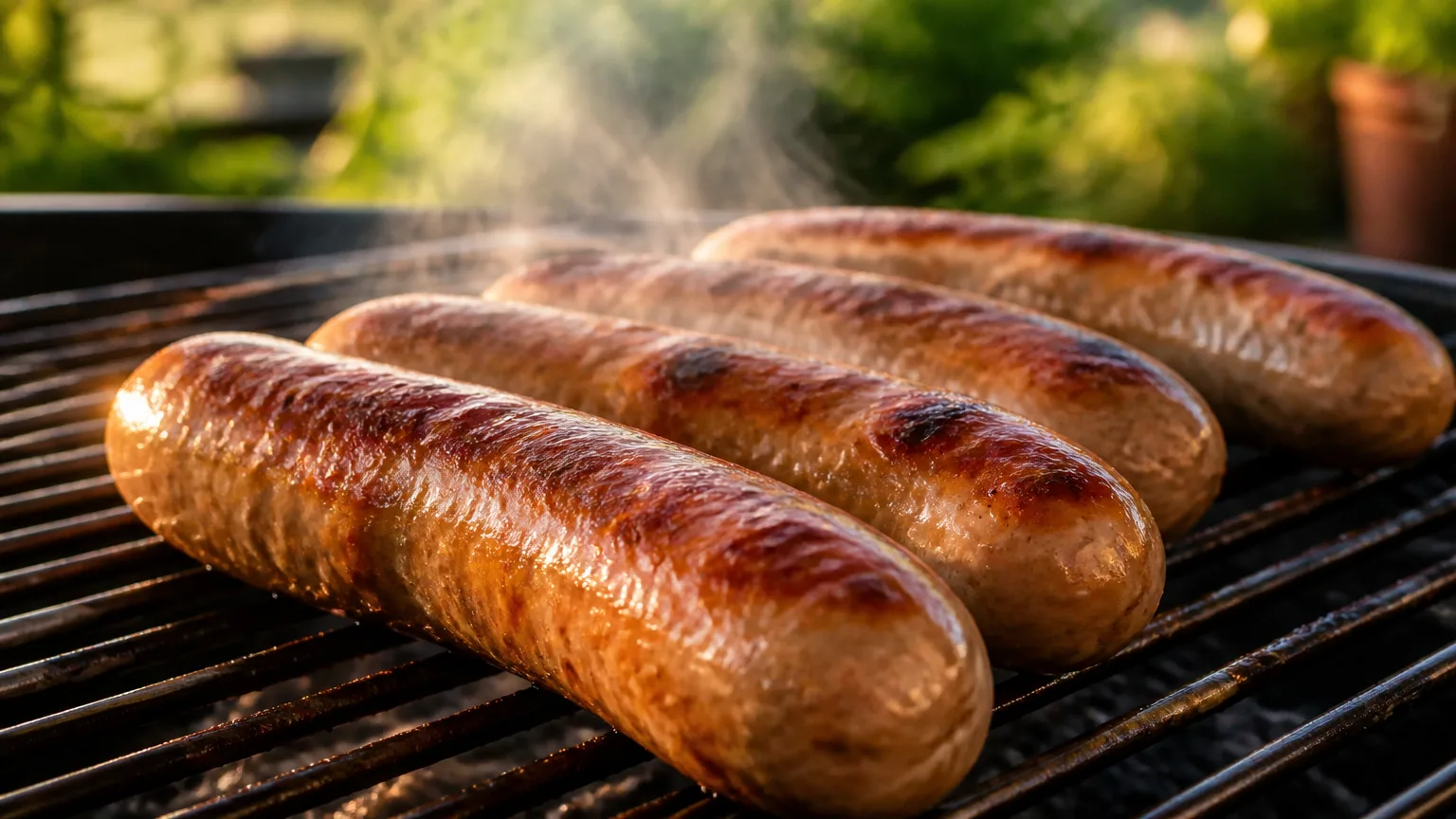
Cooking brats at home can be simple, whether you use a backyard grill or a stovetop pan. Bratwurst is a seasoned sausage, and its casing, fat, and cooking temperature all affect how juicy and tender it turns out.
A steady cooking method helps the sausage brown without splitting or drying out. This guide shares practical steps for choosing bratwurst, preparing it, and cooking it reliably on a grill or in a pan. You’ll also find ideas for serving it and guidance on handling it safely.
Traditional bratwurst is made with meat, so it is not vegetarian and may not suit every spiritual practice. If you follow a Hare Krishna or vegetarian food tradition, you can adapt the cooking techniques for suitable plant-based sausages—or skip the meat recipes altogether.
For vegetarian or spiritually oriented meal ideas, explore the wider collection at Hare Krishna Recipes. Whether you’re cooking classic bratwurst for guests or looking for a different meal to share, use this guide as a practical starting point, not a prescription.
Choose Bratwurst and Get It Ready to Cook
The best results start with the right bratwurst and a little preparation. Whether you plan to grill or pan-cook, check the package before you begin: fresh and fully cooked brats need different handling.
Choose Fresh or Fully Cooked Brats
Fresh bratwurst is raw and must cook thoroughly before serving. Fully cooked bratwurst has already been cooked and mainly needs reheating. Color and appearance can be misleading, so rely on the package label and cooking directions rather than guessing.
Fresh brats often appear in the refrigerated meat section, while fully cooked varieties may be sold refrigerated or frozen. If you are buying fresh sausage, look for packages that are cold and sealed, with casings that appear intact. Avoid brats with torn casings or damaged packaging, as they may lose juices during cooking or have been handled improperly.
Keep Sausage Cold and Thaw It Safely
Keep raw bratwurst refrigerated until you are ready to cook. If the sausages are frozen, thaw them in the refrigerator rather than on the counter. Slow, even thawing helps the brats cook more evenly and keeps them at a safe temperature.
Plan ahead when thawing: larger packages may need several hours or overnight in the refrigerator. Once thawed, cook the brats according to the package directions. Do not refreeze sausage that has been thawed using a method other than refrigeration.
Protect the Casing Before Cooking
Handle bratwurst gently and leave the casing intact. Do not pierce the sausages with a fork or knife before cooking. Holes can let flavorful fat and juices escape, leaving the brats drier and less satisfying.
You also do not need to boil fresh brats before grilling or pan-cooking unless the package specifically recommends it. A gentler cooking method helps the sausage cook through without splitting its casing. If a casing does tear, handle the brat carefully and expect some juices to escape.
Take the brats out of the refrigerator briefly while the grill or pan heats. This short rest can help them cook more evenly, but do not leave raw sausage at room temperature for an extended period. Use the heating time to prepare your cooking surface and check the package for any specific instructions.
With the sausage selected, thawed if needed, and ready to cook, you can focus on steady heat. That is the key to cooking brats without burning the outside before the center is done.
Set Up the Grill for Juicy, Evenly Cooked Brats
With the sausages ready, arrange the grill so they can cook through gently before you brown the skins. A two-zone setup gives you better control than placing brats directly over high heat from start to finish. It also gives you a cooler area to use if fat drips and flames flare.
For a charcoal grill, bank the hot coals on one side and leave the other side empty. The coal-free side provides moderate indirect heat, while the coals provide direct heat for browning. On a gas grill, set one burner to medium or medium-low and leave an adjacent burner off; the lit side supplies indirect heat, and the burner area can provide direct heat at the end.
Preheat the grill with the lid closed for about 10 to 15 minutes. Aim for moderate heat rather than a very hot grate, which can darken the casing before the center cooks. Brush the grates lightly to remove residue, then wipe them with a lightly oiled paper towel held with tongs. A clean, lightly prepared surface helps prevent sticking and makes it easier to turn the sausages.
Place the brats on the indirect-heat side and close the lid. Cook them steadily, turning occasionally, so heat reaches the center without scorching the outside. Keep the lid available throughout cooking: closing it helps maintain an even temperature, while opening it lets you check progress or respond quickly to flare-ups.
Fat can drip from bratwurst and ignite, especially over direct heat. If flames appear, move the sausages to the cooler side and close the lid briefly to reduce the oxygen feeding the flare-up. Avoid pouring water onto hot coals or flames; it can create steam and scatter ash. Once the brats are nearly cooked, move them over direct heat and turn them often until the casings are evenly browned.
For the most reliable result, check the thickest sausage with an instant-read thermometer, avoiding contact with the grill grate. Cook pork bratwurst to 160°F. If the outside browns too quickly before it reaches that temperature, return it to indirect heat and continue cooking with the lid closed.
This setup works well for a backyard meal, whether you’re grilling a few brats or serving a larger group. If you’re planning a broader holiday menu, browse these Fourth of July recipes for additional cookout ideas. The recipes are optional; the key to cooking brats evenly is to use indirect heat first and direct heat only for the final browning.
How to Grill Bratwurst Without Drying It Out
Start with a clean, lightly oiled grill and set up two heat zones. Leave one side over direct heat and keep the other side cooler, with no burner on beneath it if you have a gas grill. For charcoal, bank the coals to one side. This gives you a place to move the brats if they brown too quickly.
Place the sausages over the cooler or indirect-heat zone, then close the lid. Cook them gently, turning every few minutes so they heat evenly. Steady, moderate heat helps warm the center before the casing becomes too dark or splits.
There is no single cooking time that works for every grill. Bratwurst thickness, whether the sausages start cold or closer to room temperature, and the grill’s heat can all change the timing. Use time as a rough guide, not a doneness test; begin checking with an instant-read thermometer as the sausages approach the expected cooking window.
Insert the thermometer into the center of a brat, approaching from the end or side. Check the package for cooking directions and follow applicable food-safety guidance. As a general reference, ground pork or beef should reach 160°F, while poultry sausage should reach 165°F. If the package gives a different instruction for the product, follow it.
Once the center is at a safe temperature, move the brats briefly over direct heat. Turn them often until the casings develop an even golden-brown color and light char. Keep this finishing step short; the goal is color and a little smoky flavor, not a long blast of high heat.
If a casing darkens before the center is cooked, move the brat back to indirect heat and close the lid. Let it continue cooking gently, then check the center again before returning it to direct heat. This is especially useful when the grill runs hotter than expected or the sausages are thick.
Watch for flare-ups, which can char the casing before the inside is ready. Move the brats to the cooler zone until the flames settle, and reduce the heat if your grill allows it. Avoid spraying water onto flames; it can scatter ash and may not address the source of the flare-up.
Brats may brown unevenly if one area of the grill is hotter than another. Rotate their positions as well as turning them, and use the cooler zone to slow cooking on the hottest side. If one brat is ready before the others, remove it rather than leaving it on the grill to overcook.
Do not repeatedly puncture the casing to check for doneness or release steam. Each opening lets juices escape, which can leave the sausage dry. Avoid pressing down with a spatula, too; it squeezes out moisture without helping the center cook faster. When cooking brats this way, the thermometer—not the casing’s color or firmness—provides the clearest doneness check.
How to Pan-Cook Brats on the Stovetop
A heavy skillet and steady, moderate heat can cook bratwurst through while building a browned casing. This method works well when grilling is not practical, and it gives you control over the heat from start to finish.
Set the skillet over medium heat and add the fresh brats in a single layer, leaving space between them. Do not prick the casings; keeping them intact helps retain moisture and flavor. If you have more sausages than the pan can hold without crowding, cook them in batches.
Add a small amount of water or broth—about ¼ cup for a standard skillet—and cover the pan. The liquid creates gentle steam that helps fresh brats cook through before the outside browns too much. Keep the heat at a gentle simmer, not a vigorous boil. Adding liquid is simply a cooking technique; you do not need to boil sausages to cook them safely.
Turn the brats every few minutes so they cook evenly. If the casing starts browning too quickly, lower the burner. Once most of the liquid has evaporated, uncover the skillet and let the sausages brown in their own fat. Turn them regularly until the exterior is evenly browned, adjusting the heat as needed to prevent scorching.
For a typical fresh brat, expect roughly 15 to 20 minutes of cooking, depending on its size and your stove. Treat the time as a guide, not a guarantee. Brats that are especially thick may need longer, while precooked sausages often need less time; check the package for specific directions.
Use an instant-read thermometer to confirm doneness. Insert it into the center of a sausage without touching the skillet. Fresh pork or beef bratwurst should reach 160°F; poultry bratwurst should reach 165°F. Color alone cannot confirm that the center is fully cooked, and browning can vary with the pan and heat.
Let the cooked brats rest for a few minutes before serving. If you are cooking several batches, keep finished sausages warm in a covered dish while the remaining brats cook. This stovetop approach keeps cooking brats manageable indoors while helping prevent a scorched casing or undercooked center.
Know When Brats Are Done—and Let Them Rest
A browned casing does not prove that a brat is cooked through. During cooking brats, check the center with an instant-read thermometer rather than cutting into each sausage or judging by color and firmness.
Insert the thermometer from the end of the brat, or from the side, and guide the tip into the center. Keep it away from the casing and cooking surface; touching either can produce a misleading reading. Check a few sausages, especially the thickest ones, and return any that have not reached a safe temperature to the heat.
The safe internal temperature depends on the sausage’s ingredients and current public-health guidance. Follow the package instructions, and check current USDA recommendations: ground pork or beef sausage generally needs to reach 160°F, while poultry-based sausage needs to reach 165°F. If the package gives different preparation or handling directions, read them carefully and follow applicable food-safety guidance.
Once the brats reach the appropriate temperature, transfer them to a clean plate and let them rest for a few minutes before serving. This brief pause helps the juices settle, but resting does not make an undercooked sausage safe. Keep cooked brats covered while they rest, and avoid placing them back on a plate that held raw sausage.
Use separate plates and utensils for raw and cooked meat. If you use tongs to turn raw brats, wash them before using them to serve cooked ones—or use a second, clean pair. Wash your hands and clean surfaces that came into contact with raw sausage to prevent cross-contamination.
Refrigerate leftovers promptly in a covered container. USDA guidance recommends refrigerating perishable food within two hours, or within one hour when the temperature is above 90°F. Use refrigerated leftovers within three to four days, or freeze them for longer storage. For a convenient freezer option, see this guide to vacuum-sealing leftovers. Reheat leftovers safely before serving, following current USDA guidance.
Serve Brats with Toppings, Sides, and Vegetarian Alternatives
Once the brats have rested, serve them hot with familiar toppings and simple sides. Set out toasted buns, mustard, cooked or raw onions, and sauerkraut so guests can build a plate to suit their taste. Pickles, potato salad, coleslaw, or grilled vegetables also make easy cookout sides.
For a seasonal gathering, adjust the sides and toppings to fit the occasion. A spring menu might include fresh greens and roasted potatoes, while a summer cookout could feature corn and a crisp salad. For a holiday meal, these St. Patrick’s Day recipes can offer optional inspiration for shaping the rest of the menu.
Traditional bratwurst is meat-based, so it may not suit every guest. Hare Krishna devotees may follow dietary practices that exclude meat, and other guests may have their own dietary needs. Ask about restrictions when planning, check package ingredients, and do not assume that a particular plant-based product is acceptable to everyone.
For a separate main, choose a clearly labeled vegetarian sausage or another suitable dish, such as grilled vegetables or a hearty bean salad. Check the ingredient list and preparation directions, since plant-based products vary and are not universally suitable across traditions. When in doubt, ask the guest what they can eat.
Keep vegetarian food separate from meat throughout preparation and serving. Use clean cookware, utensils, and serving dishes, and cook the vegetarian option on a clean grill area or in a separate pan. For example, do not place a plant-based sausage on the same platter or use the same tongs as cooked bratwurst.
A simple serving setup can make these choices easier for everyone:
Label meat and vegetarian options clearly.
Place separate tongs beside each dish.
Keep buns and shared toppings away from meat juices.
Offer sides that fit the needs of your guests, and identify ingredients when practical.
With a little planning, you can serve juicy brats alongside appealing alternatives without asking guests to compromise their dietary practices. This approach works whether you are cooking brats for a small family meal or setting out food for a larger gathering.
Frequently Asked Questions
Should you boil brats before grilling?
Usually, no. You can grill fresh bratwurst over indirect heat, then briefly over direct heat to brown the casing. If you prefer to simmer them first, use water or another mild liquid and finish on the grill; avoid boiling, which can split the casing and release juices. Follow the package directions, especially for precooked brats, which only need reheating.
How long do brats take to cook?
Timing depends on whether the bratwurst is fresh or precooked, its size, and the cooking method. Fresh brats may take about 15–20 minutes on a grill or 15–20 minutes in a covered pan over medium-low heat, turning occasionally. Precooked sausages generally take less time. Check the package, and use a food thermometer rather than appearance: fresh pork or beef bratwurst should reach 160°F; poultry bratwurst should reach 165°F.
Can you cook brats from frozen?
It is possible, but cooking from frozen takes longer and may heat the sausage unevenly. For the most reliable result, thaw brats in the refrigerator first, then cook them according to the package instructions. If you cook them from frozen, use gentle heat and confirm the center reaches the safe temperature for its meat type.
Are bratwurst vegetarian or suitable for a Hare Krishna diet?
Traditional bratwurst is made with meat, so it is not vegetarian. Plant-based alternatives may be suitable, but ingredients and individual or community guidelines vary; check the label and follow your own practices. For shared cooking, clear ingredient labels help guests make informed choices. If communication support would help, see these kitchen action signs.
A Simple Path to Juicy Bratwurst at Home
For juicy brats, cook gently and evenly, then brown the casing. Manage the heat, avoid piercing or pressing the sausages, and check doneness with a thermometer—not time or color alone.
Choose a grill or skillet based on your equipment and preferences. If guests have different dietary or spiritual commitments, prepare a separate vegetarian option and label it clearly. Cook thoughtfully, and serve a meal that respects everyone at the table.