
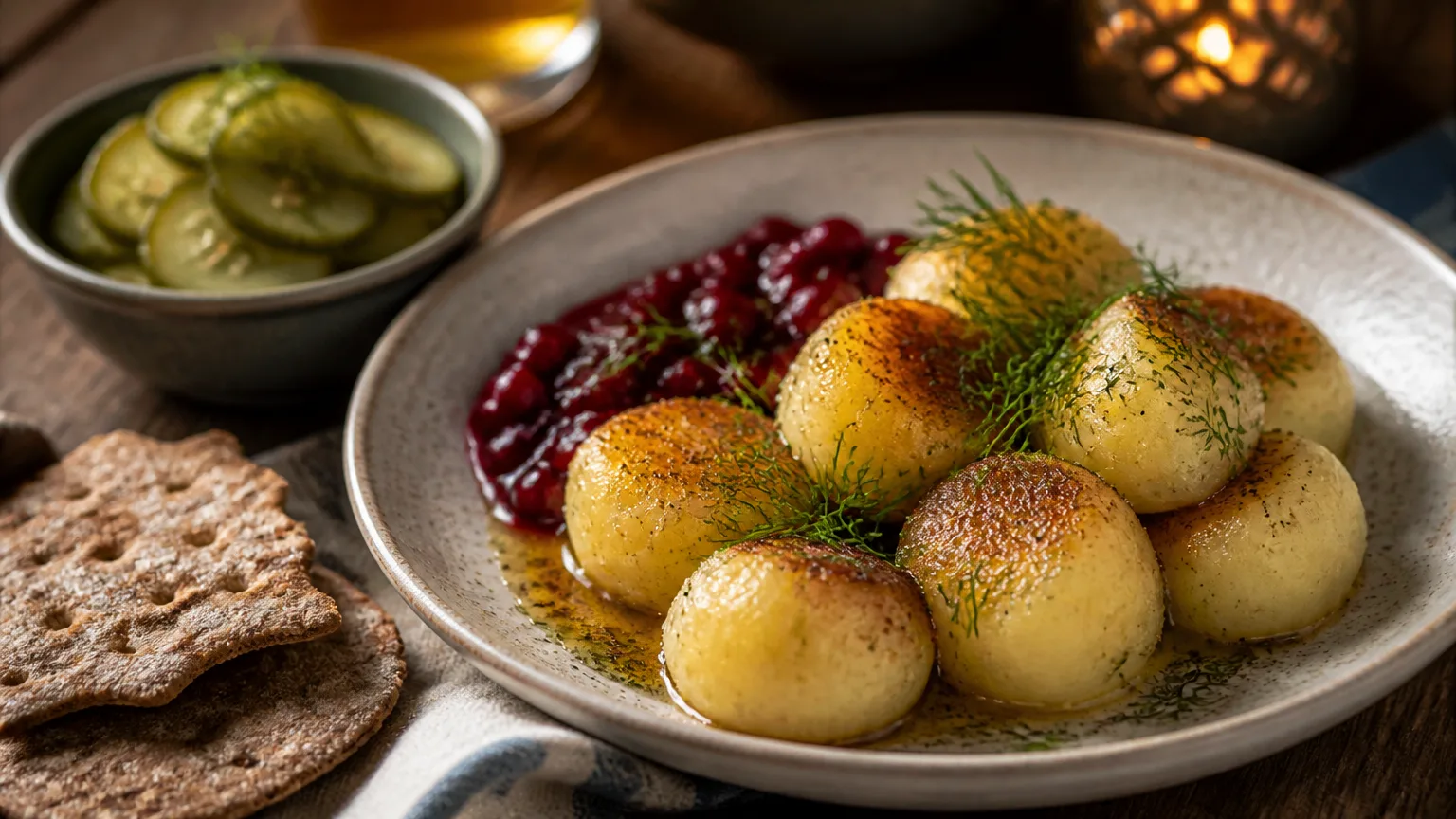
Swedish food brings together festive traditions, hearty everyday meals, and simple ingredients shaped by the seasons. From comforting potato dishes to crispbreads and rich sauces, familiar flavors reflect both local customs and family traditions.
This guide explores 12 traditional dishes and vegetarian favorites, with options for different tastes and diets. Recipes vary by region and household, so no single dish represents every Swedish table. Some classics center on meat or fish, while others are naturally vegetarian; many can also be adapted with plant-based ingredients.
As you explore, you’ll find inspiration for enjoying Swedish flavors in ways that suit your preferences. If you’re also interested in devotional vegetarian cooking, browse the wider collection of Hare Krishna recipes for more ideas.
1. Swedish Meatballs (Köttbullar)
Köttbullar are among Sweden’s best-known dishes, served in homes and restaurants across the country. These small, seasoned meatballs are traditionally made with ground meat and often appear as part of a comforting meal of Swedish food.
Classic accompaniments bring the flavors into balance. Creamy sauce and tender potatoes soften the meatballs’ savory seasoning, while tart lingonberries add a bright, fruity contrast. Pickled cucumber provides another sharp, refreshing bite.
For a vegetarian version, replace the meat with cooked lentils, finely chopped mushrooms, or plant-based mince. Season the mixture with onion, salt, and pepper, then shape it into small balls and pan-fry until browned. Serve with potatoes, cream sauce made with plant-based ingredients, lingonberries, and pickled cucumber for a similar balance of rich, tart, and savory flavors.
2. Raggmunk: Swedish Potato Pancakes
Raggmunk are Swedish potato pancakes made by folding grated potato into a simple flour-and-milk batter. Pan-fried until golden, they have crisp edges and a tender potato center. This contrast makes them a comforting example of traditional Swedish food.
Raggmunk are often served with tart lingonberries and traditionally paired with fried pork. For a vegetarian version, keep the lingonberries and add sautéed mushrooms, a crisp cabbage salad, or another meat-free topping. These choices provide savory flavor and balance the berries’ sharpness.
When ordering raggmunk at a restaurant, ask whether the batter contains any animal-based ingredients and whether the pancakes are cooked in butter or pork fat. Cooking fat and toppings both matter when adapting the dish. At home, use vegetable oil or plant-based butter, and check that any sauce or garnish is vegetarian.
For a simple meal, serve the pancakes hot with lingonberry jam and sautéed mushrooms. If you want a heartier plate, add a plant-based sausage or a spoonful of dairy-free sour cream. The result keeps raggmunk’s crisp, rich character while making it suitable for a vegetarian table.
3. Ärtsoppa: Swedish Yellow Pea Soup
After crisp potato pancakes, a bowl of ärtsoppa offers a warming taste of Swedish food. This traditional yellow pea soup is often served on Thursdays, a custom linked to Sweden’s long-standing meal traditions. It cooks slowly until the peas soften and the soup becomes thick, hearty, and satisfying.
Classic versions commonly include pork, such as salted pork or ham, which adds a smoky, savory flavor. The soup is usually served with mustard on the side, allowing diners to stir in as much as they like. Rye bread or another sturdy loaf makes a simple accompaniment and helps round out the meal.
For a vegetarian adaptation, simmer yellow peas with onion, carrot, celery, and a flavorful vegetable stock. Bay leaf, thyme, and marjoram add depth, while a little mustard at the table brings the customary sharp contrast. Some cooks finish the soup with fresh herbs or a splash of vinegar to brighten its rich flavor.
Ärtsoppa is filling and well suited to batch cooking. Make a large pot, then refrigerate or freeze portions for easy meals later in the week. Reheat it gently with a little water or stock, since the peas thicken the soup as it stands.
4. Janssons Frestelse: Creamy Potato Casserole
After the warmth of ärtsoppa, Janssons frestelse offers another classic Swedish comfort food. This baked casserole layers thin strips of potato with onion, cream, and breadcrumbs, then cooks until tender inside and golden on top.
The traditional recipe includes Swedish pickled sprats, often sold as ansjovis. These small fish give the casserole a distinctive savory, slightly sweet flavor, with a briny edge that balances the rich cream. Despite the similar name, Swedish ansjovis is not the same as Mediterranean anchovies.
Because the traditional version contains fish, it is not vegetarian. Check labels when ordering or buying prepared Janssons frestelse, since the fish may be mixed into the potato layers.
For a vegetarian adaptation, use sautéed mushrooms for savory depth and add capers or chopped pickles for brininess and a little acidity. A splash of pickle brine or lemon juice can sharpen the creamy filling. These ingredients create a satisfying alternative, but they do not make it the traditional fish-based dish.
Serve the casserole hot as a side with roasted vegetables or as a filling main with a crisp salad. It is a rich, comforting example of Swedish food that can be adapted thoughtfully for a vegetarian table.
5. Gravlax: Dill-Cured Salmon
Gravlax is a classic Swedish food made by curing salmon with salt, sugar, and plenty of fresh dill. The mixture draws moisture from the fish and seasons it over time, giving the salmon a firm texture and a clean, lightly sweet flavor. Fresh dill provides its distinctive herbal taste.
Cooks traditionally slice gravlax thinly and serve it with mustard-dill sauce and bread. It also works well on crispbread, alongside boiled potatoes, or as part of a Swedish-style buffet. Because the salmon is cured rather than cooked with heat, prepare and store it according to a trusted food-safety recipe.
For a vegetarian plate, serve marinated carrot or beetroot as a plant-based alternative—not as traditional gravlax. Thin carrot ribbons can be seasoned with salt, sugar, vinegar, and dill for a bright, savory bite. Roasted beetroot, sliced and paired with mustard-dill sauce and bread, offers a deeper, earthy flavor. These options echo gravlax’s fresh, tangy accompaniments while keeping the salmon dish distinct.
6. Kroppkakor: Swedish Potato Dumplings
Kroppkakor are hearty Swedish potato dumplings, often filled with pork and onion. Their soft potato dough surrounds a savory center, and regional recipes vary in ingredients, shape, and preparation. Dumpling names and methods also differ across Sweden, so a dish called kroppkakor in one region may resemble another local variety.
For vegetarian diners, the filling is usually the main obstacle—not the potato dough. Traditional fillings often contain meat, but mushrooms and onion make a flavorful alternative. Cook them until tender, season with salt and pepper, and let the mixture cool before filling the dumplings. Lentils can add substance, either on their own or combined with mushrooms.
Serve kroppkakor warm with browned butter, which adds a nutty richness. For a dairy-free version, use a plant-based butter alternative and brown it gently in a pan. Lingonberries add a tart contrast, while a little cream or plant-based sauce can make the meal more substantial. This adaptable dish brings the comforting character of Swedish food to a vegetarian table.
7. Smörgåstårta: Swedish Sandwich Cake
Smörgåstårta turns familiar sandwich ingredients into a festive centerpiece. This savory Swedish dish is built in layers of bread and creamy fillings, then decorated like a cake for guests to share.
Its striking cut reveals colorful layers, making it a popular feature at birthdays, family gatherings, and other celebrations. Toppings may include cucumber, tomatoes, herbs, cheese, or sliced eggs, arranged to make the loaf inviting from every side.
Vegetarian versions can combine egg salad, cream cheese, grated vegetables, and fresh herbs between soft slices of bread. Cucumber adds freshness, while dill or chives bring a familiar Scandinavian flavor. Recipes vary, so check each layer and topping if you are avoiding specific ingredients.
Some common versions contain seafood, such as shrimp or smoked salmon, while others include ham or other meats. Ask about the fillings before serving or ordering, since the cake’s appearance alone may not reveal what is inside. For a vegetarian party table, a clearly labeled version with vegetable, egg, and cheese fillings offers a colorful option that guests can slice and share.
8. Knäckebröd: Crispbread with Swedish Toppings
Knäckebröd is Swedish crispbread: thin, dry, and satisfyingly crunchy. It appears at breakfast and alongside meals, offering a simple way to sample Swedish flavors without preparing a complex recipe.
Top a slice with cheese and cucumber for a quick vegetarian breakfast, or add sliced boiled egg for extra protein. Avocado brings a creamy texture and pairs well with a pinch of salt or fresh herbs. Keep the toppings flexible: crispbread works with whatever fresh ingredients you have on hand.
For a vegan option, choose plant-based spreads or toppings such as avocado, tomato, and cucumber. Cheese and egg are vegetarian, but they are not vegan. Check the bread’s ingredients too, since recipes vary; some crispbreads may contain ingredients such as honey or dairy.
Knäckebröd can also serve as a crunchy side for soups and salads. Whether you dress it simply or load it with toppings, it offers an easy, adaptable taste of Swedish food.
9. Rotmos: Root Vegetable Mash
Rotmos is a Swedish root vegetable mash with a soft texture and gently earthy sweetness. Recipes commonly combine rutabaga, carrot, and potato, though the exact proportions vary. Some versions use more rutabaga for a deeper flavor, while others lean on potato for a lighter, milder mash.
Traditionally, rotmos is served alongside meat, where its sweetness balances savory flavors. It is also a useful example of Swedish comfort food that adapts naturally to a vegetarian plate. Mash the cooked vegetables with butter or a plant-based alternative, and season with salt and pepper.
For a satisfying meat-free meal, serve rotmos with vegetarian gravy and steamed greens, such as cabbage or kale. Beans or lentils add protein and make the dish more substantial. You can also pair it with roasted mushrooms for a rich, savory contrast.
Because rotmos is simple and flexible, it works well as both a side dish and a centerpiece. Adjust the vegetable mix to suit your taste, then add fresh herbs or a little mustard for extra flavor.
10. Grönsakssoppa: Swedish Vegetable Soup
Grönsakssoppa, or Swedish vegetable soup, is a home-style dish that changes with the season and the cook. There is no single fixed national recipe: one pot might feature tender spring vegetables, while another uses autumn root vegetables. Some versions rely on broth, and others add milk or cream for a softer, richer finish.
For a satisfying vegetarian bowl, simmer carrots, potatoes, and celery root in vegetable stock until tender. Add onion, fresh parsley or dill, and black pepper for a simple, savory base. White beans or lentils can make the soup more filling, while a splash of cream—or an unsweetened plant-based alternative—adds body.
Use whatever produce is fresh or on hand. Leeks, cabbage, peas, and cauliflower all work well, though cooking times may vary. For a dairy-free version, choose vegetable stock and finish with olive oil or oat cream. Serve with crispbread for a comforting meal that fits naturally into a Swedish food menu.
If you’re planning more plant-forward meals, find vegetarian dinner inspiration for additional ideas.
11. Semla: Cardamom Bun with Cream
After hearty soups and vegetable dishes, semla offers a sweet taste of Swedish food. This seasonal bun is flavored with aromatic cardamom, which gives its soft, lightly sweet dough a warm fragrance.
A classic semla is filled with almond paste and topped with whipped cream. Bakers often cut off the bun’s top, add the filling, then pipe cream inside before replacing the lid. Each bite brings together the bun’s spice, the rich almond center, and the cool, airy cream.
Semla is traditionally associated with Shrove Tuesday, the day before Lent. It was once a festive treat enjoyed before the fasting season, though today Swedish bakeries often sell semlor for weeks or months beforehand. In Sweden, the buns are commonly served with coffee or tea.
Ingredient choices determine whether a semla suits vegetarian or vegan diets. A classic version typically contains dairy cream and may include milk or butter in the dough; some almond pastes also contain ingredients that vary by recipe. For a dairy-free option, look for a bun made with plant-based milk and butter, paired with vegan whipped cream. These adaptations can preserve semla’s familiar flavors, but they are not the traditional version.
12. Kanelbullar: Swedish Cinnamon Buns
Kanelbullar are soft Swedish cinnamon buns, often twisted or braided before baking. Their spiced filling typically combines cinnamon, sugar, and butter, while pearl sugar adds a crisp, sweet finish. They’re a familiar, welcoming example of Swedish baking and a fitting way to round out this list of traditional dishes.
These buns are closely linked to fika, Sweden’s social coffee-and-snack pause. Fika is about taking time to connect over a small treat, not simply having a drink. A kanelbulle shared with coffee or tea makes an easy choice at a café, bakery, or home gathering.
Kanelbullar are often vegetarian-friendly, but recipes vary. Check whether the dough or filling contains dairy or egg if you avoid either ingredient. For a dairy-free option, look for buns made with plant-based milk and butter; vegan versions may also replace egg in the dough. With those details confirmed, this warmly spiced pastry offers a simple taste of Swedish food.
Frequently Asked Questions
What Swedish dishes are vegetarian?
Several Swedish dishes are vegetarian or easy to prepare without meat. Raggmunk (potato pancakes), rotmos (mashed root vegetables), and mushroom-based dishes are good options. Ärtsoppa, or yellow pea soup, can also be made without pork, while vegetarian meatballs pair well with potatoes and lingonberries.
Recipes and restaurant versions vary, so ask how a dish is prepared before ordering. For more background on plant-based food traditions, see another guide to vegetarian dishes and their origins.
What should vegetarians watch for in traditional Swedish food?
Check for hidden animal ingredients, even in dishes that seem plant-forward. Soups may contain meat stock, mashed vegetables may include butter or cream, and potato pancakes may use eggs. Sauces, bread, and fillings can also include dairy, fish, or meat.
At restaurants, ask about the stock, cooking fat, and full ingredient list. This is especially useful for dishes such as savory sandwich cakes, which may contain several fillings.
What is a good first Swedish dish to cook at home?
Raggmunk is a practical starting point because it uses familiar ingredients and cooks quickly. Grate potatoes, mix them with flour, milk, and egg, then pan-fry small portions until crisp and golden. Serve with lingonberry jam and sautéed mushrooms.
For a vegan version, use plant-based milk and an egg alternative. A little care with the batter helps the pancakes hold together and brown evenly.
Can Swedish classics be made vegan?
Many can be adapted with plant-based milk, cream, butter, stock, or meat alternatives. For example, vegan Swedish meatballs can use lentils, mushrooms, or plant-based mince, served with potatoes and lingonberries. These swaps can retain familiar savory, creamy, and tart notes.
Plant-based versions preserve recognizable flavors and serving traditions, but they are adaptations rather than identical classic recipes. That distinction reflects how national dishes evolve; read more about how national dishes reflect food traditions.
A Swedish Table with Room for Every Kind of Eater
Swedish food brings together hearty meat and fish traditions, seasonal ingredients, crispbread, and the sweet pause of fika. From pea soup and gravlax to semla and cinnamon buns, these dishes offer many ways to experience the country’s cooking.
Vegetarian diners have inviting choices, too. Begin with a naturally adaptable dish such as rotmos, or choose a clearly identified vegetarian version of a classic. Crispbread with vegetable toppings, mushroom pancakes, and plant-based meatballs can all make a satisfying meal. Check ingredients when ordering or buying prepared foods, since recipes and fillings vary.
The distinction between traditional recipes and adaptations matters. Plant-based ingredients can echo familiar Swedish flavors without making a dish identical to its meat- or fish-based original. Thoughtful labeling helps everyone choose food that suits their needs.
Food also carries meaning beyond the plate. If spiritual cooking interests you, explore the site’s Hare Krishna recipes for ideas on preparing and sharing meals with intention. You can also read about the cultural meaning of home cooking and how everyday meals connect people with memory and community.
Whether you try a classic, a seasonal side, or a vegetarian adaptation, approach each dish with curiosity and respect for its traditions. Share it generously, make informed choices, and enjoy discovering the flavors that make a Swedish table welcoming to many kinds of eaters.