
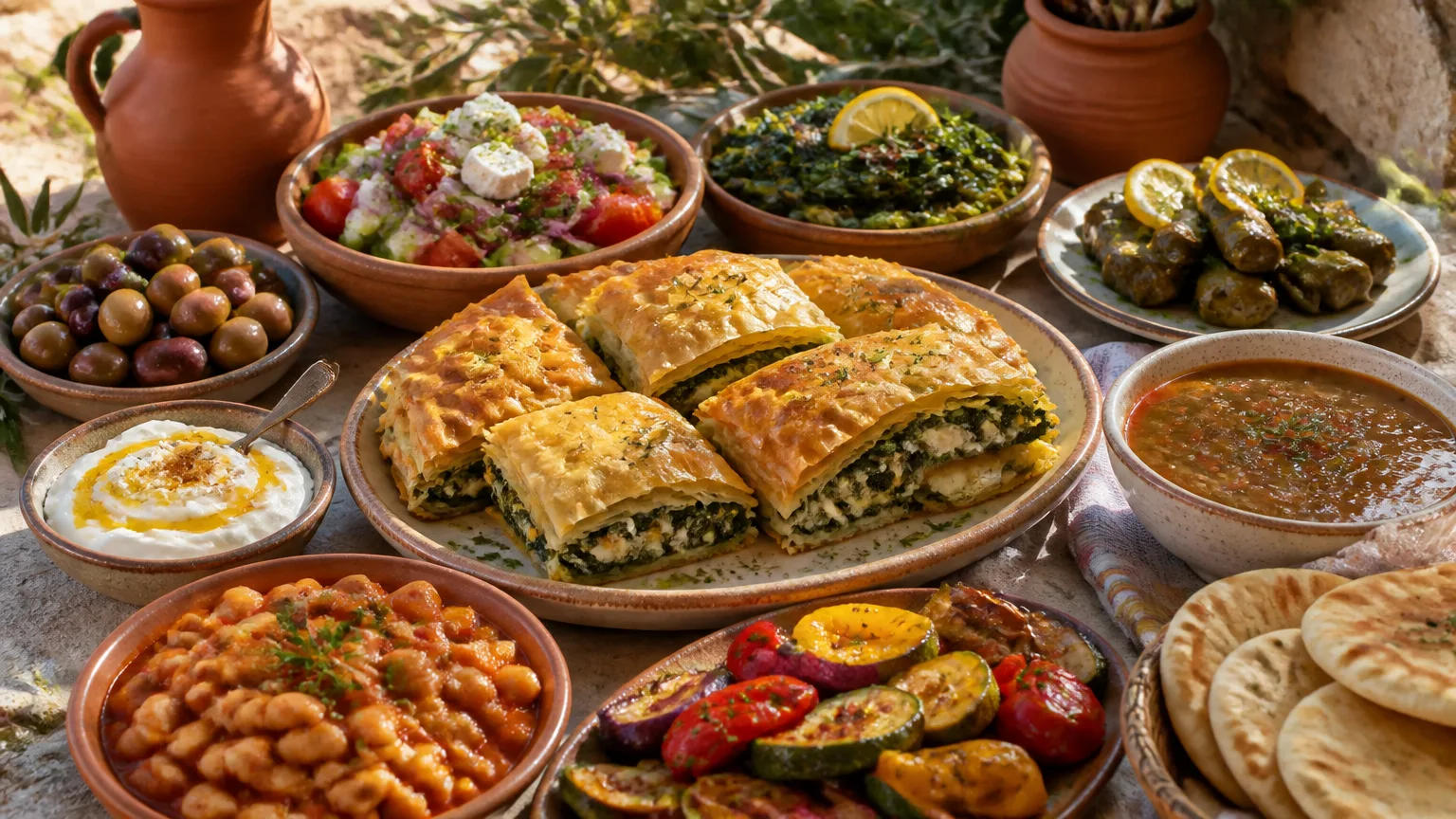
The best Greek food often begins with humble ingredients: sun-ripened vegetables, legumes, grains, fresh herbs, and olive oil. Many classic dishes are naturally vegetarian, making them inviting choices for spiritual seekers and Hare Krishna devotees. However, recipes may require adjustments for those who avoid onion and garlic.
This collection features 12 dishes to explore, from hearty bean-based mains and comforting soups to shareable sides and naturally sweet finishes. With mindful preparation, gratitude, and the practice of offering food, these recipes can complement a Hare Krishna meal plan without suggesting that traditional Greek cuisine is inherently part of the tradition. Prepare each dish attentively, choose suitable ingredients, and enjoy the communal spirit that makes Greek meals so memorable.
1. Spanakopita: Flaky Spinach and Herb Pastry
Spanakopita is a savory Greek pastry layered with spinach, fresh herbs, feta, and delicate phyllo dough. Its buttery, crisp layers contrast beautifully with the earthy freshness of spinach and dill, making it a standout among the best Greek food choices for vegetarians.
For devotees seeking a no-onion, no-garlic filling, sauté spinach with dill, parsley, feta, and suitable seasonings instead. Layer the mixture between phyllo sheets, brush lightly with oil or butter, and bake until golden. Prepare and serve the finished dish with careful attention, clean utensils, and a hygienic kitchen.
2. Briam: Greek Roasted Summer Vegetables
Briam is a colorful oven-baked medley of zucchini, eggplant, tomatoes, potatoes, and fresh herbs. Slow roasting concentrates the vegetables’ natural sweetness, while olive oil brings their flavors together in a cohesive, comforting dish. This simple preparation makes briam one of the best Greek food choices for a satisfying vegetarian meal.
For a sattvic kitchen, build flavor with hing, fresh dill, parsley, oregano, or basil instead of onion and garlic. Finish the vegetables with lemon juice before serving. Arrange the sliced produce in a baking dish, season carefully, and roast until tender, caramelized, and lightly crisp at the edges.
3. Gigantes Plaki: Butter Beans in Tomato Sauce
Gigantes plaki features giant butter beans baked in a rich sauce of tomatoes, olive oil, parsley, and herbs. The beans become creamy inside while the sauce thickens around them, creating one of the best Greek food choices for a satisfying vegetarian meal.
Serve it as a generous mezze with crusty bread or as a protein-rich main course. It also suits temple-style or family cooking because the recipe scales easily for a group. Prepare it ahead when possible; the flavors deepen and improve after resting. For a sattvic version, replace onion and garlic with hing, extra herbs, and fresh lemon juice.
4. Gemista: Stuffed Tomatoes and Peppers
Gemista turns tomatoes and peppers into edible vessels for rice, seasonal produce, and aromatic herbs. Rather than a meat-centered entrée, this Greek favorite highlights simple grains, garden vegetables, and patient baking. The vegetables become tender while the filling absorbs their juices.
For a devotional preparation, select each vegetable carefully and work with clean utensils. Avoid tasting casually before offering the dish. Prepare a suitable onion- and garlic-free filling with rice, dill, parsley, oregano, hing, and lemon. Add diced potatoes if desired, then bake until the vegetables soften and the tops lightly brown. Served warm or at room temperature, gemista shows why the best Greek food often depends on fresh ingredients and careful preparation.
5. Fasolada: Greece’s Nourishing Bean Soup
Fasolada is a rustic white bean soup made with tomatoes, carrots, celery, olive oil, and herbs. Economical and warming, it provides enough fiber and substance to anchor a satisfying vegetarian meal. That makes it one of the best Greek food choices for a nourishing family lunch.
For a devotional adaptation, build depth without onion or garlic. Use bay leaf, celery, fresh dill, and a small amount of asafoetida, or hing. Simmer the beans until tender, then finish the soup with olive oil and lemon. Serve it with bread, or pair it with a Hare Krishna dal recipe for a hearty, sattvic-inspired meal.
6. Briam-Style Gemista Potatoes: A Simple, Satisfying Pairing
Briam-style potatoes bring the comfort of Greek roasted vegetables to a simple vegetarian plate. Toss potato wedges with olive oil, lemon juice, oregano, and seasonal vegetables such as zucchini, tomatoes, or peppers.
Roasting creates crisp, golden edges while keeping the centers tender. Lemon and oregano maintain a bright, fresh flavor, balancing the potatoes’ richness without relying on onion or garlic. Asafoetida, or hing, can add depth in a sattvic kitchen.
Serve the potatoes as a substantial side with beans or rice, or add Greek-style yogurt for creaminess. With these pairings, this dish becomes a complete vegetarian meal rather than an afterthought—and a satisfying example of the best Greek food.
7. Dolmades: Rice-Stuffed Vine Leaves
Dolmades are bite-sized vine leaves wrapped around fragrant, herbed rice. Served warm or at room temperature, they offer a satisfying balance of tangy leaves, soft texture, and fresh herbs.
To prepare them, place a small spoonful of filling near each leaf’s stem end. Fold in the sides, then roll the leaf tightly into a neat parcel. Homemade dolmades let cooks control every ingredient, including a clean, onion-free filling with rice, dill, parsley, lemon, and hing. They make an appealing offering when prepared with care and served hygienically.
As a classic example of the best Greek food, dolmades work well as a starter, side dish, or light vegetarian meal. Pair them with yogurt, salad, or warm bread.
8. Horiatiki Salad: The Classic Greek Salad
Horiatiki, or Greek village salad, shows how the best Greek food depends on ingredient quality. Combine ripe tomatoes, crisp cucumber, green or red peppers, briny olives, feta, and fresh oregano or parsley. Good olive oil and seasonal produce provide most of the flavor.
Serve the vegetables in large, rustic pieces rather than finely chopping them. For a Hare Krishna or sattvic-inspired version, omit ingredients your practice does not use and season with herbs, lemon, or suitable hing. You may replace feta with a permitted fresh cheese or serve the salad without cheese. Prepare it shortly before serving to preserve its freshness.
9. Fava: Velvety Yellow Split Pea Purée
Greek fava is a smooth, comforting legume purée—not a dish made primarily from fava beans. Yellow split peas create its familiar creamy base, which becomes rich and silky after gentle simmering.
This dish rewards contemplative cooking. Simmer the peas patiently, blend them until smooth, and finish with olive oil, lemon, capers, or fresh herbs. Serve fava with warm bread, roasted vegetables, or alongside an ISKCON chole recipe for a satisfying vegetarian spread.
For a sattvic-inspired preparation, omit ingredients your practice does not use and choose suitable herbs instead. Its simplicity and careful preparation capture what makes the best Greek food so appealing.
10. Kolokithokeftedes: Crispy Zucchini Fritters
Kolokithokeftedes are flavorful Greek zucchini fritters served as a light mezze. Grated zucchini combines with fresh dill, parsley, feta, and a light coating for crisp edges and a tender center.
Drain the grated zucchini thoroughly before mixing the batter. Removing excess moisture prevents sogginess and helps the fritters hold together during cooking. Shape small patties, then bake them for a lighter option or shallow-fry them until golden.
Serve these fritters warm with a cooling yogurt dip made without onion or garlic. Stir yogurt with fresh dill, mint, lemon juice, or chopped herbs for a bright finish. Their fresh ingredients and careful preparation make them another appealing example of the best Greek food.
11. Imam Bayildi: Slow-Cooked Stuffed Eggplant
Imam bayildi turns eggplant into a luxurious vegetarian centerpiece. Slow cooking softens the flesh until it becomes silky and tender, while tomatoes, herbs, and olive oil create a deeply savory filling.
For a Hare Krishna kitchen, replace onion and garlic with hing, parsley, mint, and toasted cumin or coriander. These ingredients preserve the dish’s layered complexity while keeping the preparation suitable for your dietary practice. Score eggplant halves, fill them with the seasoned tomato mixture, and bake until richly tender.
Serve imam bayildi with rice, warm bread, or spiritually infused sweet potato dinner recipes for a generous vegetarian meal. Like other examples of the best Greek food, it rewards patient cooking and thoughtful presentation.
12. Loukoumades: Greek Honey Doughnuts
Loukoumades are airy fried dough balls traditionally finished with honey, cinnamon, chopped nuts, or syrup. As a celebratory vegetarian sweet, they bring a festive finish to a Greek-inspired meal and reflect the sharing spirit found in the best Greek food.
A devotee may select an offering-approved sweetener and preparation according to personal practice. Prepare them with clean utensils, suitable ingredients, and attentive cooking. Serve a modest portion, since their value lies in festive sharing rather than everyday heaviness. Arrange the doughnuts on a shared platter, add a light honey drizzle, and enjoy them fresh with family or guests.
Bringing Greek Vegetarian Food Into a Devotional Kitchen
These 12 dishes offer a practical way to bring the best Greek food into a seasonal, vegetarian kitchen. Build a balanced plate with one legume or grain dish, one vegetable preparation, a fresh salad, and a modest sweet. For example, pair lentil soup with roasted vegetables, horiatiki salad, and a small serving of loukoumades.
Adapt each recipe respectfully to suit your ingredients, dietary practices, and devotional tradition. Choose produce at its seasonal peak, cook with patience, and prepare every dish with gratitude. Before sharing, offer the food according to your tradition, then serve it with clean utensils and a welcoming spirit.
Greek-inspired cooking does not require elaborate methods. Fresh vegetables, beans, grains, herbs, lemon, and olive oil create satisfying meals through simple, intentional preparation. Its generosity, simplicity, and emphasis on fresh produce make Greek food naturally compatible with mindful vegetarian hospitality.