
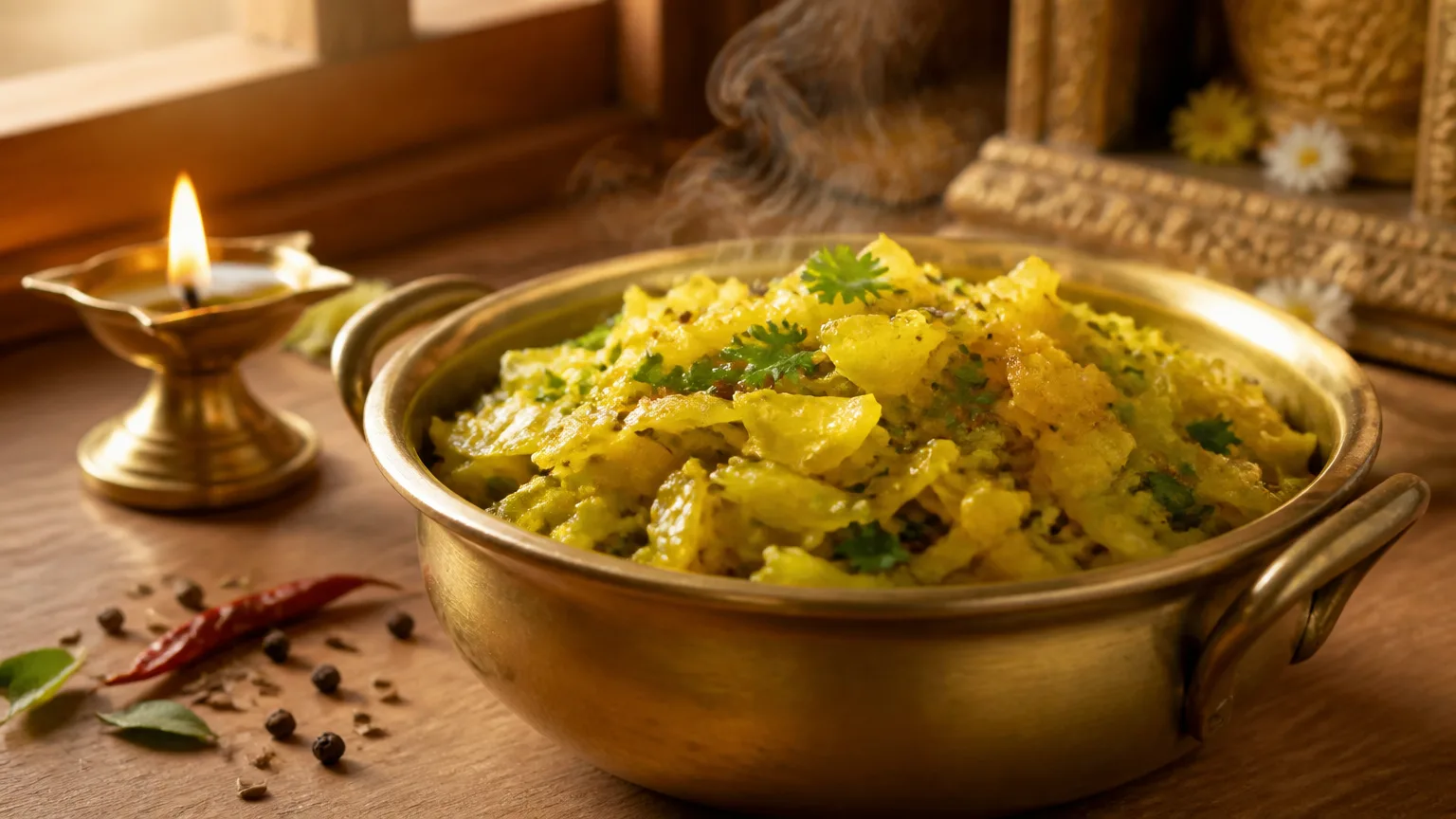
This cabbage curry ISKCON recipe offers a simple, sattvic way to prepare prasadam at home. It uses affordable cabbage, warming spices, and a gentle texture without onion, garlic, meat, eggs, or other ingredients traditionally avoided in ISKCON cooking.
Prasadam is more than a dietary category. It is food prepared with care, offered to Krishna before serving, and shared with gratitude. This nourishing curry suits devotees, spiritual seekers, and anyone exploring Hare Krishna vegetarian recipes. Serve it with rice, chapati, or other vegetarian dishes for a comforting meal that brings intention and devotion to everyday cooking.
Ingredients for a Sattvic Cabbage Curry
A simple ingredient list helps preserve the clean, balanced character of this cabbage curry ISKCON recipe. Measure the following ingredients before cooking:
- Green cabbage: Finely shred 1 medium head. It remains the central ingredient and provides texture, sweetness, and nourishment.
- Fresh ginger: Use 1 teaspoon, finely grated, for warmth and brightness.
- Green chili: Add ½–1 chili, according to your tolerance.
- Cumin seeds: Use 1 teaspoon to create an earthy foundation.
- Turmeric and coriander: Add ½ teaspoon turmeric and 1 teaspoon ground coriander for color and gentle spice.
- Hing: Use a small pinch. Check the label carefully because many commercial blends contain onion or garlic, which do not suit strict Vaishnava cooking.
- Salt: Add according to taste.
- Oil or ghee: Choose an option suitable for your family’s cooking tradition.
Tomatoes are optional and add mild acidity. You may also include peas, grated coconut, or fresh cilantro, but keep the cabbage prominent. These additions should support the curry rather than change its simple character.
For more ideas using wholesome vegetarian ingredients, explore these foods that start with O. Select fresh, sattvic ingredients and avoid additives that conflict with your devotional practice.
How to Cook the Cabbage Curry Step by Step
Heat oil or ghee in a wide, heavy pan over medium heat. Add cumin seeds and let them crackle. Stir in hing, grated ginger, chopped green chili, turmeric, coriander, and any other powdered spices in the recipe. Cook for a few seconds, keeping the spices from burning.
Add the shredded cabbage gradually, tossing after each addition. This helps every strand coat evenly with the masala. Maintain moderate heat so the cabbage softens while retaining a slight bite instead of becoming mushy.
Add salt and a small splash of water—just enough to create gentle steam. Cover the pan and cook, stirring occasionally, until the cabbage looks glossy and feels tender when pressed. A large batch may need a few extra minutes, while a shallow pan cooks more quickly.
Near the end, remove the lid and raise the heat slightly. Stir until excess moisture evaporates and the masala clings to the cabbage. The finished curry should be moist but not watery, with distinct cabbage pieces rather than a soft paste.
Taste before serving and adjust the salt or spices as needed. If the cabbage tastes raw, cover it briefly again; if it seems wet, continue cooking uncovered. These practical cues matter more than fixed cooking times, especially when preparing the cabbage curry ISKCON recipe alongside other dishes for prasadam. As with any spiritual feast, offer the completed preparation to Krishna with gratitude.
Serving Cabbage Curry as Prasadam
Prepare the cabbage curry cleanly and mindfully, keeping the cooking space and ingredients as pure as practical. Before eating, offer the finished dish to Krishna according to your established household or temple practice. ISKCON communities and families may follow different offering customs, so use the guidance familiar to your tradition.
Serve the cabbage curry warm as part of a simple, balanced vegetarian meal. Steamed basmati rice provides a gentle base, while chapati adds a satisfying whole-grain option. A small serving of dal contributes protein and complements the curry’s soft texture.
For freshness, include plain yogurt or kachumber prepared without onion. You can also add a mild vegetable preparation, such as lightly cooked carrots, green beans, or potatoes. Keep the sides lightly seasoned so the cabbage remains the meal’s central flavor.
This economical cabbage curry ISKCON recipe works well for family meals, small gatherings, or temple-inspired cooking at home. Arrange the food neatly and serve each preparation in suitable portions. Share the prasadam respectfully and gratefully, remembering that the meal is received as Krishna’s mercy rather than treated as ordinary food.
If serving children or guests unfamiliar with devotional cooking, explain the meal’s purpose warmly and without pressure. A clean presentation, balanced accompaniments, and a thankful atmosphere help make simple cabbage curry meaningful for everyone.
Variations, Storage, and Common Cooking Tips
Keep the cabbage central when adapting this cabbage curry ISKCON recipe. Add peas for gentle sweetness or a little grated coconut for richness. After cooking, stir in lemon juice and chopped cilantro for freshness.
For a milder curry, reduce the chili while keeping the other spices balanced. For a more robust flavor, increase the spices slightly, but avoid adding excessive water. Cook uncovered if the curry appears wet.
Avoid overcooking the cabbage, which can make it soft and watery. Add powdered spices over moderate heat, and stir promptly to prevent burning. Use hing only if it contains no onion or garlic.
Refrigerate leftovers promptly in a covered container. Reheat them gently with a splash of water if needed. The cabbage may soften slightly, but the curry often develops deeper flavor the next day.
A Simple Cabbage Curry with Devotional Meaning
This cabbage curry ISKCON recipe is an inexpensive, flexible, and approachable introduction to prasadam cooking. Its nourishing simplicity makes it easy to prepare with everyday ingredients, whether served with rice, chapati, or other vegetarian dishes.
Focus on cleanliness, gratitude, and a sincere offering rather than perfection or elaborate ingredients. When an ordinary vegetable is prepared and shared with devotion, it becomes part of a meaningful spiritual meal.