
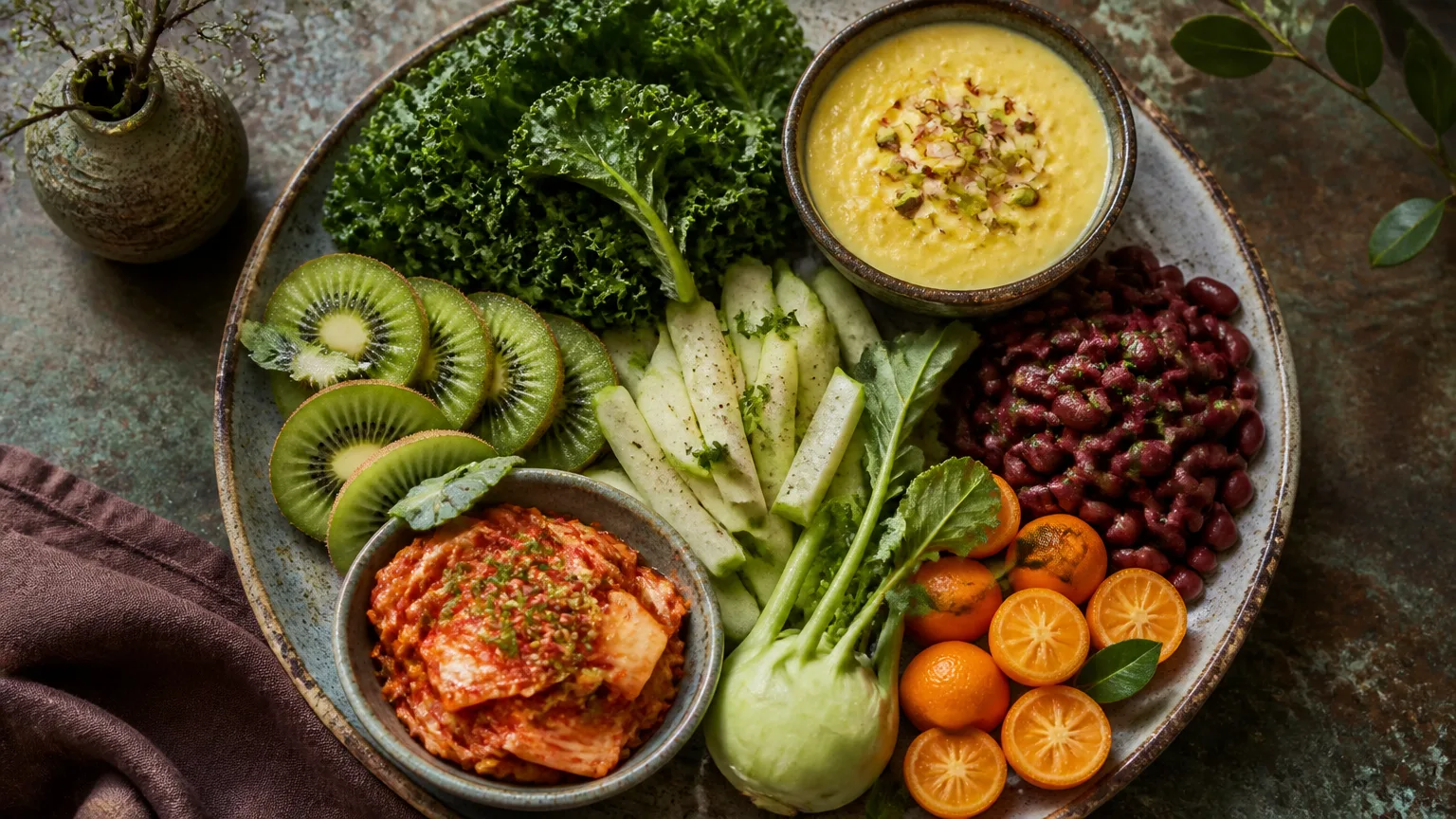
Finding appealing food that starts with an K can challenge vegetarian cooks, but the options are more varied than they seem. This collection of 25 tasty ideas includes fruits, vegetables, grains, complete dishes, spices, and globally inspired ingredients. Some entries stand alone, while others can inspire a nourishing vegetarian meal.
Like our guide to food that begins with B, this K-focused list makes alphabet cooking practical and creative. Devotional cooking generally emphasizes fresh vegetarian foods, careful preparation, and sincere offerings. Hare Krishna readers should follow their tradition’s guidance while preparing each dish mindfully, with gratitude and devotion.
1. Kale
Kale is a nutrient-dense green for salads, sautés, soups, and smoothies. Massage raw leaves with lemon juice and oil, then pair them with roasted vegetables, grains, or creamy vegetarian dressing.
2. Kabocha Squash
Kabocha’s naturally sweet, dense flesh makes it an excellent centerpiece for seasonal vegetarian cooking. Roast or steam it, or simmer it gently in curry for a colorful, satisfying festive offering.
3. Kaffir Lime
Kaffir lime leaves and zest add powerful, distinctive fragrance to Southeast Asian-inspired vegetarian soups, curries, and rice dishes. Use them carefully, then remove the leaves before serving after infusion.
4. Kamut
Kamut is an ancient wheat variety with a pleasantly chewy texture. Cook it with vegetables and herbs, then add a light dressing for wholesome vegetarian bowls or salads.
Readers sensitive to wheat should choose another grain.
5. Karahi Vegetables
Karahi vegetables bring bold color and aroma to any food that starts with an K list. Sauté bell peppers, tomatoes, cauliflower, and paneer with toasted spices and fresh herbs for flavorful depth without excessive heat.
6. Kasha
Kasha, or toasted buckwheat groats, is a hearty, naturally vegetarian grain alternative. Its earthy flavor works well in pilafs, stuffed vegetables, and breakfast bowls.
Combine cooked kasha with roasted produce and warming spices for a satisfying addition to this food that starts with an K list.
7. Katsu-Style Eggplant
Bread eggplant slices, then bake or pan-cook them until crisp and golden. Serve this meat-free Japanese comfort food with rice and a vegetarian dipping sauce.
8. Kedgeree
Make kedgeree without fish using rice, lentils, vegetables, and fragrant spices. Garnish this comforting vegetarian dish with cilantro, lemon juice, or yogurt.
9. Kefir
Kefir is a tangy cultured ingredient for smoothies, dressings, and cooling vegetarian sauces. Dairy kefir differs from water kefir, and preparations vary by dietary practice. For savory meals, choose plain kefir with herbs instead of sweetened varieties.
10. Kelp
Kelp adds gentle oceanic umami to broths, noodles, and vegetable-based soups. Use small amounts so it complements the dish rather than dominates it.
Rinse or soak dried kelp according to package directions before adding it to your recipe. Remove it before serving for a balanced, savory result.
11. Kheer
Kheer is a beloved Indian rice pudding made by slowly simmering rice with milk and cardamom. Add optional nuts or raisins for a celebratory vegetarian dessert and mindful offering.
12. Kidney Beans
Kidney beans provide filling plant protein for chili, rice dishes, and fresh salads. Season them with tomatoes, cumin, ginger, or fresh herbs for satisfying flavor.
Boil dried kidney beans thoroughly before eating to remove harmful toxins. Canned beans offer a convenient, ready-to-use option for this food that starts with an K list.
13. Kimchi
Kimchi is a spicy, fermented Korean side dish made with vegetables such as napa cabbage and radishes. Many commercial varieties contain fish sauce or shrimp paste, so seek labels marked vegetarian or vegan.
Serve vegetarian kimchi with rice, noodles, or savory pancakes for a tangy, flavorful addition to this food that starts with an K list.
14. Kiwi
Kiwi adds tart flavor and a vibrant green interior to this food that starts with an K list. Serve it at breakfast, in fruit salads, or with coconut, mint, and naturally sweet fruits.
It also brightens chutneys, parfaits, and desserts with refreshing color and acidity.
15. Kohlrabi
Kohlrabi has a crisp texture and mild flavor. Slice it into salads, roast it with spices, or add it to soups.
Use its tender leaves like kale for sautés, soups, or fresh garnishes.
16. Kombu
Kombu is a type of kelp that builds savory depth in vegetarian stock, making it a practical alternative to meat-based broth.
Simmer it briefly with vegetables, then remove it before serving. Use kombu judiciously, since its strong umami flavor can overwhelm delicate dishes.
17. Konjac
Konjac is a plant-based ingredient used in shirataki noodles and meat-free foods. Rinse the noodles, dry-pan cook them, then add vegetables and a flavorful sauce.
18. Korma
Vegetable korma is a mild, creamy curry suited to a comforting vegetarian meal. Simmer potatoes, peas, carrots, and cauliflower in a gently spiced sauce until tender.
Balance its richness with cardamom, ginger, and fresh cilantro. Serve this satisfying food that starts with an K with steamed rice.
19. Kosambari
Kosambari is a fresh South Indian salad made with soaked split lentils, cucumber, carrots, coconut, and tempering spices. Soaking creates a pleasant bite without lengthy cooking.
Serve this refreshing salad alongside warm rice dishes or creamy curries for a crisp, cooling contrast.
20. Koshari
Koshari is an Egyptian vegetarian dish combining rice, lentils, pasta, chickpeas, and tomato sauce. Prepare each component simply to balance its layered texture and substantial plant-based protein without making the meal heavy.
21. Kumquat
Kumquats can be eaten whole, including their sweet peel and tart interior. Slice them thinly and remove the seeds when needed.
Use them in relishes, preserves, salads, or desserts. Their bright flavor adds freshness to this food that starts with an K list.
22. Kung Pao Tofu
Kung pao tofu offers a vegetarian take on the classic spicy-sweet stir-fry. Combine crisp tofu, peanuts, bell peppers, and other vegetables with soy sauce, vinegar, garlic, and ginger.
For a milder version, reduce the chilies and add extra vegetables. Serve this flavorful food that starts with an K over steamed rice.
23. Kutia
Kutia is a traditional grain-based dish made with wheat berries, poppy seeds, nuts, and honey or other sweeteners. Recipes and religious associations vary by culture, but kutia often carries family memory, community, and spiritual meaning.
24. Kulcha
Kulcha is a soft, leavened Indian flatbread served with curries or vegetable fillings. Fill it with potato, onion, or herbs, as recipes vary in richness.
Serve kulcha fresh alongside a simple vegetable preparation for a satisfying addition to this food that starts with an K list.
25. Kulfi
Kulfi is a dense Indian frozen dessert flavored with cardamom, saffron, pistachios, or fruit. Its slow-set creaminess differs from churned ice cream; serve modest portions thoughtfully at celebrations. Explore other foods that start with M for more ideas.
Cooking the K Ideas in a Vegetarian, Devotional Spirit
Build complete meals by pairing kabocha or kale with kamut, kidney beans, or vegetable korma. Serve kiwi afterward, or offer a modest portion of kulfi for dessert.
Prepare each dish cleanly with seasonal ingredients, balanced portions, and careful attention. A sincere offering matters more than elaborate presentation; follow your devotional tradition’s guidance.
For more vegetarian vocabulary, explore foods that start with O or foods that start with G.
A Tasty K Food List for Everyday Inspiration
This food that starts with an K list spans fresh produce, grains, cultured ingredients, complete vegetarian dishes, breads, and desserts. It also shows how vegetarian cooking can be globally inspired while remaining spiritually meaningful through careful preparation and sincere offerings.
Begin with an accessible choice, such as kale, kiwi, kheer, or kidney beans. Then try a less familiar ingredient when you feel ready, or explore another vegetarian food list. Choose one recipe, prepare it mindfully, and remember that gratitude and intention can make an ordinary meal feel special.