
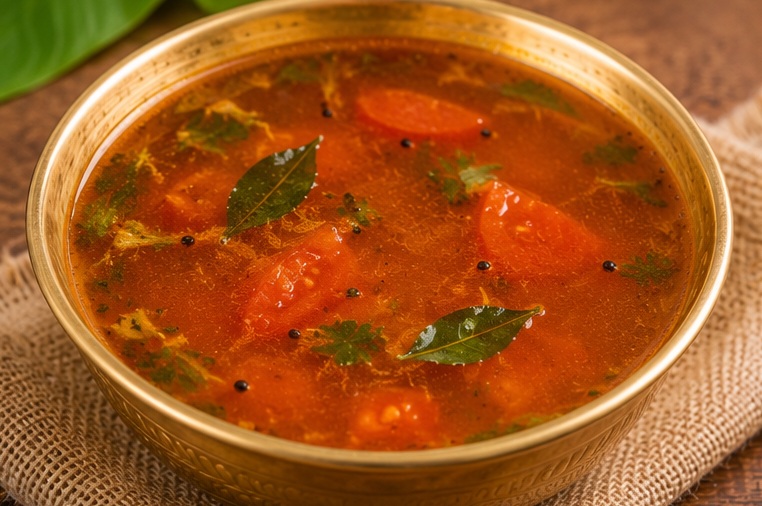
A thin, tangy tomato and tamarind rasam scented with freshly ground cumin, black pepper, coriander and curry leaves, without onion or garlic.
An independently measured regional adaptation for home prasadam cooking. All listed ingredients omit onion, garlic, eggs and mushrooms. Follow your own temple's guidance for fasting and worship.
Rasam versus sambar
This rasam is a light, tangy broth rather than a thick cooked-dal stew. Tomato, tamarind and freshly crushed pepper-cumin give it its character. This particular version contains no dal; other regional rasams may use dal water.
Balance tamarind and tomato
Tamarind strength varies, so start with a small measured amount of pulp and add water if needed. Strain fibrous solids before cooking. Ripe tomatoes soften into the broth without a flour thickener.
Keep the final broth aromatic
Crush whole spices shortly before cooking. Do not reduce the broth into a concentrated sauce. Add cilantro after heating and use freshly dried curry leaves in the tempering to reduce splatter.
Bhakti Thought
Regional traditions provide many ways to prepare and share a meal with devotion. Set aside an untouched offering for Krishna before tasting and distribute prasadam with gratitude.
PrintSouth Indian Tomato Tamarind Rasam
A thin, tangy tomato and tamarind rasam scented with freshly ground cumin, black pepper, coriander and curry leaves, without onion or garlic.
- Prep Time: 10 minutes
- Cook Time: 20 minutes
- Total Time: 30 minutes
- Yield: 4 servings 1x
- Category: Soup
- Method: Simmering
- Cuisine: Indian regional-inspired
- Diet: Vegan
Ingredients
- 300 g ripe tomatoes, chopped
- 10 g plain seedless tamarind pulp, soaked in 100 ml warm water and strained
- 650 ml drinking water
- 1 teaspoon cumin seeds
- 1 teaspoon coriander seeds
- 1/2 teaspoon black peppercorns
- 1/4 teaspoon ground turmeric
- 1 teaspoon neutral oil (5 g)
- 1/2 teaspoon black mustard seeds
- 8 fresh curry leaves, washed and dried
- 1/4 teaspoon fine salt
- 2 tablespoons chopped cilantro
US & metric measurements — original 1× batch
Use either measurement, not both. Equivalents are approximate; original specified weights are preserved. Counts, optional quantities and amounts to taste remain as written. This reference is for the original batch; multiply both quantities if scaling the recipe.
300 g (approx. 10.58 oz by weight) ripe tomatoes, chopped
10 g (approx. 0.35 oz by weight) plain seedless tamarind pulp, soaked in 100 ml (approx. 6.67 tbsp) warm water and strained
650 ml (approx. 2.71 US cups) drinking water
1 teaspoon (approx. 5 mL) cumin seeds
1 teaspoon (approx. 5 mL) coriander seeds
1/2 teaspoon (approx. 2.5 mL) black peppercorns
1/4 teaspoon (approx. 1.25 mL) ground turmeric
1 teaspoon neutral oil (5 g)
1/2 teaspoon (approx. 2.5 mL) black mustard seeds
8 fresh curry leaves, washed and dried
1/4 teaspoon (approx. 1.25 mL) fine salt
2 tablespoons (approx. 30 mL) chopped cilantro
Approximate kitchen conversions: NIST and ingredient-specific baking weights.
Instructions
- Crush cumin, coriander and black pepper in a clean mortar to a coarse powder.
- Combine chopped tomato, tamarind liquid, water, turmeric, ground spices and salt in a saucepan. Simmer 10–15 minutes until tomatoes soften.
- Gently mash some tomato pieces. Adjust with water for a thin broth; bring briefly to a simmer and remove from heat.
- Warm oil in a small pan, let mustard seeds pop, then carefully add dry curry leaves. Pour into the rasam and stir in cilantro. Reserve an offering before tasting.
Notes
- Contains mustard. The recipe does not contain lentils; this does not automatically make it appropriate for Ekadasi, because traditional fasting rules may restrict tamarind, mustard and other ingredients.
- Nutrition estimates per stated serving use representative ingredients and include measured optional ingredients; actual values depend on brands and yield. Not kitchen-tested.
- Ingredient quantities and cooking times are editorial estimates; confirm through kitchen testing.
- Nutrition values are estimates per serving unless otherwise specified.
Nutrition
- Serving Size: 1/4 of prepared batch
- Calories: 40
- Sugar: 3 g
- Sodium: 155 mg
- Fat: 2 g
- Saturated Fat: 0.3 g
- Unsaturated Fat: 1 g
- Trans Fat: 0 g
- Carbohydrates: 7 g
- Fiber: 2 g
- Protein: 1 g
- Cholesterol: 0 mg
Serving suggestions
Offer a small bowl with rice or serve as a warm soup alongside avial or a vegetable sabji.
Storage and safe serving
Refrigerate promptly and use within three days. Reheat until steaming hot.
Nutrition and allergens
Contains mustard. The recipe does not contain lentils; this does not automatically make it appropriate for Ekadasi, because traditional fasting rules may restrict tamarind, mustard and other ingredients. Nutrient values are approximate, not laboratory analyses.
Frequently Asked Questions
Does rasam require dal?
No. This tomato-tamarind variation uses water.
Can I use tamarind concentrate?
Yes, use less according to its strength and dilute first.
Why is my rasam very sour?
Use less tamarind or add more water and tomato.
Is it the same as sambar?
No; rasam is a thinner broth.
Explore More Recipes
Kerala Avial (Coconut Yogurt Mixed Vegetables)