
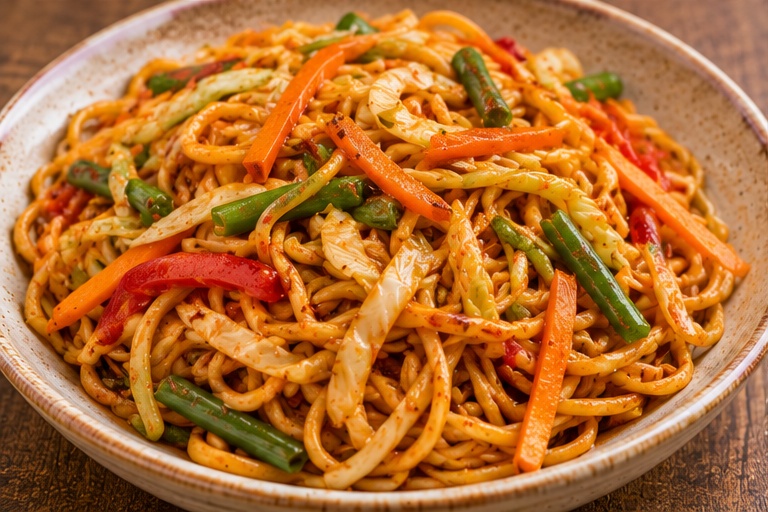
Eggless wheat noodles tossed with cabbage, carrots, green beans and peppers in a homemade ginger, dried chili and Sichuan pepper sauce, without onion, garlic or mushrooms.
This is an original home-kitchen adaptation developed for Hare Krishna Recipes. It is intended for vegetarian prasadam preparation and avoids common allium-based seasonings and bottled sauces.
A Hare Krishna adaptation of Szechuan noodles
Szechuan, also spelled Sichuan, refers here to the aromatic chili-and-peppercorn character of the Indo-Chinese noodle dish. Conventional restaurant versions often use garlic, onion, scallions, vinegar and bottled sauces. This version deliberately leaves those out and uses a homemade fresh-ginger, tomato, tamarind and chili sauce instead. It is inspired by those flavors, not represented as an authentic traditional Sichuan recipe.
Choose noodles with suitable ingredients
Use plain dried eggless wheat noodles and check their full ingredient list. Many instant noodles come with seasoning sachets containing meat extracts, onion, garlic or other unsuitable ingredients; discard those packets rather than using them. Plain rice noodles are a possible alternative, following their own cooking directions. Drain thoroughly and cook close to serving.
Build the sauce first and stir-fry in stages
Soaked dried chilies give a smooth sauce when blended with ginger and tomato paste. Finely ground Sichuan pepper adds the characteristic citrus-like tingling sensation. Keep its amount modest and reduce chili if necessary. Make the sauce before cooking the vegetables, because a wok or skillet cooks them quickly. Add green beans and carrots first, then quicker-cooking cabbage and peppers.
Bhakti Thought
Devotional cooking can bring familiar flavors from many culinary traditions into a shared offering. Prepare with care, reserve a clean portion for Krishna before tasting, and distribute the prasadam with gratitude.
PrintHare Krishna Szechuan Noodles
Eggless wheat noodles tossed with cabbage, carrots, green beans and peppers in a homemade ginger, dried chili and Sichuan pepper sauce, without onion, garlic or mushrooms.
- Prep Time: 20 minutes
- Cook Time: 20 minutes
- Total Time: 40 minutes
- Yield: 4 servings 1x
- Category: Main course
- Method: Stir-frying
- Cuisine: Indo-Chinese, Sichuan-inspired
- Diet: Vegan
Ingredients
- 300 g dry plain eggless wheat noodles
- 150 g finely shredded cabbage
- 100 g carrot, cut into thin matchsticks
- 150 g bell pepper, thinly sliced
- 100 g trimmed green beans, thinly sliced
- 2 tablespoons neutral cooking oil (28 g), divided
- 1 teaspoon toasted sesame oil (4.5 g)
- Homemade Szechuan sauce:
- 2–4 dried mild red chilies, stems removed (adjust heat)
- 1/2 teaspoon Sichuan peppercorns, hard black seeds removed if present
- 1 tablespoon finely grated fresh ginger (12 g)
- 2 tablespoons unsalted plain tomato paste (32 g)
- 2 teaspoons unsweetened tamarind paste (10 g)
- 1 teaspoon granulated sugar (4 g)
- 1/2 teaspoon fine salt (3 g)
- 1/2 cup drinking water (120 ml), plus soaking water
- 1 tablespoon fresh lime juice (15 ml)
- 2 teaspoons toasted sesame seeds (6 g), optional
US & metric measurements — original 1× batch
Use either measurement, not both. Equivalents are approximate; original specified weights are preserved. Counts, optional quantities and amounts to taste remain as written. This reference is for the original batch; multiply both quantities if scaling the recipe.
300 g (approx. 10.58 oz by weight) dry plain eggless wheat noodles
150 g (approx. 5.29 oz by weight) finely shredded cabbage
100 g (approx. 3.53 oz by weight) carrot, cut into thin matchsticks
150 g (approx. 5.29 oz by weight) bell pepper, thinly sliced
100 g (approx. 3.53 oz by weight) trimmed green beans, thinly sliced
2 tablespoons neutral cooking oil (28 g), divided
1 teaspoon toasted sesame oil (4.5 g)
Homemade Szechuan sauce:
2–4 dried mild red chilies, stems removed (adjust heat)
1/2 teaspoon (approx. 2.5 mL) Sichuan peppercorns, hard black seeds removed if present
1 tablespoon finely grated fresh ginger (12 g)
2 tablespoons unsalted plain tomato paste (32 g)
2 teaspoons unsweetened tamarind paste (10 g)
1 teaspoon granulated sugar (4 g)
1/2 teaspoon fine salt (3 g)
1/2 cup drinking water (120 ml), plus soaking water
1 tablespoon fresh lime juice (15 ml)
2 teaspoons toasted sesame seeds (6 g), optional
Approximate kitchen conversions: NIST and ingredient-specific baking weights.
Instructions
- Cover dried chilies with hot water for 10 minutes, drain, and blend with tomato paste, ginger, tamarind, sugar, salt and measured water. For a mild version use one chili or omit it. Dry-toast Sichuan peppercorns over low heat, cool and finely grind.
- Cook noodles according to their packet until just tender, drain thoroughly and briefly rinse with cold water only if needed to prevent sticking. Do not leave cooked noodles at room temperature for extended periods.
- Heat half the neutral oil in a wide skillet. Add sauce mixture and simmer over medium-low heat for 4–5 minutes until fragrant and slightly thickened. Stir in ground peppercorns, then transfer to a bowl.
- Heat remaining oil. Stir-fry green beans and carrot for 3–4 minutes, then add bell pepper and cabbage. Continue until beans are cooked and vegetables are tender-crisp, adding a splash of water if needed.
- Add drained noodles and prepared sauce. Toss with tongs over medium-high heat for 2–3 minutes until hot throughout. Add a little hot water if the noodles become dry.
- Finish off the heat with lime juice, toasted sesame oil and optional sesame seeds. Divide into four bowls and reserve an offering portion.
Notes
- Makes 4 reference servings. Use suitable plain ingredients without onion, garlic, eggs, mushrooms, alcohol-based extracts, cooking wine or unsuitable additives.
- Allergens: Wheat and sesame.
- Nutrition is estimated from typical ingredient values and listed amounts; minor seasonings omitted. Measurements, cooking times and yield have not been kitchen-tested.
- Original editorial adaptation of the owner-requested dish; not a claim of authenticity or a verified restaurant formula.
- Ingredient quantities and cooking times are editorial estimates; confirm through kitchen testing.
- Nutrition values are estimates per serving unless otherwise specified.
Nutrition
- Serving Size: 1/4 of prepared batch
- Calories: 400
- Sugar: 9.4 g
- Sodium: 335 mg
- Fat: 10.3 g
- Saturated Fat: 1.1 g
- Unsaturated Fat: 9.2 g
- Trans Fat: 0 g (estimated)
- Carbohydrates: 67.8 g
- Fiber: 6.1 g
- Protein: 11.3 g
- Cholesterol: 0 mg
Serving ideas
Serve the noodles in bowls with a separate portion of tofu or vegetable Manchurian. Pair with baked vegetable spring rolls for a complete Indo-Chinese-inspired menu. Reserve an offering first. For a large gathering, cook several manageable batches and avoid a crowded wok, which steams rather than stir-fries the vegetables.
Storage and reheating
Refrigerate cooked noodles and vegetables promptly within two hours at 40°F (4°C) or below; use within three days. For the best texture, make them fresh. Reheat until steaming hot throughout, adding a little water to loosen the sauce. Avoid repeatedly warming and cooling the noodles.
Nutrition and allergens
Contains wheat and sesame. Estimated nutrition is based on the dry noodle weight and all measured oil and sauce, including optional sesame seeds. Use a suitable eggless rice noodle variation only after verifying its ingredients and avoiding cross-contact. No eggs or animal stock are required. This recipe contains grain and is not a standard Ekadasi dish.
Frequently Asked Questions
Is Szechuan the same as Sichuan?
Yes, they are alternative spellings of the regional name; this recipe is an Indo-Chinese-inspired adaptation.
Does this recipe require soy sauce?
No. The homemade sauce uses tomato, tamarind, ginger, chili, Sichuan pepper and fresh lime.
How can I make it less spicy?
Reduce or omit dried chilies and Sichuan peppercorns.
Can I use spaghetti?
Yes, plain eggless spaghetti works as a practical alternative.
Why are the noodles sticky?
Cook just until tender, drain well and toss promptly with the sauce; do not overcook.
Explore More Recipes
Hare Krishna Vegetable Fried Rice
Nepali Vegetable Thukpa (Himalayan Noodle Soup)
Sweet and Tangy Sesame Paneer with Cucumber
Complete your Hare Krishna Chinese-inspired meal: Hare Krishna Kung Pao Tofu, Hare Krishna Vegetable Manchurian, Hare Krishna Vegetable Spring Rolls. Explore the Hybrid Menu for more international vegetarian prasadam recipes.