
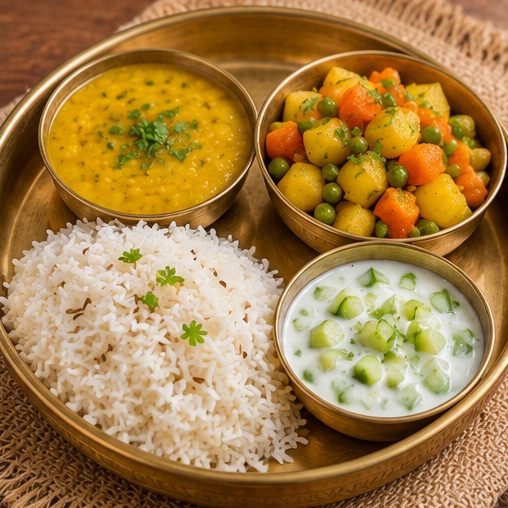
A coordinated vegetarian feast plate of basmati rice, yellow moong dal, potato-carrot-pea sabji and cucumber yogurt, made without onion or garlic.
Prepare this measured recipe for a suitable devotional offering and permitted festival meal. Follow your temple's worship and fasting schedule; grain or legume dishes are not appropriate for standard grain-free Ekadasi. All recipes omit onion, garlic, eggs and mushrooms.
A festival thali is a coordinated meal
A thali brings separate dishes together on a serving plate. This home-sized recipe includes four measured preparations rather than duplicating a standalone pulao or paneer curry. Add a separately prepared sweet if desired and appropriate for the occasion.
Plan the cooking sequence
Start the dal first because it requires time to soften. Rice can cook while the vegetables simmer. Finish the dal tempering when it is fully tender and mix raita just before serving. This sequence helps the hot components finish together without leaving yogurt at room temperature.
When is this feast appropriate?
This plate contains rice, moong dal and peas. It is not suitable for a standard grain-and-legume-free Ekadasi or an ongoing festival fast. Use it for a permitted feast after the applicable worship and fasting period. Follow the temple's menu and schedule.
Bhakti Thought
A festival is an opportunity to deepen hearing, chanting and devotional service. Prepare the offering with attention, reserve a clean portion before tasting, and share prasadam with gratitude.
Serving illustration: AI-generated, not a photograph of a kitchen-tested recipe. Follow the measured ingredient list and instructions. Any pictured herbs or additional garnishes are not included in the measured recipe.
PrintHare Krishna Festival Thali (Rice, Dal, Sabji and Raita)
A coordinated vegetarian feast plate of basmati rice, yellow moong dal, potato-carrot-pea sabji and cucumber yogurt, made without onion or garlic.
- Prep Time: 25 minutes
- Resting: 5 minutes
- Cook Time: 40 minutes
- Total Time: 70 minutes
- Yield: 4 servings 1x
- Category: Main course
- Method: Simmering and mixing
- Cuisine: Indian-inspired
- Diet: Vegetarian
Ingredients
- Rice: 180 g dry basmati rice
- 360 ml drinking water, or package-directed amount
- Dal: 120 g dry split yellow moong dal
- 600 ml drinking water, plus more as needed
- 1 teaspoon pure ghee (5 g)
- 1/2 teaspoon cumin seeds
- 1/4 teaspoon ground turmeric
- 1/4 teaspoon fine salt
- Sabji: 250 g potatoes, diced
- 150 g carrots, diced
- 100 g plain green peas
- 1 tablespoon pure ghee (14 g)
- 1/2 teaspoon cumin seeds
- 1/4 teaspoon ground turmeric
- 1/2 teaspoon ground coriander
- 1/4 teaspoon fine salt
- 120 ml drinking water, as needed
- Raita: 250 g plain whole-milk yogurt
- 150 g cucumber, diced
- 1/4 teaspoon roasted ground cumin
- 1/8 teaspoon fine salt, optional
US & metric measurements — original 1× batch
Use either measurement, not both. Equivalents are approximate; original specified weights are preserved. Counts, optional quantities and amounts to taste remain as written. This reference is for the original batch; multiply both quantities if scaling the recipe.
Rice: 180 g (approx. 6.35 oz by weight) dry basmati rice
360 ml (approx. 1.5 US cups) drinking water, or package-directed amount
Dal: 120 g (approx. 4.23 oz by weight) dry split yellow moong dal
600 ml (approx. 2.5 US cups) drinking water, plus more as needed
1 teaspoon pure ghee (5 g)
1/2 teaspoon (approx. 2.5 mL) cumin seeds
1/4 teaspoon (approx. 1.25 mL) ground turmeric
1/4 teaspoon (approx. 1.25 mL) fine salt
Sabji: 250 g (approx. 8.82 oz by weight) potatoes, diced
150 g (approx. 5.29 oz by weight) carrots, diced
100 g (approx. 3.53 oz by weight) plain green peas
1 tablespoon pure ghee (14 g)
1/2 teaspoon (approx. 2.5 mL) cumin seeds
1/4 teaspoon (approx. 1.25 mL) ground turmeric
1/2 teaspoon (approx. 2.5 mL) ground coriander
1/4 teaspoon (approx. 1.25 mL) fine salt
120 ml (approx. 0.5 US cup) drinking water, as needed
Raita: 250 g (approx. 8.82 oz by weight) plain whole-milk yogurt
150 g (approx. 5.29 oz by weight) cucumber, diced
1/4 teaspoon (approx. 1.25 mL) roasted ground cumin
1/8 teaspoon (approx. 0.63 mL) fine salt, optional
Approximate kitchen conversions: NIST and ingredient-specific baking weights.
Instructions
- Rinse rice and dal separately. Start dal in a saucepan with measured water and turmeric. Simmer 25–30 minutes or until completely soft, adding water if necessary.
- Cook the rice separately using the absorption method: bring rice and water to a simmer, cover and cook about 15 minutes, then rest covered 5 minutes before fluffing.
- For sabji, warm one tablespoon ghee, add cumin briefly, then potatoes, carrots, turmeric and coriander. Stir in water and salt. Cover and cook 12–15 minutes, then add peas and cook 5–8 minutes more until all vegetables are tender.
- For the dal, warm one teaspoon ghee in a small clean pan, add cumin briefly and stir the tempering into the fully cooked dal. Add measured salt and adjust with hot water.
- Whisk chilled yogurt with cucumber, roasted cumin and optional salt just before service. Keep it chilled separately from the hot dishes.
- Arrange each component separately on four clean plates or thalis. Reserve an untouched offering plate before tasting. Serve the hot components hot and raita chilled.
Notes
- Contains milk and legumes. The nutrient estimate covers one-quarter of the complete four-component meal; optional additional desserts are not included.
- Nutrition estimates are based on measured ingredients and stated portions, including measured optional ingredients; values vary by product and yield. Recipes are not kitchen tested.
- Ingredient quantities and cooking times are editorial estimates; confirm through kitchen testing.
- Nutrition values are estimates per serving unless otherwise specified.
Nutrition
- Serving Size: 1/4 of prepared batch
- Calories: 445
- Sugar: 9 g
- Sodium: 405 mg
- Fat: 10 g
- Saturated Fat: 6 g
- Unsaturated Fat: 3 g
- Trans Fat: 0.2 g
- Carbohydrates: 76 g
- Fiber: 7 g
- Protein: 16 g
- Cholesterol: 21 mg
Serving suggestions
Serve with an optional festival sweet or beverage from the collection. For large community gatherings use appropriate batch recipes and safe holding practices rather than scaling timings blindly.
Storage and safe serving
Cool leftovers promptly in shallow containers, refrigerate within two hours and use within three days. Cool rice rapidly; keep raita separate and use within one day. Reheat hot components until steaming throughout.
Nutrition and allergens
Contains milk and legumes. The nutrient estimate covers one-quarter of the complete four-component meal; optional additional desserts are not included. Nutrient estimates are approximate.
Frequently Asked Questions
Is a festival thali suitable for Ekadasi?
Not this version. It contains rice and legumes. See the dedicated Ekadasi feast plate.
Can I prepare the components separately?
Yes. The rice, dal, sabji and raita may each be served separately.
How can I serve more guests?
Use the site's large-group recipes and suitable equipment; do not simply multiply cooking time.
Can I add paneer or sweets?
Yes, when permitted and appropriate. The estimated nutrition does not include extras.
Explore More Recipes
Festival & Special Occasion Foods
No-Added-Salt Moong Dal with Spinach
Govinda’s-Inspired Kashmiri Pulao with Paneer, Nuts and Grapes