
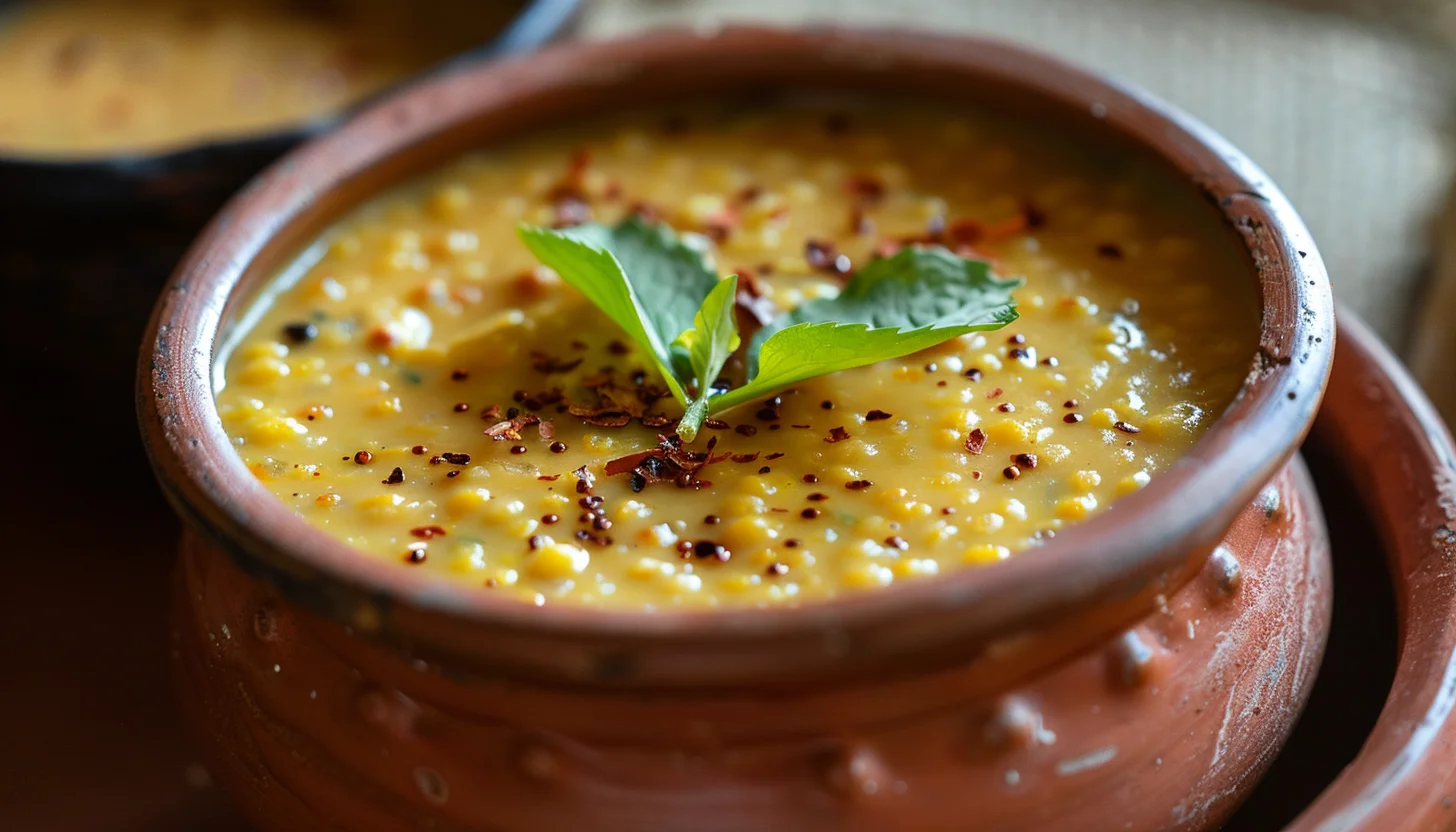
This large-batch khichuri is based on a simple Bengali rice-and-moong preparation, with ginger, anise and bay leaf. Equal dry weights of rice and split moong provide a more substantial one-pot meal than plain rice. It uses neither masoor dal nor packaged seasoning, and the consistency can be adjusted from soft spoonable grains to a thicker porridge.
This recipe is designed as a separate production guide for temple kitchens, Sunday feasts, community meals and prasadam distribution. It serves 100 as part of a planned menu; the recipe card is the baseline and the scaling guidance below is based on that yield.
Portion and yield planning
Approximately 240–300 g as a one-pot meal; check actual cooked yield.
The quantities are editorial planning estimates. Make a 25-serving trial with your actual ingredients and equipment before committing to a larger event. Weigh the finished batch and divide by the number of servings; allow a separately planned reserve for serving losses and additional guests.
Equipment and kitchen workflow
Four 16–20 L (17–21 US qt) stockpots, or cook four successive 25-serving batches; a long stirring paddle, digital scales, calibrated probe, serving ladle and heated holding cabinet.
Divide production into four labeled 25-serving sets for 100 guests. For 250 servings plan ten sets; for 500 plan twenty. Use larger commercial equipment only within its rated capacity, and adjust the number of batches to match the available staff and time. Assign roles for receiving and washing ingredients, weighing, cooking, temperature monitoring and portioning.
Technique for consistent large batches
Rice and dal absorb water differently, especially when prepared in a deep vessel. Begin with a controlled amount of water and reserve the rest for adjustment rather than treating evaporation as a fixed ratio at every scale. Stir the base gently to avoid a compact scorched layer. Once the grains are tender, the khichuri will continue thickening during holding. Thin with hot drinking water only as required, and keep the seasoning allocation matched to each batch.
Bhakti Thought
Plan the meal so preparation is orderly and service is generous without waste. Follow the measured recipe without tasting before the offering; reserve an untouched portion for Krishna and share the prasadam with care.
PrintTemple Moong Dal Khichuri for 100 People

This large-batch khichuri is based on a simple Bengali rice-and-moong preparation, with ginger, anise and bay leaf. A measured 100-serving no-onion, no-garlic vegetarian recipe with batch scaling and service guidance.
- Prep Time: 35 minutes
- Soaking or resting: 20 minutes
- Cook Time: 55 minutes
- Total Time: 110 minutes
- Yield: 100 servings 1x
- Category: Main course
- Method: Stovetop
- Cuisine: Bengali
- Diet: Vegetarian
Ingredients
- 3.5 kg (7.72 lb) Dry basmati rice
- 3.5 kg (7.72 lb) Dry split yellow moong dal
- 24 L (6.34 US gal) Drinking water, starting amount; adjust in batches
- 350 g (12.35 oz) Pure ghee
- 150 g (5.29 oz) Fresh grated ginger
- 20 g (0.71 oz) Anise seeds
- 12 g (0.42 oz) Indian bay leaves
- 85 g (3 oz) Fine salt
US & metric measurements — original 1× batch
Use either measurement, not both. Equivalents are approximate; original specified weights are preserved. Counts, optional quantities and amounts to taste remain as written. This reference is for the original batch; multiply both quantities if scaling the recipe.
3.5 kg (7.72 lb) Dry basmati rice
3.5 kg (7.72 lb) Dry split yellow moong dal
24 L (approx. 100 US cups) (6.34 US gal) Drinking water, starting amount; adjust in batches
350 g (12.35 oz) Pure ghee
150 g (5.29 oz) Fresh grated ginger
20 g (0.71 oz) Anise seeds
12 g (0.42 oz) Indian bay leaves
85 g (3 oz) Fine salt
Approximate kitchen conversions: NIST and ingredient-specific baking weights.
Instructions
- Sort and rinse rice and moong dal separately. Drain. Divide all ingredients into four labeled sets of 25 servings before cooking.
- For each 25-serving batch use a heavy 16–20 L stockpot with a lid. Combine the rice, dal, ginger and three-quarters of the allocated water; bring to a gentle boil and reduce to a simmer.
- Cook partly covered for 30–45 minutes, stirring gently from the bottom and adding reserved hot water as needed until both grains are completely tender. Prevent foaming over; do not fill pots above safe operating capacity.
- Warm the measured ghee in a separate skillet; briefly toast anise and bay leaves. Divide the tempering evenly between the pots, add measured salt and simmer several minutes. Remove bay leaves before portioning.
- Weigh the finished batches and divide total yield by 100 to establish one portion. Reserve a clean offering and then distribute the food while maintaining safe hot-holding temperatures.
Notes
- 100 servings is the recipe-card baseline. Approximately 240–300 g as a one-pot meal; check actual cooked yield.
- All quantities are planning estimates, not kitchen-tested institutional yields. Weigh ingredients and record the actual finished yield from a 25-serving trial.
- Use suitable plain ingredients without onion, garlic, eggs, mushrooms, caffeine or alcohol-based extracts; check prepared dairy and spices.
- Allergens: Milk-derived ghee.
- Metric quantities control; US equivalents are approximate. Scale the ingredient weights, but not cooking times, pot capacity or evaporation blindly.
- Serving illustration reused from the matching home-size recipe; actual presentation and recipe details may vary.
- Ingredient quantities and cooking times are editorial estimates; confirm through kitchen testing.
- Nutrition values are estimates per serving unless otherwise specified.
Nutrition
- Serving Size: 1 of 100 equal portions
- Calories: 282
- Sugar: 2.4 g
- Sodium: 341 mg
- Fat: 4.2 g
- Saturated Fat: 2.4 g
- Unsaturated Fat: 1.7 g
- Trans Fat: 0.1 g
- Carbohydrates: 50.2 g
- Fiber: 6.2 g
- Protein: 10.9 g
- Cholesterol: 9 mg
Scaling for 25, 50, 250 and 500 servings
Use the complete ingredient scaling chart following this recipe. The 100-serving card uses metric weights and volumes with approximate US equivalents. Four 25-serving batches produce 100 servings; do not multiply the cook time by the number of diners. For spices and water, validate the smaller trial and document any adjustments rather than guessing.
| Ingredient | 25 servings | 50 servings | 100 servings | 250 servings | 500 servings |
|---|---|---|---|---|---|
| Dry basmati rice | 875 g (1.93 lb) | 1.75 kg (3.86 lb) | 3.5 kg (7.72 lb) | 8.75 kg (19.29 lb) | 17.5 kg (38.58 lb) |
| Dry split yellow moong dal | 875 g (1.93 lb) | 1.75 kg (3.86 lb) | 3.5 kg (7.72 lb) | 8.75 kg (19.29 lb) | 17.5 kg (38.58 lb) |
| Drinking water, starting amount; adjust in batches | 6 L (1.59 US gal) | 12 L (3.17 US gal) | 24 L (6.34 US gal) | 60 L (15.85 US gal) | 120 L (31.7 US gal) |
| Pure ghee | 87.5 g (3.09 oz) | 175 g (6.17 oz) | 350 g (12.35 oz) | 875 g (1.93 lb) | 1.75 kg (3.86 lb) |
| Fresh grated ginger | 37.5 g (1.32 oz) | 75 g (2.65 oz) | 150 g (5.29 oz) | 375 g (13.23 oz) | 750 g (1.65 lb) |
| Anise seeds | 5 g (0.18 oz) | 10 g (0.35 oz) | 20 g (0.71 oz) | 50 g (1.76 oz) | 100 g (3.53 oz) |
| Indian bay leaves | 3 g (0.11 oz) | 6 g (0.21 oz) | 12 g (0.42 oz) | 30 g (1.06 oz) | 60 g (2.12 oz) |
| Fine salt | 21.25 g (0.75 oz) | 42.5 g (1.5 oz) | 85 g (3 oz) | 212.5 g (7.5 oz) | 425 g (14.99 oz) |
Service and portioning
Offer khichuri with a simple vegetable side or suitable yogurt if desired. If serving it as a side rather than a main meal, reduce the portion size rather than doubling the menu's total starch. A portion weight check after cooking is more reliable than counting ladles of unequal size.
Food safety for community meals
For catered service, keep hot food at or above 135°F (57°C) and cold food at or below 41°F (5°C). If cooling cooked food for later service, divide into shallow pans or use an ice bath or blast chiller; cool from 135°F (57°C) to 70°F (57°C to 21°C (70°F)) within two hours, then to 41°F (5°C) within a total of six hours. Log temperatures with a sanitized probe. Reheat previously cooked and cooled food for hot holding to 165°F (74°C) for 15 seconds within two hours. Follow local health department requirements and discard food that cannot be safely held or cooled.
Use safe food-handling practices appropriate to a licensed or permitted kitchen. Allergen labels and a designated person in charge are important when preparing food for the public. These temperature limits reflect standard food-service guidance, not a substitute for local requirements.
Allergens and nutritional estimates
Contains: Milk-derived ghee. Check all packaged ingredients and prevent cross-contact. All nutrition values are estimated from representative ingredient composition and the measured amounts divided into 100 equal portions; minor spices are omitted, and variable ingredient brands and cooking yields affect values. No accompaniments are included.
Frequently Asked Questions
Can I make 500 servings in one pot?
Use twenty 25-serving batches or suitably rated commercial kettles. Validate capacity and heat distribution before increasing batch size.
Can I replace the moong dal with masoor?
This Hare Krishna adaptation specifies moong dal; do not substitute masoor.
Why does the khichuri thicken during service?
Rice and dal continue absorbing water. Add measured hot water and stir gently while maintaining safe holding temperatures.
Can I cook it the day before?
Prefer same-day cooking. If made ahead, rapid commercial cooling and monitored reheating are essential.