
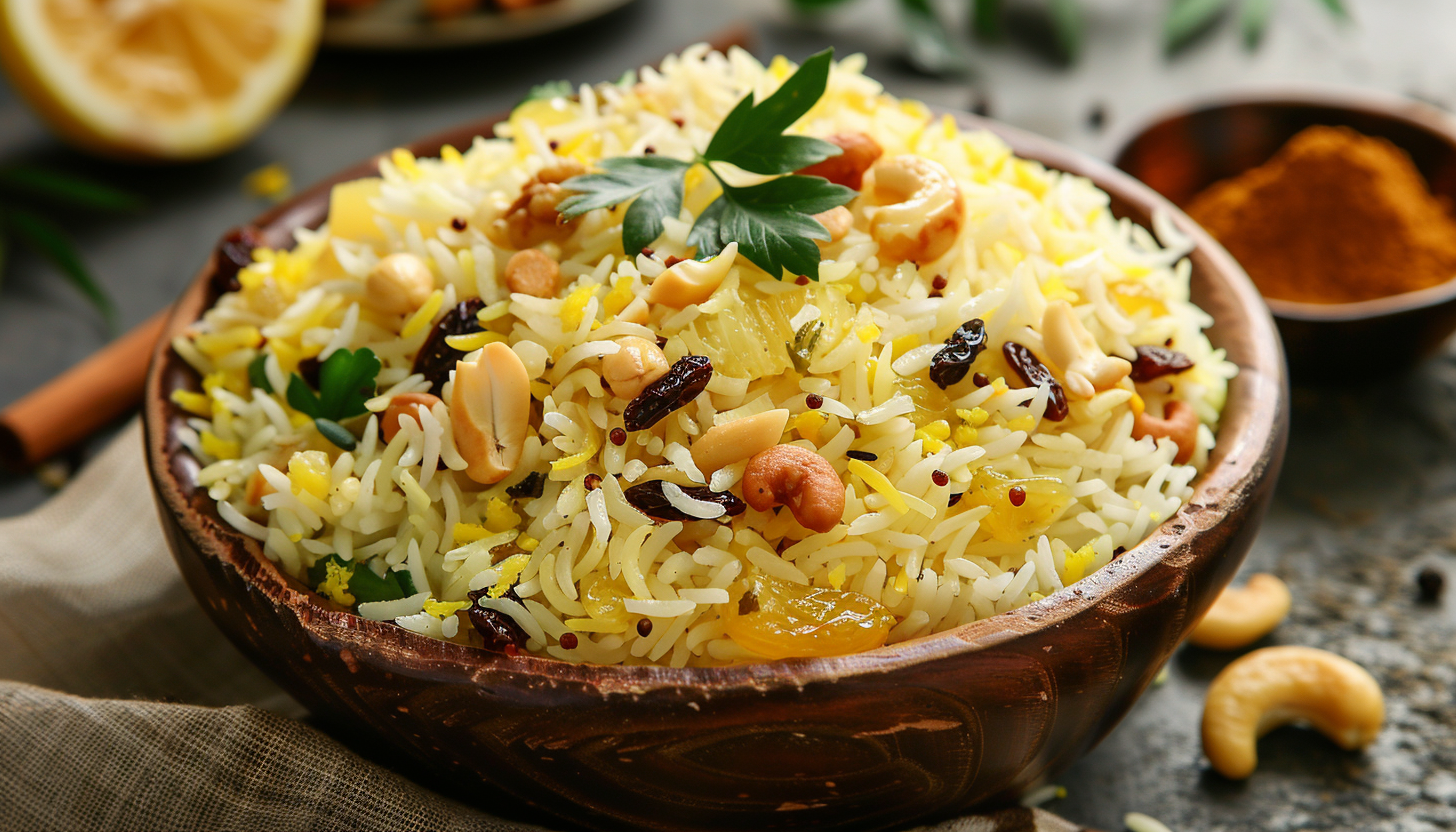
This scaled lemon rice follows the South Indian approach of cooking the grain separately and adding a measured citrus-and-spice tempering. Carrots, peas, nuts and raisins add variety. Unlike an ordinary home recipe, the process separates the rice cooking from tempering so a large team can maintain distinct grains and consistent portions.
This recipe is designed as a separate production guide for temple kitchens, Sunday feasts, community meals and prasadam distribution. It serves 100 as part of a planned menu; the recipe card is the baseline and the scaling guidance below is based on that yield.
Portion and yield planning
Approximately 150–180 g as a rice side.
The quantities are editorial planning estimates. Make a 25-serving trial with your actual ingredients and equipment before committing to a larger event. Weigh the finished batch and divide by the number of servings; allow a separately planned reserve for serving losses and additional guests.
Equipment and kitchen workflow
Four 10–12 L (11–13 qt) rice pots or rated commercial rice cookers, steamer, wide skillet, scales, shallow hotel pans, broad paddle and temperature probe.
Divide production into four labeled 25-serving sets for 100 guests. For 250 servings plan ten sets; for 500 plan twenty. Use larger commercial equipment only within its rated capacity, and adjust the number of batches to match the available staff and time. Assign roles for receiving and washing ingredients, weighing, cooking, temperature monitoring and portioning.
Technique for consistent large batches
Test one 25-serving pot with the actual rice brand and cooking vessel. Rice-water needs depend on rinsing, evaporation and equipment; scaling water by five does not justify cooking in a single deep pot. Drain cooked vegetables well. Toast the split dal and cashews in shallow ghee batches until light golden, not dark. Fold the lemon juice into the rice off direct high heat and spread the seasoning evenly without crushing the grains.
Bhakti Thought
Plan the meal so preparation is orderly and service is generous without waste. Follow the measured recipe without tasting before the offering; reserve an untouched portion for Krishna and share the prasadam with care.
PrintLemon Rice for 100 People

This scaled lemon rice follows the South Indian approach of cooking the grain separately and adding a measured citrus-and-spice tempering. A measured 100-serving no-onion, no-garlic vegetarian recipe with batch scaling and service guidance.
- Prep Time: 30 minutes
- Soaking or resting: 15 minutes
- Cook Time: 40 minutes
- Total Time: 85 minutes
- Yield: 100 servings 1x
- Category: Rice
- Method: Stovetop
- Cuisine: South Indian
- Diet: Vegetarian
Ingredients
- 5 kg (11.02 lb) Dry basmati rice
- 8.75 L (2.31 US gal) Drinking water for rice, starting amount
- 300 g (10.58 oz) Pure ghee
- 35 g (1.23 oz) Mustard seeds
- 100 g (3.53 oz) Split skinned urad dal
- 100 g (3.53 oz) Split chana dal
- 250 g (8.82 oz) Unsalted cashews, chopped
- 200 g (7.05 oz) Raisins
- 1.2 kg (2.65 lb) Finely diced carrots
- 800 g (1.76 lb) Green peas
- 25 g (0.88 oz) Ground turmeric
- 80 g (2.82 oz) Fine salt
- 400 mL (13.53 US fl oz) Fresh lemon juice, strained
- 100 g (3.53 oz) Chopped cilantro
US & metric measurements — original 1× batch
Use either measurement, not both. Equivalents are approximate; original specified weights are preserved. Counts, optional quantities and amounts to taste remain as written. This reference is for the original batch; multiply both quantities if scaling the recipe.
5 kg (11.02 lb) Dry basmati rice
8.75 L (approx. 36.46 US cups) (2.31 US gal) Drinking water for rice, starting amount
300 g (10.58 oz) Pure ghee
35 g (1.23 oz) Mustard seeds
100 g (3.53 oz) Split skinned urad dal
100 g (3.53 oz) Split chana dal
250 g (8.82 oz) Unsalted cashews, chopped
200 g (7.05 oz) Raisins
1.2 kg (2.65 lb) Finely diced carrots
800 g (1.76 lb) Green peas
25 g (0.88 oz) Ground turmeric
80 g (2.82 oz) Fine salt
400 mL (approx. 1.67 US cups) (13.53 US fl oz) Fresh lemon juice, strained
100 g (3.53 oz) Chopped cilantro
Approximate kitchen conversions: NIST and ingredient-specific baking weights.
Instructions
- Rinse rice until the water runs relatively clear and drain thoroughly. Divide ingredients into four equal batches of 25 portions.
- Cook each rice batch covered in a suitable stockpot or commercial rice cooker using its allocated water; adjust the water to match the rice variety and equipment. Let stand covered 10 minutes, then fluff gently.
- Steam diced carrot and peas until tender and drain. Heat ghee in shallow skillet batches, toast mustard, chana and urad dal gently, then add cashews, raisins and turmeric. Take care to prevent scorching.
- Fold the tempering, cooked vegetables, salt and measured lemon juice into the hot rice with a broad paddle. Finish with cilantro. Avoid vigorous stirring.
- Measure the final cooked yield and portion into 100 equal servings. Reserve an offering and maintain safe hot holding. Do not leave rice in an unheated bulk container.
Notes
- 100 servings is the recipe-card baseline. Approximately 150–180 g as a rice side.
- All quantities are planning estimates, not kitchen-tested institutional yields. Weigh ingredients and record the actual finished yield from a 25-serving trial.
- Use suitable plain ingredients without onion, garlic, eggs, mushrooms, caffeine or alcohol-based extracts; check prepared dairy and spices.
- Allergens: Milk, mustard, cashews and legumes (urad and chana dal).
- Metric quantities control; US equivalents are approximate. Scale the ingredient weights, but not cooking times, pot capacity or evaporation blindly.
- Serving illustration reused from the matching home-size recipe; actual presentation and recipe details may vary.
- Ingredient quantities and cooking times are editorial estimates; confirm through kitchen testing.
- Nutrition values are estimates per serving unless otherwise specified.
Nutrition
- Serving Size: 1 of 100 equal portions
- Calories: 251
- Sugar: 2.6 g
- Sodium: 327 mg
- Fat: 4.7 g
- Saturated Fat: 2.2 g
- Unsaturated Fat: 2.4 g
- Trans Fat: 0.1 g
- Carbohydrates: 46.2 g
- Fiber: 1.9 g
- Protein: 5.2 g
- Cholesterol: 8 mg
Scaling for 25, 50, 250 and 500 servings
Use the complete ingredient scaling chart following this recipe. The 100-serving card uses metric weights and volumes with approximate US equivalents. Four 25-serving batches produce 100 servings; do not multiply the cook time by the number of diners. For spices and water, validate the smaller trial and document any adjustments rather than guessing.
| Ingredient | 25 servings | 50 servings | 100 servings | 250 servings | 500 servings |
|---|---|---|---|---|---|
| Dry basmati rice | 1.25 kg (2.76 lb) | 2.5 kg (5.51 lb) | 5 kg (11.02 lb) | 12.5 kg (27.56 lb) | 25 kg (55.12 lb) |
| Drinking water for rice, starting amount | 2.188 L (2.31 US qt) | 4.375 L (1.16 US gal) | 8.75 L (2.31 US gal) | 21.875 L (5.78 US gal) | 43.75 L (11.56 US gal) |
| Pure ghee | 75 g (2.65 oz) | 150 g (5.29 oz) | 300 g (10.58 oz) | 750 g (1.65 lb) | 1.5 kg (3.31 lb) |
| Mustard seeds | 8.75 g (0.31 oz) | 17.5 g (0.62 oz) | 35 g (1.23 oz) | 87.5 g (3.09 oz) | 175 g (6.17 oz) |
| Split skinned urad dal | 25 g (0.88 oz) | 50 g (1.76 oz) | 100 g (3.53 oz) | 250 g (8.82 oz) | 500 g (1.1 lb) |
| Split chana dal | 25 g (0.88 oz) | 50 g (1.76 oz) | 100 g (3.53 oz) | 250 g (8.82 oz) | 500 g (1.1 lb) |
| Unsalted cashews, chopped | 62.5 g (2.2 oz) | 125 g (4.41 oz) | 250 g (8.82 oz) | 625 g (1.38 lb) | 1.25 kg (2.76 lb) |
| Raisins | 50 g (1.76 oz) | 100 g (3.53 oz) | 200 g (7.05 oz) | 500 g (1.1 lb) | 1 kg (2.2 lb) |
| Finely diced carrots | 300 g (10.58 oz) | 600 g (1.32 lb) | 1.2 kg (2.65 lb) | 3 kg (6.61 lb) | 6 kg (13.23 lb) |
| Green peas | 200 g (7.05 oz) | 400 g (14.11 oz) | 800 g (1.76 lb) | 2 kg (4.41 lb) | 4 kg (8.82 lb) |
| Ground turmeric | 6.25 g (0.22 oz) | 12.5 g (0.44 oz) | 25 g (0.88 oz) | 62.5 g (2.2 oz) | 125 g (4.41 oz) |
| Fine salt | 20 g (0.71 oz) | 40 g (1.41 oz) | 80 g (2.82 oz) | 200 g (7.05 oz) | 400 g (14.11 oz) |
| Fresh lemon juice, strained | 100 mL (3.38 US fl oz) | 200 mL (6.76 US fl oz) | 400 mL (13.53 US fl oz) | 1 L (1.06 US qt) | 2 L (2.11 US qt) |
| Chopped cilantro | 25 g (0.88 oz) | 50 g (1.76 oz) | 100 g (3.53 oz) | 250 g (8.82 oz) | 500 g (1.1 lb) |
Service and portioning
Use a measured scoop, not an overflowing spoon. Label the cashew and mustard allergens prominently. Lemon rice pairs with a simple dal and raita. Rice is especially important to cool quickly if it cannot be served immediately; never leave a large stockpot to cool at room temperature.
Food safety for community meals
For catered service, keep hot food at or above 135°F (57°C) and cold food at or below 41°F (5°C). If cooling cooked food for later service, divide into shallow pans or use an ice bath or blast chiller; cool from 135°F (57°C) to 70°F (57°C to 21°C (70°F)) within two hours, then to 41°F (5°C) within a total of six hours. Log temperatures with a sanitized probe. Reheat previously cooked and cooled food for hot holding to 165°F (74°C) for 15 seconds within two hours. Follow local health department requirements and discard food that cannot be safely held or cooled.
Use safe food-handling practices appropriate to a licensed or permitted kitchen. Allergen labels and a designated person in charge are important when preparing food for the public. These temperature limits reflect standard food-service guidance, not a substitute for local requirements.
Allergens and nutritional estimates
Contains: Milk, mustard, cashews and legumes (urad and chana dal). Check all packaged ingredients and prevent cross-contact. All nutrition values are estimated from representative ingredient composition and the measured amounts divided into 100 equal portions; minor spices are omitted, and variable ingredient brands and cooking yields affect values. No accompaniments are included.
Frequently Asked Questions
Can I make it without cashews?
Yes; omit them and prevent nut cross-contact if an allergy requires it.
Why are the grains sticky?
Excess water, stirring during cooking or wet vegetables may contribute.
Can I use lime instead of lemon?
Yes, use the same starting volume of freshly squeezed juice.
Can cooked rice wait on the counter?
No. Maintain safe hot holding or use monitored rapid cooling.