
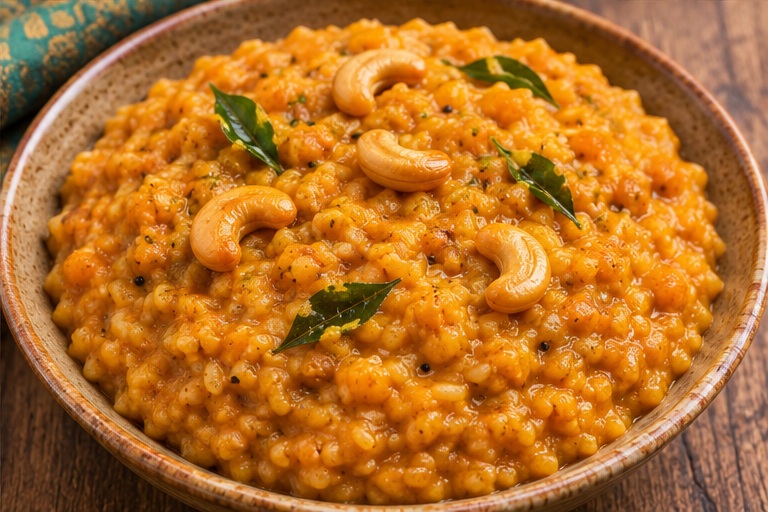
A soft, hot rice and toor dal preparation seasoned with freshly roasted coconut, coriander, fenugreek and tamarind, finished with cashews and curry leaves.
This independently standardized regional adaptation is intended for home cooks preparing vegetarian prasadam.
A Karnataka-style rice and dal dish
Bisi bele bath is known for its warm, soft rice-and-lentil texture and distinctive seasoning. This version follows a vegetable-free tamarind-and-coconut variation, using split toor dal in place of whole toor for predictable home cooking. The spice mixture is prepared from individual ingredients rather than a purchased masala.
Cook the lentils before adding tamarind
Toor dal should be fully soft before acidic tamarind is introduced. Cook rice separately so both components can reach the desired texture. The final mixture should be softer than a dry pulao but not a thin soup. Keep hot water available because the rice and lentils continue to absorb moisture.
Make a fresh spice paste
Toast the whole spices and small quantities of split dals over gentle heat. Fenugreek becomes bitter if burned. Grind once cool with coconut and a little water. Use mild chili to control heat. Lightly toasted cashews and curry leaves provide a fragrant finish without onion or garlic.
Bhakti Thought
The variety of regional cooking provides many opportunities for devotional service. Prepare a clean offering before tasting and share the prasadam thoughtfully.
PrintKarnataka Bisi Bele Bath (Tamarind Rice and Toor Dal)
A soft, hot rice and toor dal preparation seasoned with freshly roasted coconut, coriander, fenugreek and tamarind, finished with cashews and curry leaves.
- Prep Time: 20 minutes
- Cook Time: 45 minutes
- Total Time: 65 minutes
- Yield: 4 servings 1x
- Category: Main course
- Method: Stovetop
- Cuisine: Karnataka
- Diet: Vegetarian
Ingredients
- 1 cup dry basmati rice (200 g)
- 1/2 cup dry split toor dal (100 g)
- 5 cups drinking water (1.2 L), divided, plus more if needed
- 1 tablespoon unsweetened tamarind paste (15 g), diluted in water
- 1/4 cup grated unsweetened coconut (20 g)
- 2 teaspoons coriander seeds
- 1 teaspoon chana dal (4 g)
- 1 teaspoon split urad dal (4 g)
- 1/4 teaspoon fenugreek seeds
- 1 dried red chili, optional
- 1/4 teaspoon ground cinnamon
- 1 pinch ground cloves
- 2 tablespoons pure ghee (28 g), divided
- 2 tablespoons unsalted cashews (18 g)
- 8 fresh curry leaves
- 3/4 teaspoon fine salt (4.5 g)
- 2 tablespoons chopped cilantro
US & metric measurements — original 1× batch
Use either measurement, not both. Equivalents are approximate; original specified weights are preserved. Counts, optional quantities and amounts to taste remain as written. This reference is for the original batch; multiply both quantities if scaling the recipe.
1 cup dry basmati rice (200 g)
1/2 cup dry split toor dal (100 g)
5 cups drinking water (1.2 L), divided, plus more if needed
1 tablespoon unsweetened tamarind paste (15 g), diluted in water
1/4 cup grated unsweetened coconut (20 g)
2 teaspoons (approx. 10 mL) coriander seeds
1 teaspoon chana dal (4 g)
1 teaspoon split urad dal (4 g)
1/4 teaspoon (approx. 1.25 mL) fenugreek seeds
1 dried red chili, optional
1/4 teaspoon (approx. 1.25 mL) ground cinnamon
1 pinch ground cloves
2 tablespoons pure ghee (28 g), divided
2 tablespoons unsalted cashews (18 g)
8 fresh curry leaves
3/4 teaspoon fine salt (4.5 g)
2 tablespoons (approx. 30 mL) chopped cilantro
Approximate kitchen conversions: NIST and ingredient-specific baking weights.
Instructions
- Rinse toor dal and simmer in three cups of water until completely soft, about 30–40 minutes. Meanwhile cook rinsed rice separately with two cups of water until tender, adjusting the rice water if needed.
- In a small skillet warm one teaspoon ghee. Toast coriander, chana dal, urad dal, fenugreek and optional chili gently until fragrant. Add coconut and stir briefly. Cool, then grind with cinnamon, cloves and a little water.
- Combine cooked rice and dal in a heavy pan. Stir in ground spice mixture, diluted tamarind and measured salt. Add hot water as needed to achieve a soft spoonable consistency.
- Simmer gently for 5–8 minutes, stirring from the bottom so the mixture does not scorch. Warm remaining ghee and lightly toast cashews; add curry leaves briefly.
- Stir the tempering into the rice and dal. Garnish with cilantro, reserve an offering and serve hot.
Notes
- Makes 4 equal portions. Use plain suitable ingredients without onion, garlic, eggs, mushrooms, caffeine or alcohol-based extracts.
- Allergens: Milk-derived ghee, cashews, coconut and legumes.
- Nutrition is estimated from typical ingredient composition; minor spices omitted. Recipe measurements, timing and yield are not kitchen-tested.
- Ingredient quantities and cooking times are editorial estimates; confirm through kitchen testing.
- Nutrition values are estimates per serving unless otherwise specified.
Nutrition
- Serving Size: 1/4 of prepared batch
- Calories: 390
- Sugar: 3.4 g
- Sodium: 452 mg
- Fat: 11.5 g
- Saturated Fat: 6.4 g
- Unsaturated Fat: 4.8 g
- Trans Fat: 0.2 g
- Carbohydrates: 61.4 g
- Fiber: 5.5 g
- Protein: 10.6 g
- Cholesterol: 18 mg
Serving suggestions
Serve in four bowls as a substantial rice-and-dal main dish or use smaller portions on a varied prasadam plate. A simple vegetable side provides contrast to the soft texture. Offer the hot preparation before tasting.
Rice storage and reheating
Cool leftovers rapidly in shallow containers, preferably within one hour, refrigerate promptly and consume within one day. Reheat only once until steaming hot throughout, adding water to restore consistency. Do not let a large pot of cooked rice and dal cool slowly at room temperature.
Dietary and nutrition notes
Contains rice, lentils, cashews, coconut and milk-derived ghee. Not appropriate for standard grain-and-legume-free Ekadasi. Nutrition assumes four portions and all listed ingredients, including the measured ghee. A version with added vegetables would change the serving weight and nutrient values.
Frequently Asked Questions
Can I use a prepared bisi bele bath powder?
Only if every ingredient is suitable; this version uses individual spices.
Can I add vegetables?
Yes, cook vegetables separately or add at a suitable point; this particular variation does not require them.
Why is it very thick?
Rice and dal absorb water as they stand; stir in hot water as needed.
Why is my dal still firm?
Continue simmering before adding tamarind; older lentils may take longer.