
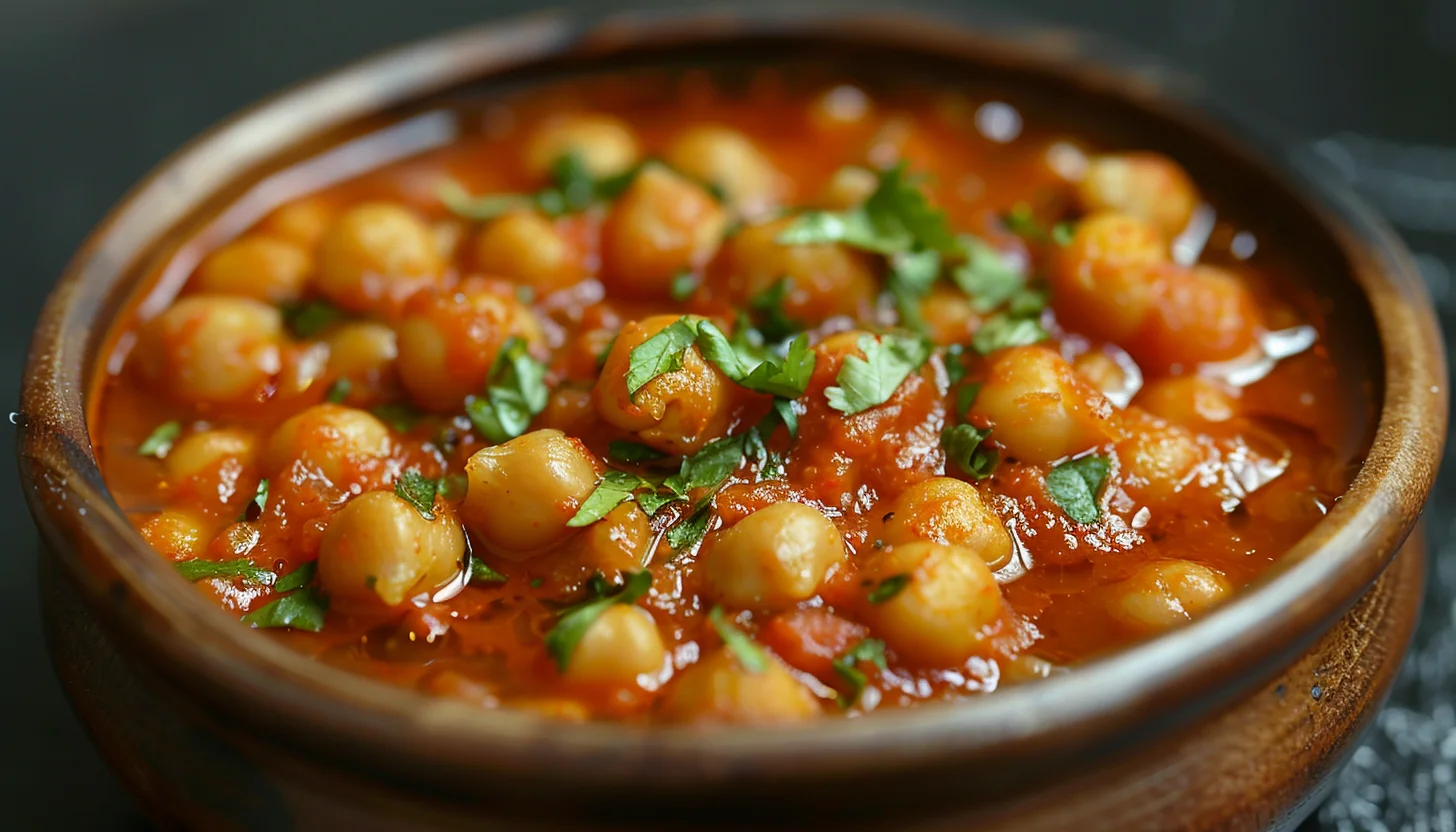
Fully cooked chickpeas simmered in a tangy tomato, tamarind and ginger sauce with measured neutral oil, no onion or garlic.
This measured adaptation is intended for home cooks preparing a vegetarian prasadam meal. Dietary and nutrition information describes the ingredients rather than promising medical suitability.
A tamarind-forward curry
This plant-based adaptation emphasizes sour tamarind and fresh tomato rather than butter, cream or a purchased paste. Neutral oil replaces ghee. Cumin and coriander complement the ginger, and fully cooked chickpeas supply texture, protein and fiber.
Choose plain tamarind and cooked chickpeas
Tamarind products differ considerably in strength. Dilute the specified plain paste first; concentrated extracts may require less. Check for added sugar and salt. Use only fully cooked chickpeas: the short simmer is not intended to cook dry legumes.
Make a sauce that clings
Soften tomatoes before adding chickpeas. Mash or blend the tomato mixture carefully, keeping an immersion blender submerged to prevent splashing. Simmer until the sauce is moist and spoonable, not watery. Add water in small measured amounts.
Bhakti Thought
Prepare food with attention to the people receiving it. Offer a clean portion to Krishna before tasting, and share the prasadam with care for individual dietary requirements.
PrintVegan Tamarind Chickpea Curry

Fully cooked chickpeas simmered in a tangy tomato, tamarind and ginger sauce with measured neutral oil, no onion or garlic.
- Prep Time: 15 minutes
- Cook Time: 30 minutes
- Total Time: 45 minutes
- Yield: 4 servings 1x
- Category: Main course
- Method: Stovetop
- Cuisine: Indian
- Diet: Vegan
Ingredients
- 3 cups fully cooked unsalted chickpeas (480 g)
- 250 g ripe tomatoes, chopped
- 1 tablespoon unsweetened tamarind paste (15 g)
- 1 tablespoon neutral oil (14 g)
- 1 tablespoon grated ginger (12 g)
- 1 small green chili, optional
- 1/2 teaspoon ground cumin
- 1/2 teaspoon ground coriander
- 1/2 teaspoon fine salt (3 g)
- 3/4 cup drinking water (180 ml), plus more as needed
- 2 tablespoons chopped cilantro (5 g)
US & metric measurements — original 1× batch
Use either measurement, not both. Equivalents are approximate; original specified weights are preserved. Counts, optional quantities and amounts to taste remain as written. This reference is for the original batch; multiply both quantities if scaling the recipe.
3 cups fully cooked unsalted chickpeas (480 g)
250 g (approx. 8.82 oz by weight) ripe tomatoes, chopped
1 tablespoon unsweetened tamarind paste (15 g)
1 tablespoon neutral oil (14 g)
1 tablespoon grated ginger (12 g)
1 small green chili, optional
1/2 teaspoon (approx. 2.5 mL) ground cumin
1/2 teaspoon (approx. 2.5 mL) ground coriander
1/2 teaspoon fine salt (3 g)
3/4 cup drinking water (180 ml), plus more as needed
2 tablespoons chopped cilantro (5 g)
Approximate kitchen conversions: NIST and ingredient-specific baking weights.
Instructions
- Rinse and drain cooked chickpeas. Dissolve tamarind in part of the measured water and strain if fibrous.
- Warm oil and stir ginger and optional chili briefly. Add cumin, coriander and tomato; cook 5–7 minutes until soft.
- Carefully mash or blend the softened tomatoes. Stir in tamarind liquid, chickpeas and salt.
- Simmer 15–20 minutes, adding water if needed, until chickpeas are hot and coated with sauce.
- Finish with cilantro and reserve an offering before serving.
Notes
- Makes four equal portions. Use plain suitable ingredients without onion, garlic, eggs, mushrooms, caffeine or alcohol-based extracts.
- Allergens: Legumes (chickpeas).
- Nutrition is estimated from typical ingredient composition; minor spices may be omitted. Proportions, cooking time and yield have not been kitchen-tested.
- Serving illustration reused from a related recipe; appearance may vary.
- Ingredient quantities and cooking times are editorial estimates; confirm through kitchen testing.
- Nutrition values are estimates per serving unless otherwise specified.
Nutrition
- Serving Size: 1/4 of prepared batch
- Calories: 251
- Sugar: 8.9 g
- Sodium: 308 mg
- Fat: 6.8 g
- Saturated Fat: 0.6 g
- Unsaturated Fat: 6.2 g
- Trans Fat: 0 g
- Carbohydrates: 38.2 g
- Fiber: 10.2 g
- Protein: 11.4 g
- Cholesterol: 0 mg
Serving ideas
Serve with plain rice or suitable flatbread and a mild vegetable side. For a vegan meal, avoid ghee-brushed breads and dairy accompaniments. Reserve a clean offering before sharing.
Storage and reheating
Refrigerate within two hours in shallow containers and consume within three days. Reheat until steaming hot throughout. Add water if thickened; freeze portions for longer storage.
Dietary information
Vegan, with no wheat ingredients; check packaged spices and tamarind for cross-contact. Chickpeas supply protein and fiber. Nutrition estimates exclude sides. Not suitable for Ekadasi because it contains legumes. The serving illustration is reused from a related chickpea dish.
Frequently Asked Questions
Can I use lemon instead?
Yes, but the flavor will differ.
Can I omit oil?
Use water to soften spices and tomatoes; texture and flavor differ.
Does it need garam masala?
No.
Can I use canned chickpeas?
Yes, choose plain unsalted cooked chickpeas and rinse.
Explore More Recipes
Bengali Cholar Dal with Coconut and Raisins
Arhar Dal Malai (Creamy Coconut Toor Dal)
Festival recipe: For a dry coconut-and-curry-leaf chickpea preparation, try South Indian Chickpea Sundal.
Restaurant-inspired recipe: For a baked chickpea main dish with a fresh tomato sauce, try Baked Chickpea Kofta with Tomato Gravy.