
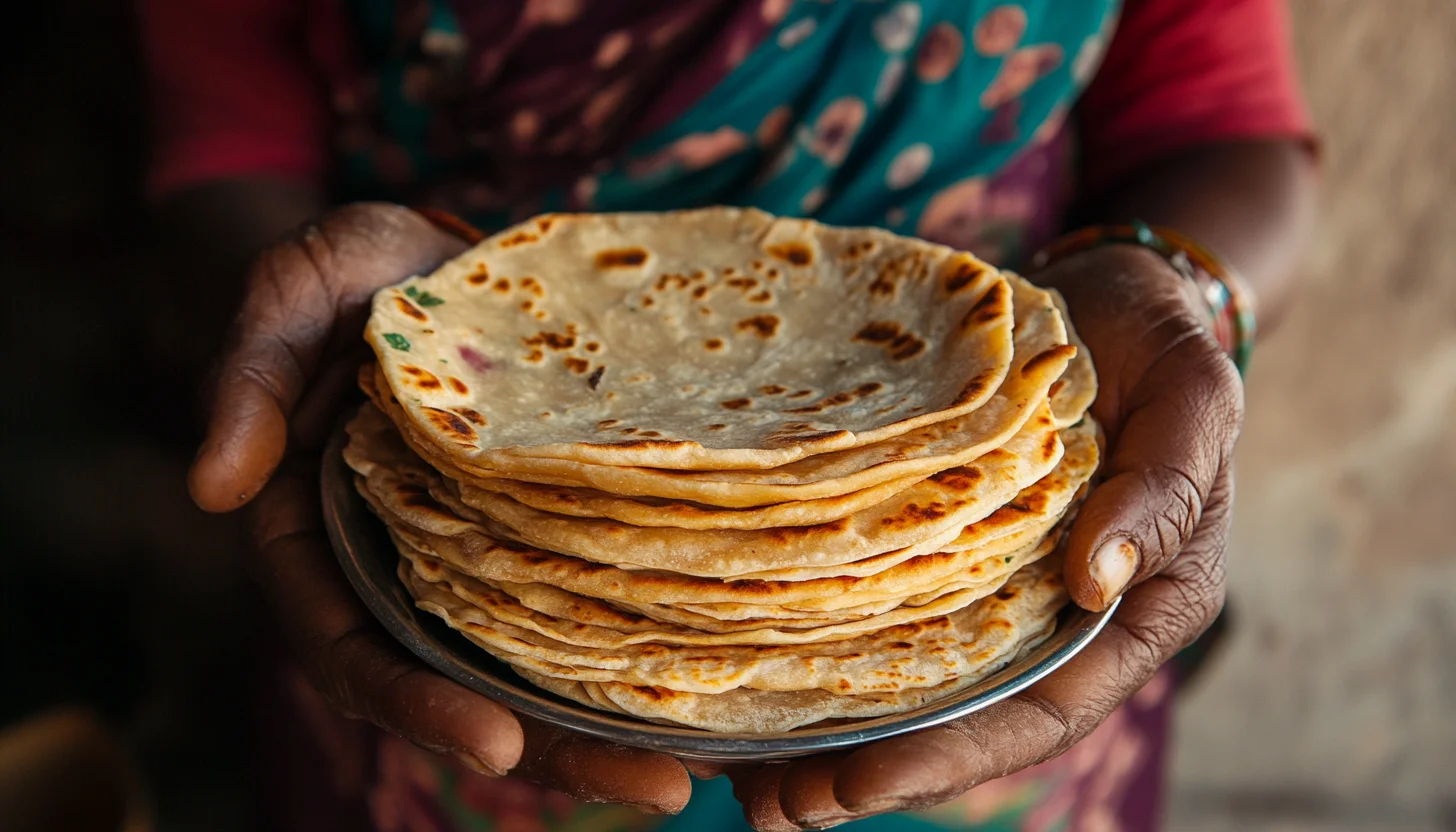
The goal of large-group chapati service is a steady production line of soft breads, not an enormous quantity of dough made without a plan. This version uses the basic whole-wheat flour, water and butter method. It makes one medium chapati per person. If your feast requires two each, use the 200-bread equivalent, rather than making the same dough into undersized breads.
This recipe is designed as a separate production guide for temple kitchens, Sunday feasts, community meals and prasadam distribution. It serves 100 as part of a planned menu; the recipe card is the baseline and the scaling guidance below is based on that yield.
Portion and yield planning
One medium chapati per serving; prepare 200 for two per guest.
The quantities are editorial planning estimates. Make a 25-serving trial with your actual ingredients and equipment before committing to a larger event. Weigh the finished batch and divide by the number of servings; allow a separately planned reserve for serving losses and additional guests.
Equipment and kitchen workflow
Digital scales, four covered dough bowls or appropriately sized mixer, rolling boards and pins, three or four griddles, clean covered bread containers and heat-resistant utensils.
Divide production into four labeled 25-serving sets for 100 guests. For 250 servings plan ten sets; for 500 plan twenty. Use larger commercial equipment only within its rated capacity, and adjust the number of batches to match the available staff and time. Assign roles for receiving and washing ingredients, weighing, cooking, temperature monitoring and portioning.
Technique for consistent large batches
Hydration depends on the flour and humidity. Start with less water and add gradually; a dough that is too wet slows rolling. Divide dough by weight to maintain uniform sizes. Assign separate roles for portioning, rolling, griddle cooking and holding. Keep unrolled dough covered. Use multiple dry griddles so the bread cooks quickly without becoming brittle, and do not use an open-flame puffing technique in a busy volunteer kitchen.
Bhakti Thought
Plan the meal so preparation is orderly and service is generous without waste. Follow the measured recipe without tasting before the offering; reserve an untouched portion for Krishna and share the prasadam with care.
PrintSoft Chapatis for 100 People

The goal of large-group chapati service is a steady production line of soft breads, not an enormous quantity of dough made without a plan. A measured 100-serving no-onion, no-garlic vegetarian recipe with batch scaling and service guidance.
- Prep Time: 45 minutes
- Soaking or resting: 60 minutes
- Cook Time: 75 minutes
- Total Time: 180 minutes
- Yield: 100 servings 1x
- Category: Bread
- Method: Griddle cooking
- Cuisine: Indian
- Diet: Vegetarian
Ingredients
- 4 kg (8.82 lb) Whole wheat chapati flour (atta), plus a little for dusting
- 2.4 L (2.54 US qt) Warm drinking water, starting amount
- 200 g (7.05 oz) Unsalted melted butter, for brushing
US & metric measurements — original 1× batch
Use either measurement, not both. Equivalents are approximate; original specified weights are preserved. Counts, optional quantities and amounts to taste remain as written. This reference is for the original batch; multiply both quantities if scaling the recipe.
4 kg (8.82 lb) Whole wheat chapati flour (atta), plus a little for dusting
2.4 L (approx. 10 US cups) (2.54 US qt) Warm drinking water, starting amount
200 g (7.05 oz) Unsalted melted butter, for brushing
Approximate kitchen conversions: NIST and ingredient-specific baking weights.
Instructions
- Weigh four batches of flour, 1 kg each. Add most of the water to each batch and mix, adding more gradually until a soft, pliable dough forms.
- Knead by hand or in an appropriately rated dough mixer until smooth. Cover the dough and rest approximately one hour in a clean, cool preparation area.
- Divide each batch into 25 equal balls, about 64 g each before dusting. Keep covered and roll to even 6–7 inch (approx. 17.8 cm) (15–18 cm (approx. 7.1 in)) circles.
- Cook on a dry, stable preheated griddle until bubbles appear, turn and cook until both sides show lightly browned spots and the bread is cooked through. Use a spatula or folded clean cloth to encourage puffing; avoid working over an exposed flame.
- Brush the finished bread sparingly with measured melted butter, stack in clean covered food-grade containers and reserve a clean offering. Serve promptly.
Notes
- 100 servings is the recipe-card baseline. One medium chapati per serving; prepare 200 for two per guest.
- All quantities are planning estimates, not kitchen-tested institutional yields. Weigh ingredients and record the actual finished yield from a 25-serving trial.
- Use suitable plain ingredients without onion, garlic, eggs, mushrooms, caffeine or alcohol-based extracts; check prepared dairy and spices.
- Allergens: Wheat (gluten) and milk-derived butter.
- Metric quantities control; US equivalents are approximate. Scale the ingredient weights, but not cooking times, pot capacity or evaporation blindly.
- Serving illustration reused from the matching home-size recipe; actual presentation and recipe details may vary.
- Ingredient quantities and cooking times are editorial estimates; confirm through kitchen testing.
- Nutrition values are estimates per serving unless otherwise specified.
Nutrition
- Serving Size: 1 of 100 equal portions
- Calories: 150
- Sugar: 0.2 g
- Sodium: 2 mg
- Fat: 2.6 g
- Saturated Fat: 1.2 g
- Unsaturated Fat: 1.4 g
- Trans Fat: 0.1 g
- Carbohydrates: 28.8 g
- Fiber: 4.3 g
- Protein: 5.3 g
- Cholesterol: 4 mg
Scaling for 25, 50, 250 and 500 servings
Use the complete ingredient scaling chart following this recipe. The 100-serving card uses metric weights and volumes with approximate US equivalents. Four 25-serving batches produce 100 servings; do not multiply the cook time by the number of diners. For spices and water, validate the smaller trial and document any adjustments rather than guessing.
| Ingredient | 25 servings | 50 servings | 100 servings | 250 servings | 500 servings |
|---|---|---|---|---|---|
| Whole wheat chapati flour (atta), plus a little for dusting | 1 kg (2.2 lb) | 2 kg (4.41 lb) | 4 kg (8.82 lb) | 10 kg (22.05 lb) | 20 kg (44.09 lb) |
| Warm drinking water, starting amount | 600 mL (20.29 US fl oz) | 1.2 L (1.27 US qt) | 2.4 L (2.54 US qt) | 6 L (1.59 US gal) | 12 L (3.17 US gal) |
| Unsalted melted butter, for brushing | 50 g (1.76 oz) | 100 g (3.53 oz) | 200 g (7.05 oz) | 500 g (1.1 lb) | 1 kg (2.2 lb) |
Service and portioning
Count finished chapatis in stacks of 10 or 25 so the service coordinator knows actual output. Brush with butter after cooking and keep covered without trapping excessive condensation. Prepare breads close to the meal, avoiding extended holding. For 500 guests, schedule several parallel griddles and test actual breads-per-minute before announcing service time.
Food safety for community meals
Keep raw flour and dough away from ready-to-eat food; do not taste raw dough. Cook each bread completely. Keep finished breads covered in clean food-grade containers and serve promptly. If holding with dairy-rich fillings or other temperature-controlled foods, apply the appropriate hot/cold holding rules.
Use safe food-handling practices appropriate to a licensed or permitted kitchen. Allergen labels and a designated person in charge are important when preparing food for the public. These temperature limits reflect standard food-service guidance, not a substitute for local requirements.
Allergens and nutritional estimates
Contains: Wheat (gluten) and milk-derived butter. Check all packaged ingredients and prevent cross-contact. All nutrition values are estimated from representative ingredient composition and the measured amounts divided into 100 equal portions; minor spices are omitted, and variable ingredient brands and cooking yields affect values. No accompaniments are included.
Frequently Asked Questions
How many chapatis do I need for 100 guests?
This recipe gives 100, one per guest. Double all ingredients for two per guest.
Why are they hard?
The dough may be too dry or the griddle time too long. Keep the dough and cooked breads covered.
Can I use a commercial mixer?
Yes, stay within the manufacturer's rated dough capacity and divide the batches as needed.
Can I omit butter?
Yes. The unbrushed chapatis are plant-based, but may dry more quickly.