
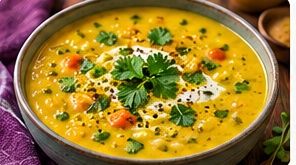
Creamy chickpea and coconut soup with carrots, potatoes, tomatoes, turmeric, coriander and lemon. No onion or garlic. This independently standardized preparation brings a different culinary style to the Hare Krishna table.
What makes mulligatawny distinctive?
Mulligatawny has developed through Anglo-Indian culinary traditions, with many different forms. This chickpea-based variation combines familiar vegetables with coconut, coriander and turmeric. It is blended only in part to retain some texture and uses neither meat stock nor onion or garlic. Chickpeas provide more substance than a plain vegetable puree.
Cook chickpeas before adding
Use fully cooked unsalted canned chickpeas or dried chickpeas that have been soaked and thoroughly boiled. Rinse and drain canned chickpeas before weighing. The soup's short simmer is intended to soften vegetables and blend flavors, not to cook raw dried legumes. Cut the potato and carrot into small pieces so they soften together.
Balance creamy and tart flavors
Coconut milk supplies richness, while lemon added at the end brightens the soup. Plain full-fat coconut milk is different from sweetened coconut cream. Stir it in after the vegetables soften. Blend carefully with an immersion blender and stop when the desired texture is reached; a few intact chickpeas give a pleasing contrast.
Bhakti Thought
Cooking a warming soup for others expresses hospitality. Share the offered food with gratitude.
PrintVegetarian Mulligatawny Soup with Chickpeas and Coconut
Creamy chickpea and coconut soup with carrots, potatoes, tomatoes, turmeric, coriander and lemon. No onion or garlic.
- Prep Time: 20 minutes
- Cook Time: 30 minutes
- Total Time: 50 minutes
- Yield: 4 servings 1x
- Category: Soup
- Method: Stovetop and blending
- Cuisine: Anglo-Indian-inspired
- Diet: Vegetarian
Ingredients
- 1 1/2 cups cooked, drained unsalted chickpeas (240 g)
- 1 tablespoon ghee (14 g)
- 1 teaspoon ground coriander
- 1/2 teaspoon turmeric
- 1/4 teaspoon mild red chili powder, optional
- 150 g carrot, diced
- 200 g potato, diced
- 100 g green bell pepper, diced
- 200 g tomato, chopped
- 3 cups water (720 ml)
- 1/4 cup grated unsweetened coconut (20 g)
- 1/2 cup unsweetened full-fat coconut milk (120 ml)
- 3/4 teaspoon fine salt (4.5 g)
- 2 tablespoons lemon juice (30 ml)
- 2 tablespoons chopped cilantro
US & metric measurements — original 1× batch
Use either measurement, not both. Equivalents are approximate; original specified weights are preserved. Counts, optional quantities and amounts to taste remain as written. This reference is for the original batch; multiply both quantities if scaling the recipe.
1 1/2 cups cooked, drained unsalted chickpeas (240 g)
1 tablespoon ghee (14 g)
1 teaspoon (approx. 5 mL) ground coriander
1/2 teaspoon (approx. 2.5 mL) turmeric
1/4 teaspoon (approx. 1.25 mL) mild red chili powder, optional
150 g (approx. 5.29 oz by weight) carrot, diced
200 g (approx. 7.05 oz by weight) potato, diced
100 g (approx. 3.53 oz by weight) green bell pepper, diced
200 g (approx. 7.05 oz by weight) tomato, chopped
3 cups water (720 ml)
1/4 cup grated unsweetened coconut (20 g)
1/2 cup unsweetened full-fat coconut milk (120 ml)
3/4 teaspoon fine salt (4.5 g)
2 tablespoons lemon juice (30 ml)
2 tablespoons (approx. 30 mL) chopped cilantro
Approximate kitchen conversions: NIST and ingredient-specific baking weights.
Instructions
- Heat ghee in a heavy pot over medium-low heat. Stir in coriander, turmeric and optional chili for 20 seconds.
- Add carrot, potato, pepper and tomato. Stir briefly, then add water and bring to a gentle boil.
- Simmer 15–20 minutes until vegetables are fork-tender. Add cooked chickpeas, coconut and coconut milk; simmer another 5 minutes.
- Using an immersion blender, puree part of the soup until creamy, leaving some chickpeas and vegetables intact. Keep hot liquids away from splattering blades.
- Warm gently, stir in salt, lemon and cilantro, and reserve a portion for offering.
Notes
- Makes 4 servings. Use suitable plain ingredients without onion, garlic, eggs or mushrooms.
- Nutrition estimated from representative ingredient composition; minor spices omitted. Weights, cooking times and proportions have not been kitchen-tested.
- Refrigerate leftovers promptly and follow the storage guidance.
- Ingredient quantities and cooking times are editorial estimates; confirm through kitchen testing.
- Nutrition values are estimates per serving unless otherwise specified.
Nutrition
- Serving Size: 1/4 of the prepared batch
- Calories: 276
- Sugar: 7.9 g
- Sodium: 483 mg
- Fat: 13.4 g
- Saturated Fat: 9.6 g
- Unsaturated Fat: 3.7 g
- Trans Fat: 0.1 g
- Carbohydrates: 34 g
- Fiber: 8.2 g
- Protein: 8.1 g
- Cholesterol: 9 mg
Serving suggestions
Serve with rice or a simple bread, or offer a small bowl as the first course of a prasadam meal. A lightly seasoned vegetable side or crisp bread provides contrast to the creamy soup. For a community meal, keep the finished soup hot and divide the chickpeas evenly.
Storage and reheating
Refrigerate promptly within two hours and use within three days. Reheat gently until steaming hot, stirring as the coconut fat melts. Add a little water if the soup thickens. Freeze portions for longer storage; some separation is normal after thawing and can be stirred back together.
Dietary notes
Contains milk-derived ghee and coconut. Replace ghee with neutral oil for a vegan version. The recipe includes legumes and is not a standard Ekadasi preparation. Nutrient estimates assume four portions and full-fat coconut milk; different products vary significantly.
Frequently Asked Questions
Can I use light coconut milk?
Yes, the soup will be less rich and the nutrient values will change.
Must I puree everything?
No, partial blending gives body while retaining texture.
Can I use dried chickpeas?
Yes, but cook them completely before measuring.
Can I omit chili?
Yes; coriander, turmeric and lemon give plenty of flavor.
Explore More Recipes
Bengali Cholar Dal with Coconut and Raisins