
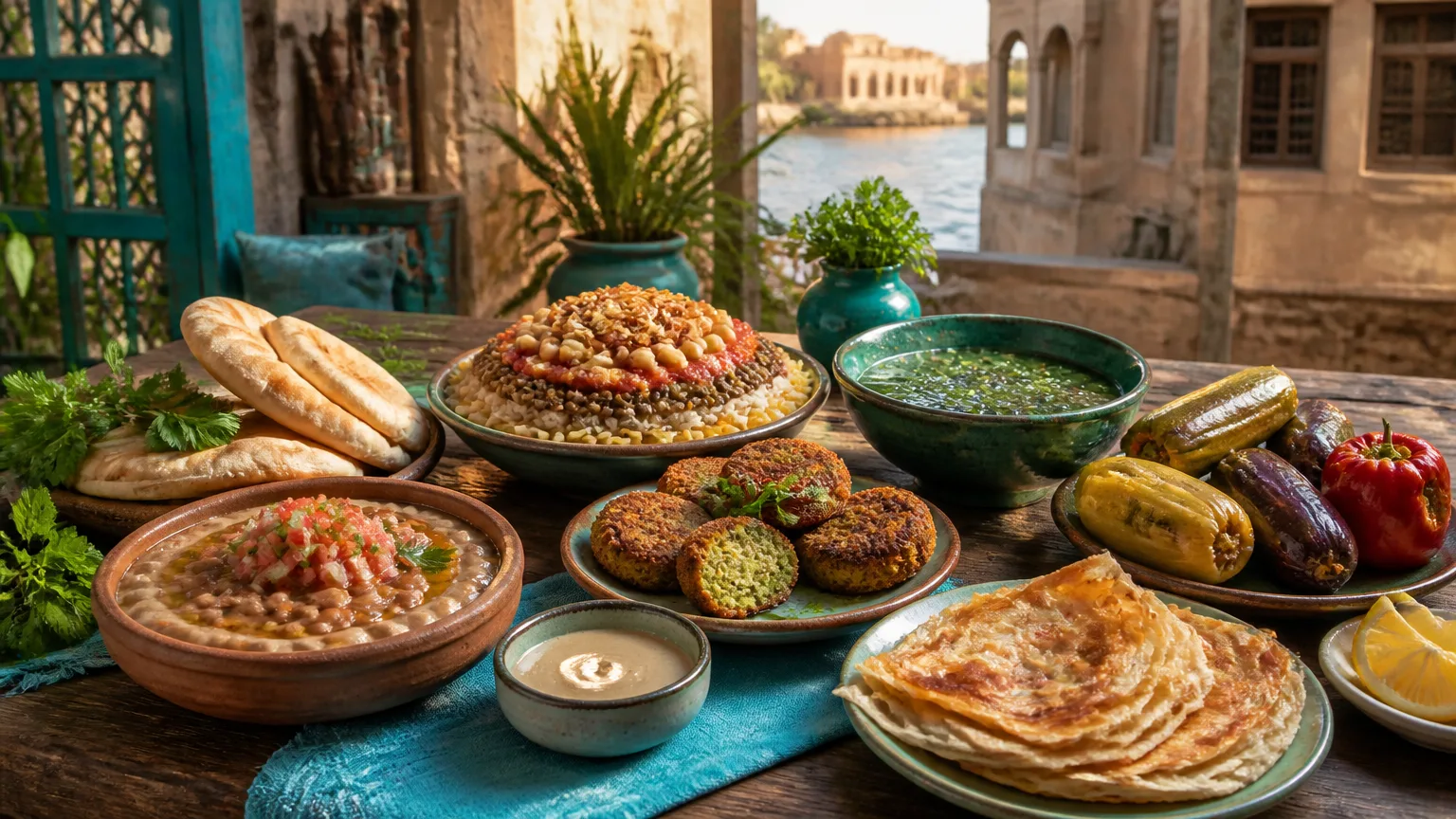
Egyptian food reflects a long history shaped by the Nile, regional trade, and generations of home cooking. Beans, grains, vegetables, herbs, and bread form the base of many everyday meals, from a bowl of ful medames to a plate of koshari. This rich tradition offers both a window into culinary history and a practical source of vegetarian inspiration.
This article explores seven dishes: ful medames, ta’ameya, koshari, bissara, molokhia, mahshi, and feteer meshaltet. Their ingredients and stories show how cooks have made filling, flavorful food from local staples. Not every Egyptian dish is vegetarian, however, and some recipes use meat or broth. Ingredients, preparation, and origin stories also vary by region and family.
For spiritual readers, preparing and sharing food can express care and gratitude. That appreciation can sit alongside Egyptian food traditions without treating them as the same as Hare Krishna practice. If you are exploring vegetarian cooking through a devotional lens, the wider recipe collection at Hare Krishna Recipes offers a useful place to begin.
1. Ful Medames: The Fava Bean Staple with Ancient Roots
Ful medames is one of Egypt’s most familiar vegetarian meals: tender fava beans cooked slowly until soft and hearty. Often served warm, the beans offer an affordable, nourishing foundation that can feed a family without costly ingredients.
A bowl is commonly finished with olive oil, lemon juice, and cumin. People may also add chopped tomato, onion, parsley, or tahini, then eat the beans with flatbread. These toppings vary from household to household, so a simple breakfast or lunch can reflect personal taste as much as local custom.
The dish’s history is closely tied to the long use of fava beans across Egypt and the wider region. Archaeological evidence and historical records show that people have cultivated and eaten fava beans for centuries. But that does not prove that today’s ful medames follows an unchanged recipe from antiquity—or establish exactly where and when the dish began.
Instead, ful medames shows how a familiar ingredient can remain central to everyday foodways. Its low-cost beans, straightforward preparation, and flexible seasoning have helped make it a lasting part of Egyptian food. Vendors and home cooks alike can adapt the dish to what is available, while keeping its basic character intact.
Ful medames is naturally vegetarian when prepared without animal-derived additions. Check that any toppings or sides, such as yogurt or butter, meet your needs; otherwise, the beans can go straight to a meat-free table. For a practical version, cook fava beans until tender, season with cumin and lemon, and let each person add oil and toppings to taste.
2. Taameya: Egypt’s Herb-Flecked Fava Bean Fritters
Taameya is often called Egyptian falafel, but its typical base sets it apart from many falafel traditions elsewhere. Egyptian cooks commonly make it with dried fava beans rather than chickpeas, then blend in fresh herbs and aromatics. Recipes vary, however, and there is no single version shared by every cook or region.
The mixture is usually shaped into small patties or rounds and fried until the outside turns crisp. Break one open to see its vivid green interior, colored by herbs such as parsley, cilantro, or dill. Onion, garlic, cumin, and coriander often add depth, though the exact seasoning depends on the household recipe.
A breakfast staple and street-food favorite
Across Egypt, taameya is a familiar breakfast and street-food choice. Vendors may fry it to order and tuck the hot fritters into baladi bread with salad and tahini. At home, it can also accompany ful medames, Egypt’s seasoned fava bean dish, for a filling meal built around legumes.
The contrast of textures makes taameya especially satisfying: a crisp shell surrounds a tender, herb-rich center. Tomato, cucumber, lettuce, and pickles bring freshness, while tahini adds a creamy, nutty note. These simple sides turn a few fritters into a well-rounded vegetarian plate.
Regional and recipe variations
The balance of herbs and spices can change from one recipe to another. Some cooks favor parsley and cilantro for a brighter green color; others add more dill, scallions, or leek. Fritters may be shaped as flat patties or rounded bites, and toppings vary with local habits and what is available.
For a meal with more variety, serve taameya alongside vegetarian dip recipes and raw vegetables. Dips such as hummus or baba ganoush offer a useful comparison: both add a smooth, scoopable element beside the crunchy fritters. Together with bread and salad, they make a generous spread that highlights the range of plant-based Egyptian food.
3. Koshari: Cairo’s Beloved Grain-and-Legume Comfort Food
After the crisp fritters and dips, koshari brings another kind of comfort to an Egyptian vegetarian table. This hearty Cairo favorite combines rice, lentils, pasta, and chickpeas, topped with tomato sauce and crisp onions. Its appeal comes from how well these familiar, filling ingredients work together.
Koshari is best understood as a practical union of staples, not a dish with one simple origin story. Accounts often discuss influences from South Asian and Mediterranean food traditions, alongside Egypt’s changing urban food culture. Popular stories about who first created it vary, so they should not be treated as settled history.
The dish’s layered construction gives each ingredient a distinct role. Rice and lentils form a substantial base, while pasta adds another soft, satisfying texture. Chickpeas bring a firmer bite, and crisp onions provide contrast. A tangy tomato sauce ties the layers together.
That combination also suited busy city life. Koshari could be made in large batches from affordable pantry ingredients, then served quickly at shops and street stalls. Over time, it became a familiar meal across Cairo and a widely recognized part of Egyptian food—not simply because of its ingredients, but because it is filling, adaptable, and easy to enjoy on the go.
Condiments let diners adjust each serving to their taste. Garlic vinegar adds sharpness, while chili sauce brings heat; many people mix both into the tomato sauce or add them separately. If you are ordering for a group, ask for these condiments on the side so everyone can choose their preferred level of tang and spice.
The basic dish is vegetarian, making it a substantial option for a meat-free meal. However, recipes and restaurant practices can vary. If you avoid all animal products, check the tomato sauce and toppings, and confirm that no broth, butter, or other animal-derived ingredients have been added.
4. Egyptian Lentil Soup: A Warming Dish Across Generations
After crisp fritters and dips, Egyptian lentil soup offers a softer, warming element in a vegetarian meal. Known in Arabic as shorbet adas, it is a familiar home-style dish served at family tables and in restaurants. Ingredients and preparation vary, so no single recipe represents every Egyptian kitchen.
Many versions combine lentils with onion, carrot, and warm spices such as cumin. Some cooks add tomato, garlic, or other vegetables, depending on family habits and what is available. The ingredients simmer until tender, then the soup may be blended smooth or left with more texture.
This flexibility reflects the wider role of pulses across the region. Lentils are affordable, store well, and provide protein and fiber, making them a practical foundation for a filling meal. Their long-standing place in everyday cooking also means recipes often pass from one generation to the next, with small adjustments rather than strict measurements.
Consistency and seasoning can differ from one household to another. A modern recipe might use a blender for a silky finish, while a family version may keep some lentils and vegetables intact. Cumin is common, but cooks may adjust the spice level, add black pepper, or finish the soup with a squeeze of lemon.
Lemon brightens the earthy flavor, while bread makes the soup more substantial and easy to serve as a meal. A bowl with warm flatbread can work well for lunch or a simple dinner. These accompaniments also let diners tailor each serving without changing the pot.
For a vegetarian version, use water or vegetable stock. Some preparations may use meat-based stock, so check the ingredients when ordering or following a recipe. This distinction matters for anyone seeking vegetarian Egyptian food, especially when a dish’s name does not reveal how its broth was made.
5. Molokhia: The Green Stew with a Long Regional Story
Molokhia is a leafy green stew known for its silky texture and deep, savory flavor. It holds a familiar place in Egyptian home cooking, where families prepare it for everyday meals as well as shared gatherings. Like the other dishes in Egyptian food, recipes vary by household and region.
The leaves are central to the dish. Cooks typically chop them finely, or use dried leaves, then simmer them in broth until they soften and thicken the liquid. The resulting texture can be smooth and slippery, which is part of molokhia’s appeal.
Garlic and coriander often provide the stew’s signature aroma. In many Egyptian kitchens, cooks fry these seasonings in oil or another cooking fat, then stir them into the pot. This finishing step adds a bold, fragrant contrast to the mild greens.
Molokhia has a wider regional story, with related preparations found across parts of North Africa and the Middle East. Its history is difficult to reduce to one origin or exact timeline, but the dish has become especially established in Egyptian cooking. Local customs shape how the leaves are prepared, seasoned, and served.
At the table, molokhia commonly appears with rice, bread, or both. Some families serve it over rice, while others keep the stew in a bowl and use bread to scoop it up. It may also accompany chicken or meat, with each household choosing sides and portions to suit its meal.
A vegetarian version depends on the broth and cooking fat. Familiar preparations may use poultry or meat stock, and some cooks finish the stew with animal fat. For a meat-free interpretation, use vegetable broth and plant-based oil; this keeps the leaves and seasonings at the center without suggesting that every traditional version is vegetarian.
When ordering molokhia or following a recipe, ask what stock and fat were used. A simple swap to vegetable broth can make the stew suitable for a vegetarian meal, while still leaving room for regional and family variations.
6. Mahshi: Vegetables Filled with Rice, Herbs, and Family Tradition
Mahshi is not one fixed recipe, but a family of Egyptian dishes made by filling vegetables with seasoned rice. Cooks may use courgettes, peppers, aubergines, or vine leaves, depending on the season, region, and what is available.
The rice filling often includes herbs such as parsley, dill, or mint, along with onion, tomato, and spices. Some recipes add meat, while a rice-and-herb filling makes a substantial vegetarian meal. When ordering, ask whether the filling or cooking liquid contains meat or animal stock.
Preparing mahshi takes patience. Cooks hollow out vegetables or trim vine leaves, mix the filling, then carefully stuff or roll each piece. The vegetables cook gently, often packed together in a pot with tomato sauce or cooking liquid. This hands-on work makes mahshi well suited to preparing with family or friends.
Families adapt the method to their own tastes. One household might favor dill and tomato, while another uses different herbs, spices, or vegetables. The amount of filling and the cooking time can also vary, shaping the texture and flavor from one kitchen to the next.
Mahshi appears in everyday home cooking, but its careful preparation also makes it a popular choice for gatherings and celebrations. A large pot can feed many people, and its assortment of stuffed vegetables gives guests several options. In Egyptian food, it is both a comforting meal and a way to share familiar family traditions.
7. Feteer Meshaltet: Layered Pastry from Egypt’s Rural Food Traditions
Feteer meshaltet is a rich, flaky pastry linked to Egyptian village hospitality and special occasions. Its preparation takes time: cooks stretch dough into thin sheets, brush or fold them with fat, and layer them before baking. Serving feteer to guests can be a generous gesture, turning simple ingredients into a dish meant to be shared.
The traditional plain form has no filling. Its crisp, layered texture and mild flavor make it suitable for sweet or savory accompaniments. Depending on the household or region, it may be served with honey, molasses, or sugar, or alongside cheese and other savory foods.
Filled versions are also common, but fillings vary. Some cooks add vegetables or cheese, while others choose sweet ingredients. These variations should not be confused with plain feteer: a filling changes the dish, and the pastry itself may also contain butter, ghee, or other dairy.
For vegetarians, ingredients matter at both stages. A plain version may be suitable for some vegetarian diets, but traditional recipes can use dairy fat. Vegans should check for butter, ghee, and other animal-derived ingredients; people who avoid dairy should ask what fat was used. When ordering, confirm both the pastry and any filling or accompaniment.
Feteer’s layered texture reflects careful, hands-on preparation, but recipes are not uniform. Families may differ in the fat used, how thinly they stretch the dough, and whether they serve it plain or filled. Rather than assuming one fixed recipe, ask how a particular version is made.
As with other Egyptian food, the dish’s place at the table can depend on the occasion. Everyday meals may center on staples such as beans, bread, and vegetables, while feteer offers a more labor-intensive, shareable preparation for guests and celebrations. Together, these traditions show how vegetarian Egyptian cooking ranges from practical daily meals to dishes made for gathering.
Frequently Asked Questions
Is Egyptian cuisine naturally vegetarian?
Egyptian food includes many familiar vegetarian dishes, especially meals built around fava beans, lentils, rice, vegetables, and bread. Ful medames, ta’ameya, koshari, and several stuffed vegetables can be meat-free, but that does not mean every traditional recipe is vegetarian.
Recipes vary by household, region, and cook. A dish may contain meat broth, ghee, butter, or another animal-derived ingredient even when its main ingredients are vegetables or grains. Check the preparation rather than relying on the dish’s name.
Which Egyptian dishes are easiest to adapt?
Dishes based on beans, grains, and vegetables are often straightforward to prepare without meat. For example, cooks can make koshari with its familiar lentils, rice, pasta, chickpeas, and tomato sauce, or prepare molokhia with vegetable broth instead of meat stock.
The simplest adaptations preserve the dish’s core ingredients and method. Use vegetable oil or another suitable plant-based fat where needed, and avoid changing several defining elements at once. If cooking for someone with specific dietary requirements, check sauces, toppings, and cooking fats as well.
How can I tell whether a dish contains hidden meat or animal fat?
Ask specifically about the stock and cooking fat. “Vegetable dish” may describe the main ingredients, not the broth or fat used to cook them. In restaurants, ask whether the cook used meat stock, ghee, butter, or animal fat; at home, check recipe labels and family instructions.
For a fully plant-based meal, also ask about dairy toppings and sauces. A clear question—“Is the broth vegetable-based, and is the cooking oil plant-based?”—can help avoid uncertainty.
Are the origins of Egyptian dishes known for certain?
Some foods have strong and longstanding associations with Egyptian home cooking and daily meals. Ful medames, for instance, is widely recognized as a staple, while koshari is closely associated with modern Egyptian cuisine.
However, food histories often reflect centuries of trade, migration, and changing household practices. Claims that a dish began at one exact time or place may be difficult to verify. It is more accurate to describe a dish’s cultural association than to present a debated origin story as settled fact.
How can a Hare Krishna cook adapt these dishes respectfully?
A Hare Krishna cook can choose ingredients that meet devotional practices while recognizing that those choices may differ from customary Egyptian versions. For example, prepare a meat-free koshari with plant-based oil, while describing it as an adaptation rather than the only traditional form.
Keep the dish’s Egyptian name, context, and defining ingredients where possible, and explain any changes plainly. Respectful cooking does not require treating Egyptian traditions and Hare Krishna practice as the same; it means honoring the dish’s cultural identity while cooking in line with personal commitments.
A Table Shaped by History, Hospitality, and Plant-Based Staples
Together, these seven dishes show the range of Egyptian vegetarian cooking. Fava beans and lentils provide filling everyday staples, while stuffed vegetables bring seasonal produce to the table. Feteer adds a festive, shareable pastry, reminding us that plant-based meals can be both practical and celebratory.
Egyptian vegetarian dishes are not one fixed cuisine. Their ingredients and preparation shift with region, season, household, and occasion. A family’s molokhia may use a different broth or fat from a neighbor’s, while stuffed vegetables reflect what is fresh and available. These variations are part of a living food tradition, not exceptions to a single standard.
When adapting a recipe, make ingredient changes transparently and keep the dish’s cultural context visible. For example, vegetable stock can replace meat broth, but check whether a recipe also calls for animal fat. For stuffed vegetables, ask about the filling; for sauces and toppings, check for butter, yogurt, or other ingredients that may not fit your needs. Clear descriptions help others understand both the dish and the choices behind your version.
Exploring Egyptian food can also open a window onto the many ways plant-based traditions develop across cultures. Compare the everyday staples and celebration foods in vegetarian Salvadoran dishes, discover regional variety through vegetarian Brazilian recipes, or see how hospitality shapes Portuguese vegetarian dishes.
Each cuisine has its own history, ingredients, and customs. Reading across traditions can deepen appreciation, but it is important not to treat distinct food cultures as interchangeable. Start with a reliable recipe, learn what gives the dish its identity, and explain any substitutions you make.
Whether you cook ful medames for a weekday meal or serve feteer at a gathering, approach the food with curiosity and care. Egyptian vegetarian cooking offers more than meat-free options: it tells stories of resourcefulness, seasonality, family, and welcome. Modest adaptations can bring these dishes to your table while honoring the traditions that shaped them.