
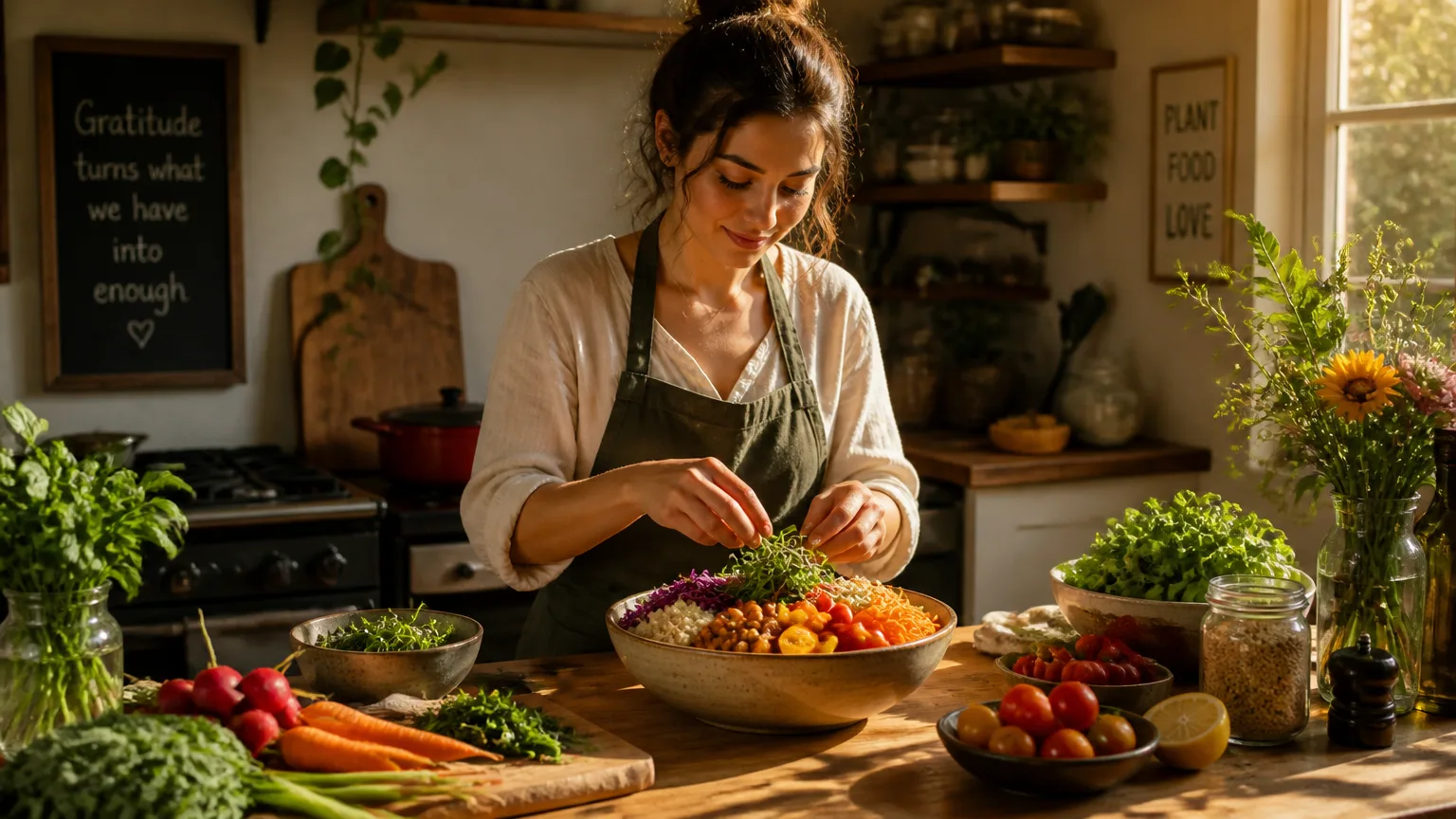
Cooking can happen mechanically: chop, stir, serve, and move on. Yet the same meal can change when prepared with attention, care, and a sense of sacred purpose. Choosing fresh ingredients, noticing their colors and textures, and cooking with gratitude can help you enjoy vegetarian food as more than a routine.
Meaningful vegetarian cooking does not require perfection, elaborate rituals, or advanced culinary skills. It can begin with one simple meal prepared slowly and thoughtfully. As you wash vegetables, season a soup, or share food with others, you create space for compassion, mindfulness, and gratitude to shape the experience.
For many spiritual seekers, cooking offers a practical way to bring values into daily life. A plant-based meal can express care for living beings, respect for nature, and appreciation for the nourishment received. Even a familiar dish, such as rice with vegetables or a warm lentil stew, can become an opportunity to pause and recognize the effort behind each ingredient.
Mindful cooking is open to everyone. It may mean focusing fully on the task, reducing waste, or preparing food with the intention to nourish body and mind. In the Hare Krishna tradition, this awareness takes a devotional form: food is prepared with love and offered to Krishna before it is eaten. Readers who want to explore this practice can learn more about making every meal a sacred offering.
No single spiritual path is required to cook with meaning. You might begin by setting an intention, offering a quiet prayer, or expressing thanks before serving. This article will help you discover how ordinary kitchen habits can become more conscious, compassionate, and spiritually fulfilling—one meal at a time.
Begin With the Conscious Choice to Cook Without Harm
Vegetarian cooking can begin with a simple intention: to nourish yourself while causing less harm. This choice is not a strict list of forbidden foods. It is a positive practice rooted in compassion, respect for life, and greater care for the world around you.
People arrive at vegetarianism through different paths. Some feel concern for animals, while others respond to environmental issues, health needs, spiritual beliefs, or personal experience. No single reason is required, and no one needs to follow a perfect path. Sincere, sustainable progress matters more than shame or rigid rules.
That intention becomes real through ordinary kitchen choices. At the market, you might pause over where your ingredients came from, who produced them, and what resources they required. Choosing seasonal vegetables, beans, grains, and fruit can make the connection between your meal and the wider food system easier to see.
Cooking also invites closer attention. As you wash greens, chop onions, or season lentils, notice the work and resources behind each ingredient. A carrot represents soil, water, labor, transport, and time. Recognizing that process can turn preparation into an act of gratitude rather than a task to complete quickly.
This awareness can shape how you use food. Buy only what you can prepare, store delicate produce properly, and use stems, peels, and leftovers when possible. A vegetable soup made from tired produce or a stock prepared from clean scraps shows that compassion includes reducing waste.
Your choices can also support people and communities. Look for fairly produced ingredients when your budget allows, support local growers, and learn which products reflect responsible labor practices. Small decisions, repeated over time, can align your daily meals with your values.
Serving food extends that intention beyond your own plate. Cook enough to share with a neighbor, prepare a nourishing meal for your household, or bring a plant-based dish to a gathering. When vegetarian food creates connection, it becomes an expression of care rather than a private rule.
To enjoy vegetarian cooking with more meaning, begin with one practical commitment:
Plan meals before shopping.
Choose ingredients with care.
Reduce avoidable waste.
Cook with patience and attention.
Share food whenever possible.
These habits keep ethical intention grounded in daily life. Each meal becomes an opportunity to practice compassion through what you buy, prepare, serve, and appreciate.
Turn Ingredient Selection Into an Act of Gratitude
Ingredient selection can become a quiet practice of gratitude. Before shopping or cooking, pause to consider what each food represents: sunlight, soil, water, skilled labor, transport, and the care required to bring it to your kitchen.
A carrot is more than an item on a list. It reflects a farmer’s work, fertile ground, seasonal weather, and the people who harvested and delivered it. Recognizing these connections can help you approach vegetarian cooking with greater respect and attention.
Begin With What Is Fresh and Familiar
Fresh, seasonal produce often makes cooking feel grounded rather than overwhelming. Visit a farmers market, choose one vegetable that looks appealing, or select produce that is currently abundant in your area.
You do not need rare ingredients or complicated recipes to enjoy vegetarian meals. A few nourishing foods can provide a satisfying foundation:
A seasonal vegetable, such as squash, greens, tomatoes, or carrots
A dependable staple, such as rice, lentils, beans, oats, or potatoes
A source of flavor, such as ginger, garlic, lemon, herbs, or spices
Familiar ingredients also reduce decision fatigue. When you know how a potato roasts, how lentils soften, or how greens respond to garlic, you can cook with confidence instead of chasing constant novelty.
Pantry staples deserve the same appreciation as fresh foods. Rice, beans, flour, spices, and cooking oils may seem ordinary, yet they make nourishing meals possible throughout the year. Organizing these basics and using them fully can turn a simple pantry into a source of stability and abundance.
Let Your Senses Slow the Process
Mindfulness in the kitchen does not require silence or a lengthy ritual. Use your senses as practical anchors while you prepare food.
Notice the bright color of a pepper, the rough skin of a squash, or the fragrance released when cumin touches warm oil. Listen to onions soften in a pan, feel dough change beneath your hands, and taste a sauce before deciding what it needs.
These small observations bring attention back to the present moment. They also help you cook more skillfully. A fragrant spice may need only a brief moment in the pan, while a firm vegetable may require more time to soften.
Try asking yourself:
What colors are on my cutting board?
Which aromas are developing?
How does the texture change as the food cooks?
What flavor is missing or already balanced?
This approach makes cooking less about perfection and more about participation. Resources such as Hare Krishna Recipes can offer inspiration, while your own senses guide practical choices.
When you select ingredients with appreciation, even a modest meal carries meaning. You recognize the abundance before you, prepare it with care, and create space to enjoy vegetarian cooking as a daily expression of gratitude.
Cook With Attention, Cleanliness, and a Devotional Mood
The kitchen can become a place where inner intention meets practical preparation. Clean surfaces, organized tools, and steady attention do more than improve efficiency. They show respect for the ingredients and for the people who will receive the meal.
Prepare the Kitchen as an Act of Respect
Begin by creating a clean, workable space. Wash produce thoroughly, wipe the counters, rinse cutting boards, and remove anything that does not belong to the task. Then gather the tools and ingredients you need before cooking.
This preparation reduces stress and helps you remain present. It also expresses care for the food. A carefully washed carrot, neatly chopped herb, or clean cooking vessel can become part of the offering’s dignity.
Simple organization makes mindful cooking easier:
Place ingredients where you can reach them safely.
Read the recipe before turning on the heat.
Measure spices and liquids in advance.
Keep a bowl nearby for peels and scraps.
Clean as you go to maintain order.
These habits support both cleanliness and concentration. When the kitchen is prepared, you have more attention available for the work itself.
Establish a Devotional Mood
Before cooking, pause for a moment. You might offer a prayer, repeat a mantra, play sacred music, or sit quietly and remember why you are preparing the meal. Your tradition may guide this practice, but no single form is required.
Even a brief inward recollection can change the atmosphere. You may think, “May this food nourish others,” or express gratitude for the farmers, soil, water, and many hands involved. This intention helps transform routine work into devotional service.
Some cooks prefer silence, especially when preparing food early in the morning. Others feel more connected while listening to spiritual songs or reciting familiar words. Choose what supports sincerity rather than what appears impressive.
Bring Full Attention to Each Step
Devotional cooking depends on presence. Stir patiently instead of rushing the pot. Notice the fragrance of onions, the changing color of vegetables, and the texture of grains as they cook. Taste attentively and adjust seasoning with care.
Distracted or resentful cooking can affect your experience of the meal. If you feel hurried or frustrated, slow down where possible. Take one breath, return to the current task, and continue without demanding perfection from yourself.
Careful technique becomes a form of attention. Chopping evenly helps ingredients cook properly. Managing heat prevents waste. Serving thoughtfully acknowledges that food carries both nourishment and meaning.
You do not need elaborate presentation or a long list of rituals to enjoy vegetarian cooking with purpose. Devotion is measured by sincerity, not performance. A simple meal prepared with cleanliness, patience, and genuine care can hold deeper meaning than an elaborate dish made without attention.
Let the kitchen reflect your intention in practical ways. Prepare well, work calmly, and treat each ingredient as worthy of care. With time, these habits can make ordinary cooking feel more focused, grateful, and spiritually alive.
Prepare Food as an Offering, Then Share It With Love
Cooking can move beyond personal consumption when you prepare food as an offering. Instead of asking only, “What do I want to eat?” you can also ask, “How can this meal express gratitude, care, and service?”
In the Hare Krishna tradition, devotees prepare suitable vegetarian food and offer it to Krishna with devotion. After the offering, they honor the food as prasada, or mercy. This practice changes the experience of eating: the meal becomes something received with gratitude rather than consumed casually.
If you want to explore this practice, learn the specific offering steps followed by your spiritual community or teacher. Sacred traditions deserve understanding and respect. Avoid treating an offering as a decorative technique or a formula separate from devotion, intention, and service.
A simple offering may include fresh vegetables, grains, fruit, and a thoughtfully prepared main dish. You might arrange the food carefully, offer it with a prayer, and pause before eating. The value lies less in complexity than in sincerity and consistent attention.
You can also bring this spirit into everyday vegetarian cooking. Try a new recipe, such as these Hare Krishna salad dressing ideas, while remembering that preparation can serve others. Wash produce carefully, cook patiently, and consider who will enjoy the meal.
Let Hospitality Turn Cooking Into Service
Offering food does not end with private prayer. Serving family, welcoming guests, or preparing a meal for a neighbor extends the practice into generosity and connection.
A shared meal can be simple:
Invite a friend for lentil soup and rice.
Bring vegetable stew to someone recovering from illness.
Prepare extra portions for a community gathering.
Offer fruit, bread, or snacks to a visiting guest.
Cook with children and let them help serve.
These actions make spiritual meaning visible. Nourishment becomes a form of welcome, and cooking becomes a practical way to notice and support other people.
Shared food also creates space for conversation. A table can bring together people with different backgrounds, beliefs, and dietary needs. When you serve with care, you communicate that each person matters.
This perspective can deepen your ability to enjoy vegetarian cooking. You are not preparing food only to satisfy hunger. You are creating an opportunity for gratitude, hospitality, and service. Whether you follow a devotional offering practice or simply pause to give thanks, each meal can connect personal nourishment with the well-being of others.
Make Meaningful Vegetarian Cooking Sustainable in Daily Life
Meaningful vegetarian cooking does not require elaborate menus or long hours in the kitchen. A small group of reliable recipes, staple grains and legumes, seasonal vegetables, and a few favorite spices may be enough. Simple food can still express gratitude, care, and hospitality.
Build a Routine That Fits Your Real Schedule
Choose recipes that match your available time and energy. A one-pot lentil stew, vegetable casserole, or make-ahead grain bowl may serve your household better than an ambitious recipe that creates stress.
Keep a short list of dependable meals for busy days:
- Rice with beans, roasted vegetables, and a quick yogurt or tahini sauce
- Lentil soup with bread and seasonal greens
- Baked vegetables with chickpeas and a simple spice blend
- Flexible pasta, grain, or tortilla dishes using available produce
For inspiration, explore these vegetarian casserole recipes and adapt them to your ingredients. A recipe should support your practice, not control it. If fresh vegetables are unavailable, frozen produce can still become part of a thoughtful meal.
Let Leftovers Support Your Values
Cooking extra food can reduce waste, save money, and protect your energy. Batch cooking is not a compromise in spiritual quality. It can be an act of stewardship because it honors the ingredients, labor, and resources already invested in the meal.
Prepare a pot of beans, cooked grains, roasted vegetables, or tomato sauce once. Use them across several meals by changing the seasonings or presentation. For example, roasted vegetables can fill a wrap one day and accompany lentils the next.
Make Room for Different Needs
Households often include people with different dietary requirements, preferences, or appetites. Start with a shared base, then offer simple additions such as cheese, nuts, tofu, a dairy-free sauce, or extra vegetables.
Label stored meals clearly and ask guests about allergies before serving. This practical attention turns hospitality into a meaningful expression of respect.
Protect Joy on Imperfect Days
Some days will include reheated food, convenience ingredients, or very little cooking. These choices do not cancel your intention. A brief prayer, a moment of thanks, or careful attention while serving can keep the practice sincere.
The goal is not to perform vegetarian cooking perfectly. It is to create sustainable habits that help you enjoy vegetarian meals with greater presence, compassion, and joy.
Frequently Asked Questions About Meaningful Vegetarian Cooking
What makes vegetarian cooking spiritually meaningful?
Spiritual meaning comes from intention, compassion, mindfulness, gratitude, offering, and service. It does not depend on complex recipes, costly ingredients, or advanced cooking skills.
You might wash vegetables carefully, cook without distractions, or pause to appreciate the people who grew your food. Sharing the finished meal with family, neighbors, or someone in need can also turn cooking into an act of service. These simple choices help you enjoy vegetarian meals with greater awareness.
Do I have to follow Hare Krishna practices?
No. Anyone can cook mindfully and compassionately, regardless of religious background. A quiet prayer, personal intention, or moment of gratitude can bring meaning to your kitchen practice.
If you want to offer food to Krishna, learn the tradition respectfully. Practices may include specific ingredient standards, preparation methods, cleanliness guidelines, and prayers. Guidance from an established community or qualified teacher can help you follow those practices with care rather than assumption.
What foods are suitable for a devotional vegetarian meal?
Fresh vegetables, fruits, grains, legumes, herbs, nuts, and dairy products may form the basis of a devotional vegetarian meal. A simple plate of rice, lentils, seasonal vegetables, and fruit can be nourishing and meaningful.
Ingredient standards differ among lineages and communities. Some devotional traditions avoid particular ingredients, such as onions or garlic, while others follow different guidelines. Check with your spiritual community before preparing food for an offering, especially when cooking for guests with specific practices.
How can I prepare a sacred meal when I am busy or inexperienced?
Choose one simple dish, such as vegetable rice, lentil soup, or roasted seasonal vegetables. Clean your preparation area, work calmly, and set aside a brief moment for prayer or a clear intention.
After cooking, offer the meal according to your tradition or pause in gratitude before serving. You do not need elaborate presentation. Grateful sharing can make an ordinary weeknight meal feel focused and generous.
How can I prevent spiritual cooking from becoming stressful?
Treat sincerity as more important than perfection. A missed prayer, imperfect recipe, or rushed meal does not erase your intention.
Stay flexible when schedules change. Offer hospitality without judging your own performance, and return gently to the practice after difficult days. Meaningful cooking should support steadiness, connection, and joy—not create fear or pressure.
Let Every Vegetarian Meal Become an Opportunity for Connection
Meaningful vegetarian cooking brings several simple practices together. You make compassionate choices, select ingredients with gratitude, prepare food attentively, and offer it with a spirit of service. Each step can turn an ordinary task into an opportunity to enjoy vegetarian cooking with greater purpose.
The spiritual value of cooking is found in the relationship created between your intention, the food, the Divine, and the people being nourished. A carefully prepared meal does more than satisfy hunger. It expresses respect for life, appreciation for nature’s gifts, and care for everyone who gathers around the table.
Begin with a manageable ritual. Clean the cooking space before you start, offer a brief prayer, or pause to thank the people and processes that brought the ingredients to you. You might also prepare a simple homemade vegetarian meal for a friend, neighbor, or family member.
Sharing makes this practice more generous and real. A modest dish served with warmth can create connection more powerfully than an elaborate meal prepared without attention. For a special gathering, a joyful vegan brunch can provide inspiration while keeping hospitality welcoming and practical.
Do not wait for perfect ingredients, extra time, or an important occasion. Choose one familiar recipe, clear your workspace, and cook without rushing. Before serving, take a moment to offer thanks or dedicate the meal to the well-being of others.
Meaningful cooking is not about making every meal extraordinary. It is about learning to recognize the sacred potential in ordinary nourishment. With each thoughtful choice, attentive action, devotional offering, and generous serving, your kitchen can become a place of compassion, gratitude, and connection.