
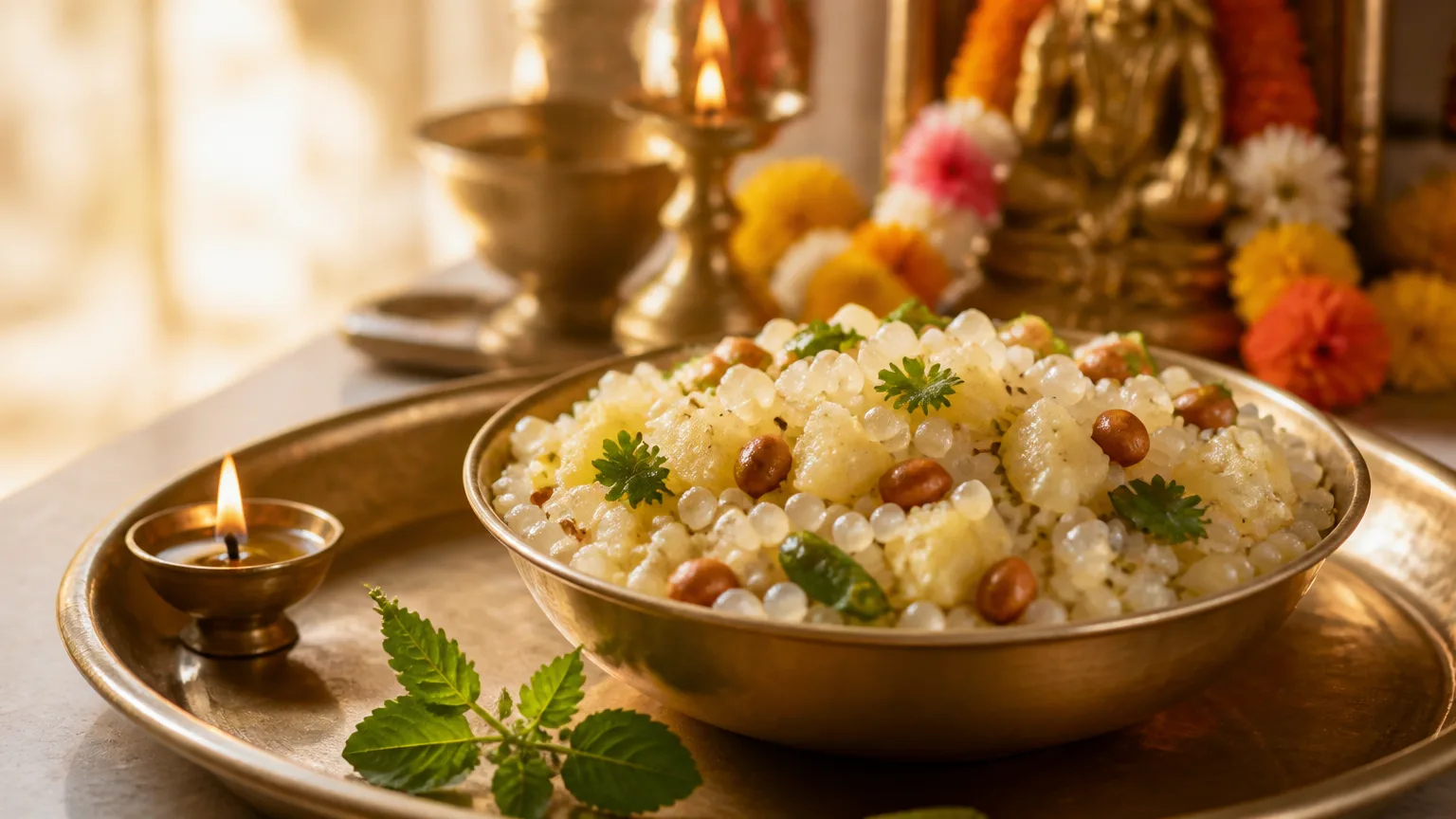
Soft tapioca pearls, roasted peanuts, and tender potatoes give sabudana khichdi its comforting texture and gentle flavor. This sabudana khichdi recipe iskcon offers a naturally vegetarian dish that devotees can prepare with clean ingredients and offer to Krishna before eating.
Cooking should become an act of service, not an ordinary meal preparation. Keep the kitchen clean, use fresh ingredients, and work peacefully while preparing the offering. Always follow the guidance of your spiritual teacher, temple, and Ekadashi standards, as ingredient choices and preparation practices may vary. For another devotional staple, explore this authentic ISKCON dal recipe and learn how mindful cooking supports a thoughtful offering.
What Makes This Sabudana Khichdi Suitable for Offering?
This sabudana khichdi recipe ISKCON devotees can offer begins with simple, vegetarian ingredients. Soaked sabudana provides gentle nourishment, while potatoes, peanuts, cumin, fresh herbs, lemon, and mild spices create satisfying flavor without heavy seasoning.
The recipe omits onion and garlic, making it more compatible with many Vaishnava kitchens. However, devotees should follow the specific standards of their spiritual teacher, temple, and community. Ekadashi rules and offering practices may also differ.
Sattvic-minded cooking emphasizes freshness, cleanliness, and a peaceful mood. Cumin and herbs add fragrance, while lemon brightens the dish. Peanuts and potatoes give it substance, much like other devotional staples that turn humble ingredients into nourishing, celebratory offerings.
Cooking for an offering also differs from cooking for personal preference. Prepare the khichdi carefully, but do not taste it during cooking. Instead, rely on measured ingredients and experience, then offer the finished dish according to your established practice.
This thoughtful simplicity also appears in festive preparations such as a devotional ISKCON cake recipe. In both dishes, mindful preparation matters as much as presentation.
Ingredients and the Key Step: Soaking Sabudana Correctly
For a small family offering, prepare:
- 1 cup medium-sized sabudana for the base
- 1 medium boiled potato, diced for substance
- ½ cup roasted peanuts, crushed for crunch
- 1 teaspoon cumin seeds for aroma
- 1 tablespoon lemon juice and 2 tablespoons chopped cilantro for freshness
- Rock salt and other seasonings according to the devotee’s observance
These quantities provide a balanced sabudana khichdi recipe ISKCON devotees can prepare and offer. Adjust the salt, spices, and fasting ingredients to follow your spiritual teacher, temple, or Ekadashi standards. You may also explore these vegetarian foods for a devotional meal for additional offering ideas.
Soaking determines whether the khichdi stays distinct and fluffy or turns sticky and dense. Place the sabudana in a bowl and rinse it several times. Continue until the water is mostly clear, which removes excess surface starch.
Next, add only enough water to hydrate the pearls. The water should reach their level, not submerge them deeply. Cover the bowl and rest it for several hours, preferably overnight.
Before cooking, test one pearl by pressing it between your fingers. It should soften easily without becoming mushy. If the center remains hard, sprinkle in a little water and rest the sabudana longer. Properly hydrated pearls should separate gently when stirred.
Step-by-Step Sabudana Khichdi Recipe
Begin by preparing the peanut mixture. Dry-roast the peanuts gently, cool them, and crush them into a coarse powder. Cut the boiled potatoes into even pieces so each serving includes a balanced mix of soft potato, crisp peanut, and tender sabudana.
Warm the cooking fat in a wide pan over low to medium heat. Add the cumin seeds and let them crackle gently. Add mild chili or grated ginger only if it follows the devotee’s cooking standard. Keep the seasoning simple, as this sabudana khichdi recipe ISKCON devotees can offer should remain suitable for the intended offering.
Add the potato pieces and sauté them carefully. Turn them with a light touch until they are warmed through and lightly coated with the seasoning. Avoid heavy browning, which can overpower the delicate flavor and make the potatoes firm.
Add the soaked sabudana and prepared peanut mixture. Fold everything together gently, using a broad spoon and minimal stirring. Cook over low heat until the pearls become translucent and the khichdi smells fragrant. This usually takes only a few minutes; overcooking can make the pearls sticky or gummy.
If the mixture looks dry, sprinkle in a small amount of water and cover the pan briefly. If it appears gummy, remove the lid and spread the khichdi gently across the pan so excess moisture can escape. Do not taste during preparation. Rely on measured ingredients, careful observation, and established devotional cooking practice.
Turn off the heat before adding lemon juice and freshly chopped cilantro. Fold them in gently without crushing the sabudana. Serve the finished dish according to your offering practice, alongside other Hare Krishna curry recipes when appropriate.
How to Offer, Serve, and Adapt the Khichdi
Transfer the warm khichdi to a clean offering plate or bowl. Place it before the Deity or altar according to your practice, then offer it with prayer and gratitude. Keep the food untouched until the offering is complete. Afterward, honor it as prasadam and share it respectfully.
Serve modest portions with fresh fruit, plain yogurt where permitted, or mild chutney. These accompaniments should support, not overpower, the khichdi’s delicate flavor. For more devotional cooking ideas, explore Heartwarming Sheet Pan Meal Recipes for Devotional Cooking.
Adapt this sabudana khichdi recipe ISKCON devotees can offer with extra roasted peanuts, grated coconut, or a softer texture. Avoid ingredients that conflict with your Ekadashi or temple observance. Keep portions clean, serve the dish warm, and offer generously to family, guests, and fellow devotees.
A Nourishing Dish Made Meaningful Through Offering
A successful sabudana khichdi recipe ISKCON devotees can offer begins with properly soaked sabudana, gentle cooking, and a thoughtful offering. These steps preserve its comforting texture while honoring devotional cooking practices.
Serve the khichdi warm and share it as an expression of hospitality and spiritual practice. With cleanliness, gratitude, and devotion, even a quick, humble meal becomes meaningful prasadam.