
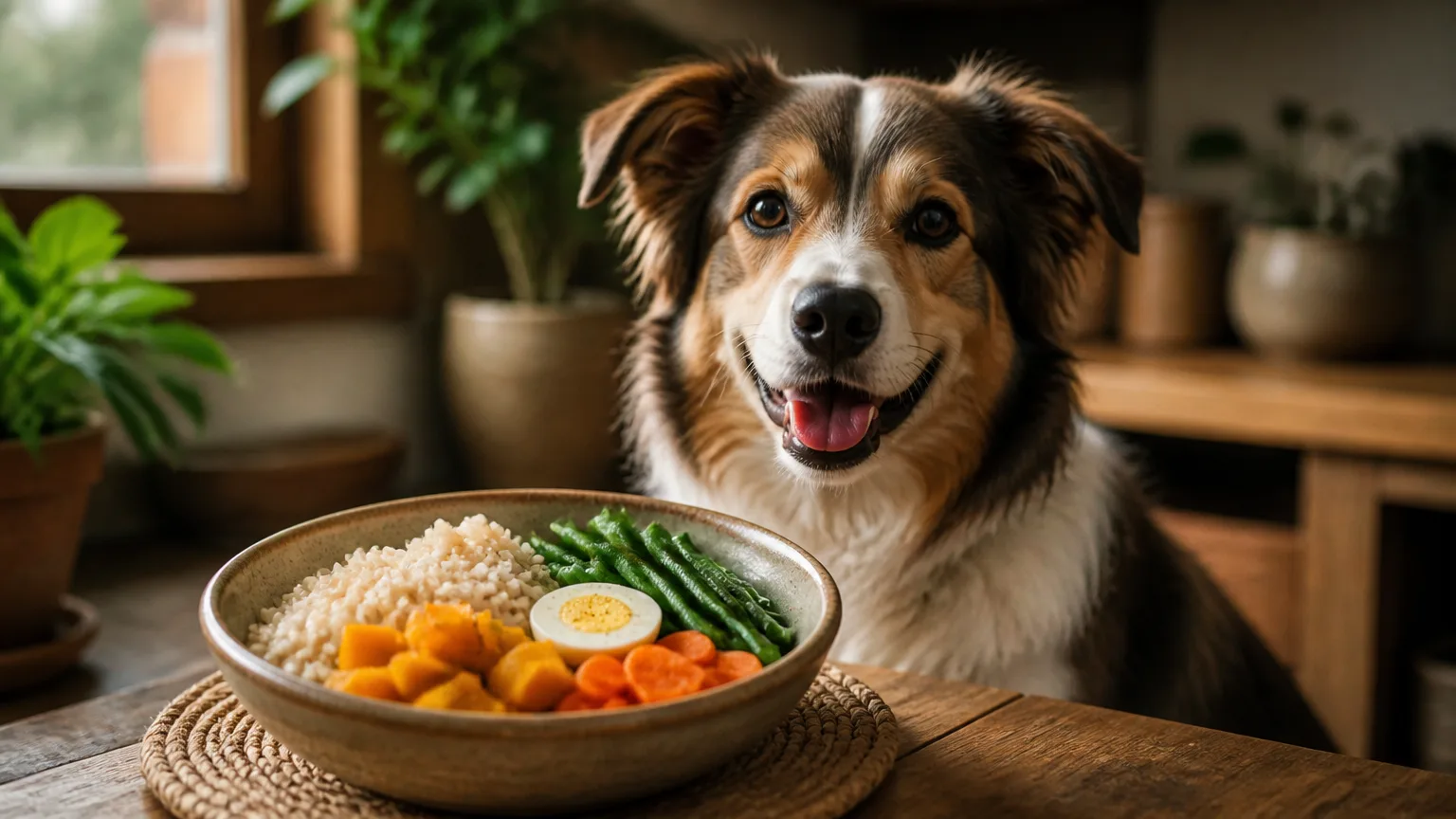
Homemade dog food recipes can help families prepare meals that reflect compassion, devotion, and mindful living. Devotees, spiritual seekers, and households committed to compassionate cooking may prefer wholesome vegetarian ingredients. Dogs, however, must receive nutrition that supports their health, energy, and stage of life.
Dogs are omnivores and may enjoy carefully prepared foods such as rice, pumpkin, carrots, green beans, and cooked eggs. Yet an improvised, all-vegetarian diet can lack protein, calcium, vitamin B12, taurine, vitamin D, and essential fatty acids. These gaps may affect bones, muscles, heart health, and overall wellbeing.
A meat-free homemade meal or topper is not automatically a complete long-term diet. Before making a major dietary change, consult your veterinarian or a board-certified veterinary nutritionist. Professional guidance is especially important for puppies, senior dogs, pregnant or nursing dogs, and pets with medical conditions.
Cooking can be an act of seva—a loving service offered with care. Exploring vegetarian delights for spiritual meals can inspire your kitchen, but devotional intention should support practical responsibility. The recipes ahead focus on safe preparation, balanced additions, and compassionate choices that keep your dog’s nutritional needs first.
Safety Rules for Vegetarian Homemade Dog Food
Vegetarian meals can be suitable for some dogs when prepared carefully. However, devotional human recipes cannot simply transfer to a dog’s bowl because they may contain rich sauces, salt, or unsafe seasonings.
Use Plain, Cooked Ingredients
Build meals from simple, digestible foods prepared without added salt, chili, heavy spices, or excessive fat. Safer foundations include:
- Cooked white or brown rice
- Plain oats or quinoa
- Pumpkin and cooked sweet potato
- Carrots, green beans, and peas
- Small amounts of plain dairy, only if your dog tolerates it
- Fully cooked quinoa
- Plain baked or steamed sweet potato
- Finely chopped, cooked green beans
- A small amount of plain low-fat cottage cheese or unsweetened yogurt, only if your dog tolerates dairy
- ½ cup mashed, unsalted chickpeas
- ½ cup oat flour
- ¼ cup plain pumpkin puree
- ¼ cup finely grated carrot
- Calcium and vitamin D
- Vitamin B12 and iodine
- Taurine and zinc
- Essential fatty acids
Avoid ghee-rich sauces and fried ingredients. Even familiar foods from easy healthy dinner recipes may require major changes before they are appropriate for dogs.
Exclude Toxic Foods and Seasonings
Never add onion, garlic, leeks, or chives. Also keep grapes, raisins, chocolate, xylitol, and macadamia nuts away from your dog. These ingredients can cause serious illness, even in small amounts.
Check packaged ingredients carefully. Broths, sauces, spice blends, and dairy products may contain hidden onion powder, garlic, sweeteners, or high levels of fat.
Introduce Food Gradually and Store It Safely
Try one recipe at a time and begin with a modest portion. Watch for vomiting, diarrhea, itching, gas, lethargy, or other signs of intolerance. Stop serving the food and contact your veterinarian if symptoms are severe or persistent.
Refrigerate homemade food promptly in sealed containers and use it within a few days. Freeze extra portions when needed, and discard food that smells unusual or remains at room temperature too long.
Most homemade dog food recipes should complement a nutritionally complete canine diet, not replace it. Use a recipe as a topper or occasional meal unless a veterinarian or veterinary nutritionist formulates and supplements the full diet.
Recipe 1: Gentle Rice, Lentil, and Pumpkin Bowl
Prepare this soft bowl as an occasional meal topper or carefully portioned home-cooked component. Gather well-cooked white or brown rice, thoroughly softened red lentils, plain pumpkin puree, finely chopped carrots, and water or unsalted broth confirmed free of onion and garlic.
Rinse the red lentils carefully, then simmer them until they become very soft. Steam the carrots until tender. Combine the rice, lentils, pumpkin, carrots, and enough cooking liquid to create a moist, spoonable texture. Cool the mixture completely before serving.
Lentils provide plant protein and fiber, while pumpkin may help support healthy stool consistency. However, legumes can cause gas, especially when introduced quickly. This bowl does not provide every vitamin, mineral, amino acid, or fatty acid a dog needs, so it should not replace a complete canine diet without veterinary formulation.
Begin with one spoonful mixed into your dog’s usual food. Monitor for loose stool, vomiting, bloating, or discomfort before offering more. Adjust the portion according to your dog’s size, calorie needs, activity level, and veterinarian’s advice.
Prepare this meal mindfully, keeping the ingredients plain and fresh. A devotional meal prepared for people is not automatically suitable for pets. For example, an ISKCON sambar recipe may contain spices, salt, or ingredients that do not suit dogs. Offer compassionate care through restraint: omit human seasonings, onion, garlic, and rich toppings from these homemade dog food recipes.
Recipe 2: Sweet Potato, Quinoa, and Green Bean Mash
This colorful mash combines familiar ingredients with gentle flavors and useful moisture. It can serve as a topper or occasional meal within homemade dog food recipes, rather than a complete long-term diet.
Ingredients and preparation
Use:
Cook the quinoa until soft and fluffy. Serve the sweet potato plain, with no salt, butter, sugar, or spice blends. Remove tough skins, stems, and large pieces before combining the ingredients.
Mash or mix the food until it reaches a soft, even texture. This step helps older dogs and dogs with dental difficulty eat more comfortably. It also reduces choking risks from firm vegetables or oversized chunks.
Why this recipe works
Sweet potato provides carbohydrates for energy, while quinoa contributes plant protein and additional carbohydrates. Green beans add fiber and moisture, and a small dairy portion can improve texture and flavor when tolerated.
Introduce the mash gradually and watch for gas, loose stool, itching, or vomiting. Your dog’s digestion, allergies, age, and medical conditions should determine whether this recipe is appropriate. Clean hands, utensils, and storage containers support safe preparation; preparing the meal with gratitude should also include careful hygiene.
For broader human nutrition ideas, explore these anti-inflammatory dinner recipes, but keep human seasonings separate from your dog’s portion. For exclusive long-term feeding, add a professionally designed canine supplement or use complete commercial food as directed by a veterinarian or veterinary nutritionist.
Recipe 3: Chickpea and Vegetable Training Bites
These small baked bites turn safe vegetarian ingredients into occasional training rewards, not a complete meal. Mash unsalted, fully cooked chickpeas until smooth. Combine them with oat flour, plain pumpkin puree, and finely grated carrot.
Ingredients and Preparation
Use simple ingredients and avoid all seasonings:
Mix the ingredients until a soft dough forms. Shape it into tiny, flat portions, no larger than your dog can safely manage. Place the bites on a baking sheet and bake without oil, sugar, salt, onion, garlic, or seasoning. Allow them to cool completely before training.
Safe Serving Guidelines
Chickpeas provide protein and fiber, but they may cause gas, bloating, or digestive upset in some dogs. Begin with one small bite and monitor your dog before offering more. Count each treat within the dog’s daily calorie allowance.
Avoid whole, hard, or oversized pieces, which may create a choking risk. Store cooled bites safely and discard them if they develop an unusual smell or remain at room temperature too long.
Use these treats occasionally alongside complete dog food. Homemade vegetarian treats are not formulated to provide every essential nutrient and cannot replace a balanced canine diet. Offering a measured bite supports compassionate care through thoughtful restraint, rather than indiscriminate feeding from the human table.
Recipe 4: Oat, Apple, and Carrot Breakfast Topper
This mildly sweet topper adds gentle flavor without turning your dog’s meal into a human-style breakfast. Use plain cooked oats, finely grated carrot, and a small amount of peeled, cored apple.
Cook the oats in water, with no salt, milk, sugar, or seasoning. Let them cool completely, then fold in the carrot and apple. Remove every apple seed, along with the core and stem, before grating the fruit. Do not add cinnamon-sugar mix, sweeteners, butter, or dairy toppings.
Serve a small spoonful alongside your dog’s complete, balanced food. Oats can provide soluble fiber, while apple adds moisture and flavor. However, fruit and grains should remain modest portions rather than the nutritional center of every meal.
Refrigerate leftovers promptly in a sealed container and use them within a short, safe period. Discard any portion left at room temperature too long or showing an unusual smell or texture.
Dogs with diabetes, obesity, sensitive digestion, or grain allergies may need a different approach. Ask your veterinarian before adding this topper, especially if your dog has a medical condition or follows a restricted diet. Among homemade dog food recipes, this option works best as a mindful offering of care—not a replacement for species-appropriate nutrition.
Recipe 5: Balanced Vegetarian Meal Planning With Professional Guidance
Use these homemade dog food recipes as toppers, enrichment foods, or occasional meat-free meals. They should complement nutritionally complete dog food unless a veterinarian or board-certified veterinary nutritionist formulates the entire plan.
A practical rotation might include a spoonful of plain vegetables over regular food, a chilled lentil enrichment filling, or one measured vegetarian meal each week. Keep portions within your dog’s daily calorie allowance. For meal inspiration, explore this Mediterranean diet meal prep, but remove salt, spices, onion, garlic, and rich ingredients from your dog’s portion.
Long-term vegetarian feeding requires precise planning. A professional may recommend measured supplements for:
Human multivitamins are not safe substitutes. Nutrient levels and ingredients may harm dogs or fail to meet canine requirements.
Ask a veterinarian to calculate calories and nutrient needs based on body weight, age, activity level, and health conditions. Monitor weight, stool quality, coat condition, energy, appetite, and signs of allergy or deficiency. Discontinue a recipe and seek veterinary advice if concerning symptoms appear.
Compassion also means respecting a dog’s biological requirements. A household may follow a spiritual or vegetarian culinary tradition while still providing species-appropriate nutrition.
Cooking With Compassion and Keeping Dogs Well Nourished
Homemade dog food recipes can add wholesome variety when prepared with care. Plain rice-and-lentil bowls, sweet potato and quinoa mash, chickpea training bites, and oat-fruit toppers may work as occasional additions. Introduce each option gradually, serve small portions, and monitor your dog’s stool, appetite, energy, and skin.
The key distinction is simple: some vegetarian ingredients are safe for dogs, but a fully balanced vegetarian diet requires professional formulation. Dogs need precise amounts of protein, fat, vitamins, minerals, and essential amino acids. A veterinarian or board-certified veterinary nutritionist should design any homemade diet intended for long-term feeding.
Prepare these foods calmly and gratefully, using plain ingredients and safe portions. However, spiritual intention should never replace veterinary nutrition guidance or attention to your dog’s individual response. Avoid onion, garlic, excess salt, rich sauces, unsafe fruits, and any ingredient your veterinarian has restricted.
For most dogs, these recipes should complement complete, balanced food rather than replace it. Keep treats and toppers within your veterinarian’s recommended calorie limits, especially for dogs with diabetes, kidney disease, food allergies, or weight concerns.
Compassionate feeding combines kindness with responsibility. Choose one recipe, begin with a small portion, and observe how your dog responds over several days. Keep your dog’s long-term health, nutritional needs, and comfort at the heart of every offering.