
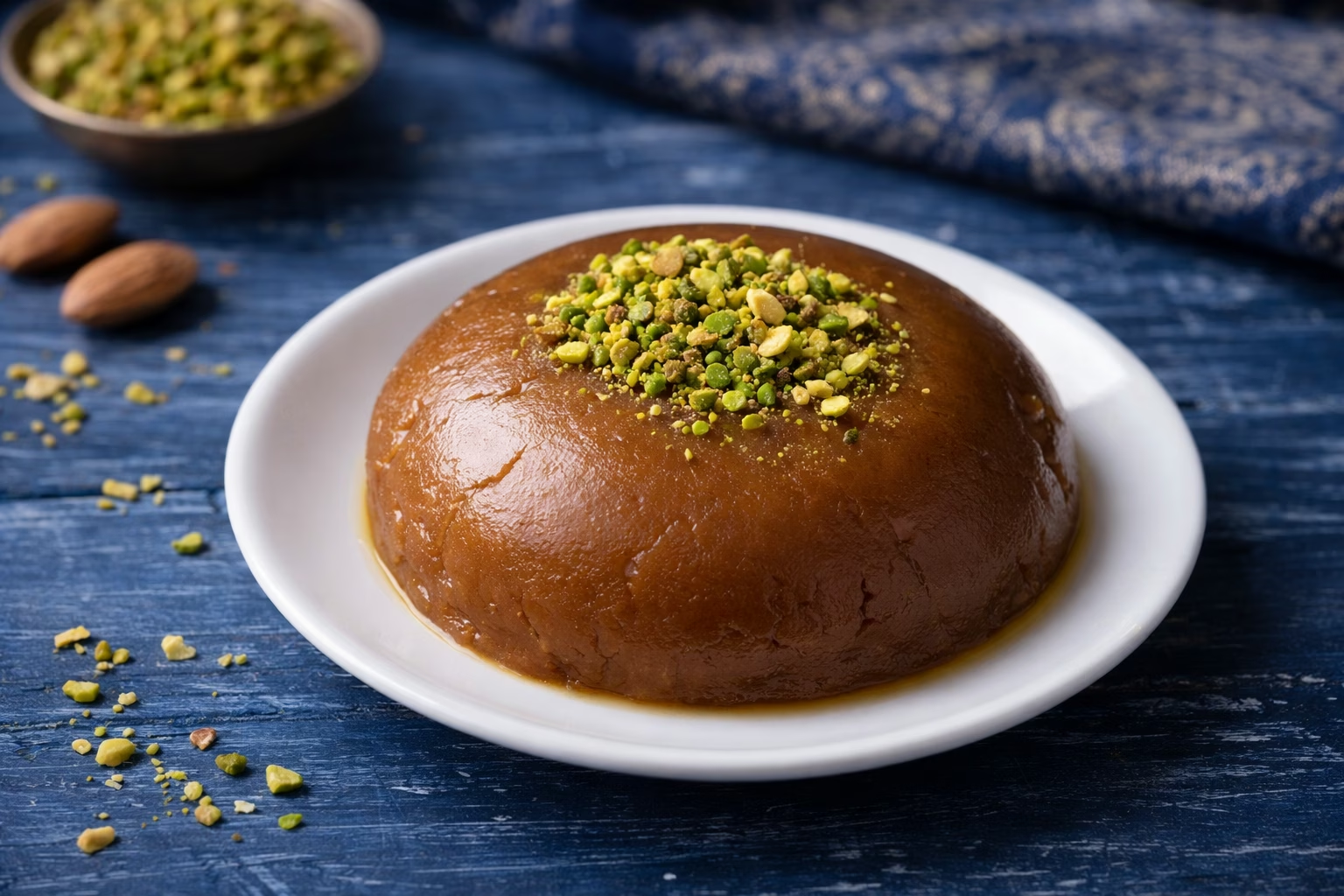
Karah Prasad (also spelled Kada Prasad or Karah Parshad) is a deeply nourishing Punjabi wheat halva made from only four humble ingredients: whole wheat flour, ghee, sugar, and water. When prepared correctly, it becomes an incredibly smooth, rich, glossy sweet with a deep roasted aroma that fills the entire kitchen.
Although Karah Prasad is traditionally served in Sikh Gurdwaras as a sacred offering, this style of roasted wheat halva has also become widely appreciated across devotional communities. Many ISKCON temples and bhakti communities prepare a similar wheat halva as prasadam, and it is frequently served to devotees during festivals, Sunday programs, and community meals.
At The Bhakti House in Jackson, Michigan, this style of wheat halva is often shared with devotees as a warm, nourishing sweet after kirtan and spiritual discussion. Its simplicity, purity of ingredients, and deep roasted flavor make it a beautiful addition to any prasadam feast or devotional meal.
Despite containing only four ingredients, the flavor is surprisingly complex—nutty, caramel-like, silky, and deeply satisfying.
What Karah Prasad Is
Karah Prasad is a traditional Punjabi wheat halva made by slowly roasting whole wheat flour in ghee until it develops a deep golden color and rich aroma. A simple sugar syrup is then added, transforming the mixture into a soft, glossy halva.
It is traditionally prepared with devotion and shared with everyone equally, reflecting principles of humility, generosity, and spiritual community.
The four ingredients are simple:
- whole wheat flour (atta)
- ghee
- sugar
- water
Yet when cooked properly, the result is incredibly luxurious.
Why Karah Prasad Tastes Different From Regular Halva
Most Indian halvas are made using semolina (sooji) and often include:
- nuts
- cardamom
- milk
- raisins
Karah Prasad, however, uses whole wheat flour, which gives it a distinctly different character.
This results in:
- deeper roasted flavor
- darker golden-brown color
- warm nutty aroma
- dense, silky texture
Instead of being grainy like semolina halva, properly prepared Karah Prasad becomes smooth and melt-in-the-mouth.
Authentic Karah Prasad Recipe
(Traditional Punjabi Wheat Halva)
Ingredients
- 1 cup whole wheat flour (atta)
- 1 cup ghee
- 1 cup sugar
- 2 cups water
These proportions follow the traditional ratio:
1 : 1 : 1 : 2
flour : ghee : sugar : water
This ratio produces the signature silky texture.
Step 1 — Prepare the Sugar Syrup
In a saucepan combine:
- sugar
- water
Heat gently until the sugar dissolves.
Keep the syrup warm but not boiling.
Step 2 — Roast the Flour
In a heavy pot or cast iron pan heat the ghee.
Once the ghee melts completely, add the whole wheat flour.
Cook over medium-low heat, stirring constantly.
Continue roasting for 10–15 minutes until:
- the flour becomes deep golden brown
- the aroma becomes nutty and sweet
- the texture becomes smooth and glossy
This is the most important step.
Proper roasting develops the caramelized wheat flavor that makes Karah Prasad extraordinary.
Step 3 — Add the Sugar Syrup
Carefully pour the warm sugar water into the roasted flour mixture.
The mixture will bubble vigorously, so add slowly.
Stir continuously to prevent lumps.
Within 2–3 minutes, the mixture thickens and transforms into a soft halva.
Step 4 — Finish the Halva
Continue cooking until the ghee begins to lightly separate at the edges.
The halva should appear:
- glossy
- smooth
- soft but thick
Remove from heat and allow it to rest for a few minutes before serving.
The Correct Texture
Perfect Karah Prasad should be:
- soft
- silky smooth
- glossy
- slightly flowing but thick
It should never be dry or crumbly.
The Secret to Temple-Quality Karah Prasad
Many people notice that temple halva tastes better than homemade versions.
The biggest reason is long, slow roasting.
In large temple kitchens the flour is often roasted for 20–40 minutes over gentle heat.
During this time:
- the flour develops deep caramelized flavor
- the ghee fully coats every grain
- the texture becomes incredibly smooth
This slow roasting is what creates the rich aroma that fills the langar hall.
Why It Looks Like It Is Slow-Cooked
In Punjabi temple kitchens the halva is often prepared in a large heavy pot called a karahi.
Because the vessel is thick and the heat is low, the mixture cooks slowly and evenly, almost like a slow cooker.
Large batches are constantly stirred with long wooden paddles, sometimes by two or three cooks at once.
This continuous stirring prevents lumps and produces a perfectly silky texture.
How to Recreate Temple Flavor at Home
To achieve authentic flavor at home:
- Use a heavy pot or cast iron pan.
- Roast the flour on low heat for at least 20 minutes.
- Stir constantly.
- Wait for the aroma of freshly baked bread and roasted nuts.
That fragrance signals the flour is perfectly roasted.
Devotional Cooking and Bhakti
Sacred sweets like this are traditionally prepared with a devotional mood.
Many cooks chant the Hare Krishna maha-mantra while stirring:
Hare Krishna Hare Krishna
Krishna Krishna Hare Hare
Hare Rama Hare Rama
Rama Rama Hare Hare
When food is prepared with devotion and offered to the Lord, it becomes prasadam, spiritualized food that nourishes both body and soul.
At The Bhakti House in Jackson, Michigan, sweets like this are often served to devotees after kirtan, satsang, and community gatherings.
Flavor Profile
When made properly, Karah Prasad has a unique taste:
- warm roasted wheat flavor
- deep caramelized aroma
- silky smooth texture
- gentle sweetness balanced by ghee
The taste is comforting, rich, and deeply satisfying.
Optional Variations
While traditional Karah Prasad contains only four ingredients, some devotional kitchens make gentle variations.
Jaggery Version
Replace sugar with jaggery for a deeper molasses flavor.
Cardamom Version
Add ½ tsp cardamom powder for a fragrant temple-style halva.
Nut Garnish
Top with toasted almonds or cashews for festive occasions.
Lighter Version
Reduce the ghee slightly while maintaining the same roasting technique.
Why This Sweet Is So Satisfying
The magic comes from the perfect balance of the four ingredients:
1 : 1 : 1 : 2
flour : ghee : sugar : water
This creates a texture that is:
- rich but smooth
- sweet but balanced
- comforting and nourishing
Serving Suggestions
Serve warm with:
- chai or herbal tea
- after a devotional meal
- during kirtan gatherings
- as part of a prasadam feast
It pairs beautifully with simple meals like dal, sabzi, and rice.
Final Thoughts
Karah Prasad reminds us that the simplest ingredients can create something extraordinary when prepared with care and devotion.
This humble Punjabi wheat halva has nourished spiritual communities for generations and continues to bring warmth and sweetness to devotional gatherings around the world.
Prepared slowly, stirred with patience, and offered with love, it becomes far more than a dessert—it becomes prasadam, a sacred gift meant to be shared.
PrintKarah Prasad Recipe (Punjabi Wheat Halva)
Karah Prasad is a deeply nourishing Punjabi wheat halva made from only four humble ingredients: whole wheat flour, ghee, sugar, and water. When prepared properly, it becomes a smooth, rich, and fragrant sweet with a deep roasted flavor.
This simple preparation is beloved across devotional communities and is very similar to the wheat halva often served as prasadam in bhakti temples and devotional gatherings. At The Bhakti House in Jackson, Michigan, this style of halva is frequently shared with devotees after kirtan and satsang as a warm and satisfying sweet offering.
Cooking sweets like this in the spirit of bhakti (devotional service) transforms a simple recipe into something sacred. Prepared with mindfulness and offered with love, it becomes prasadam, food that nourishes both body and soul.
- Prep Time: 5 minutes
- Cook Time: 20 minutes
- Total Time: 25 minutes
- Yield: Serves 12–24 1x
- Category: Sweet
- Method: Roasting and Simmering
- Cuisine: Indian, Punjabi
- Diet: Vegetarian
Ingredients
- 1 cup whole wheat flour (atta)
- 1 cup ghee
- 1 cup sugar
- 2 cups water
Instructions
Prepare the Sugar Syrup
In a saucepan combine the water and sugar. Heat gently and stir until the sugar dissolves completely. Keep the syrup warm but not boiling.
Roast the Flour
In a heavy pot or cast iron pan melt the ghee over medium heat. Add the whole wheat flour and begin roasting while stirring constantly.
Continue roasting for 10–15 minutes until:
-
the flour becomes deep golden brown
-
the aroma becomes nutty and sweet
-
the mixture looks smooth and glossy
This roasting step is the secret to authentic Karah Prasad flavor.
Add the Sugar Syrup
Carefully pour the warm sugar syrup into the roasted flour mixture. The mixture will bubble vigorously, so add slowly while stirring continuously.
Continue stirring for 2–3 minutes until the mixture thickens and becomes smooth.
Finish the Halva
Cook until the ghee begins to slightly separate around the edges of the halva. Remove from heat and allow it to rest briefly before serving.
The halva should be soft, smooth, and glossy.
Notes
The Secret to Temple Flavor
In traditional temple kitchens the flour is roasted for 20–40 minutes over low heat, which develops deeper caramelized flavor. For the best results at home, roast slowly and patiently.
Use a Heavy Pot
A cast iron pan or thick steel pot helps roast the flour evenly and prevents burning.
Constant Stirring
The halva should be stirred continuously while roasting. This prevents lumps and creates the signature silky texture.
Perfect Texture
Proper Karah Prasad should be:
-
smooth
-
glossy
-
soft but thick
-
slightly flowing
It should never be dry or crumbly.
Flavor Variations
Although the traditional recipe contains only four ingredients, some devotional kitchens add:
-
½ tsp cardamom powder for fragrance
-
jaggery instead of sugar for deeper flavor
-
toasted nuts for festive occasions
Devotional Cooking
Many devotees chant the Hare Krishna maha-mantra while cooking:
Hare Krishna Hare Krishna
Krishna Krishna Hare Hare
Hare Rama Hare Rama
Rama Rama Hare Hare
When offered with devotion, the sweet becomes prasadam, a sacred offering meant to be shared.
Nutrition
- Serving Size: 2 Teaspoons
- Calories: 310
- Sugar: 24g
- Sodium: 6mg
- Fat: 20g
- Saturated Fat: 12g
- Unsaturated Fat: 0g
- Trans Fat: 0g
- Carbohydrates: 32g
- Fiber: 2g
- Protein: 4g
- Cholesterol: 0mg
Frequently Asked Questions
What is Karah Prasad made of?
Karah Prasad is made from four ingredients: whole wheat flour, ghee, sugar, and water.
Why is Karah Prasad so smooth?
The flour is roasted slowly in ghee for a long time, which develops flavor and creates a silky texture.
Is Karah Prasad the same as halva?
It is similar to wheat halva but uses roasted atta instead of semolina, creating a deeper flavor and smoother texture.
Why does temple Karah Prasad taste better?
Temple kitchens roast the flour much longer and stir continuously, creating a richer aroma and smoother consistency.